Tomb of Lazarus
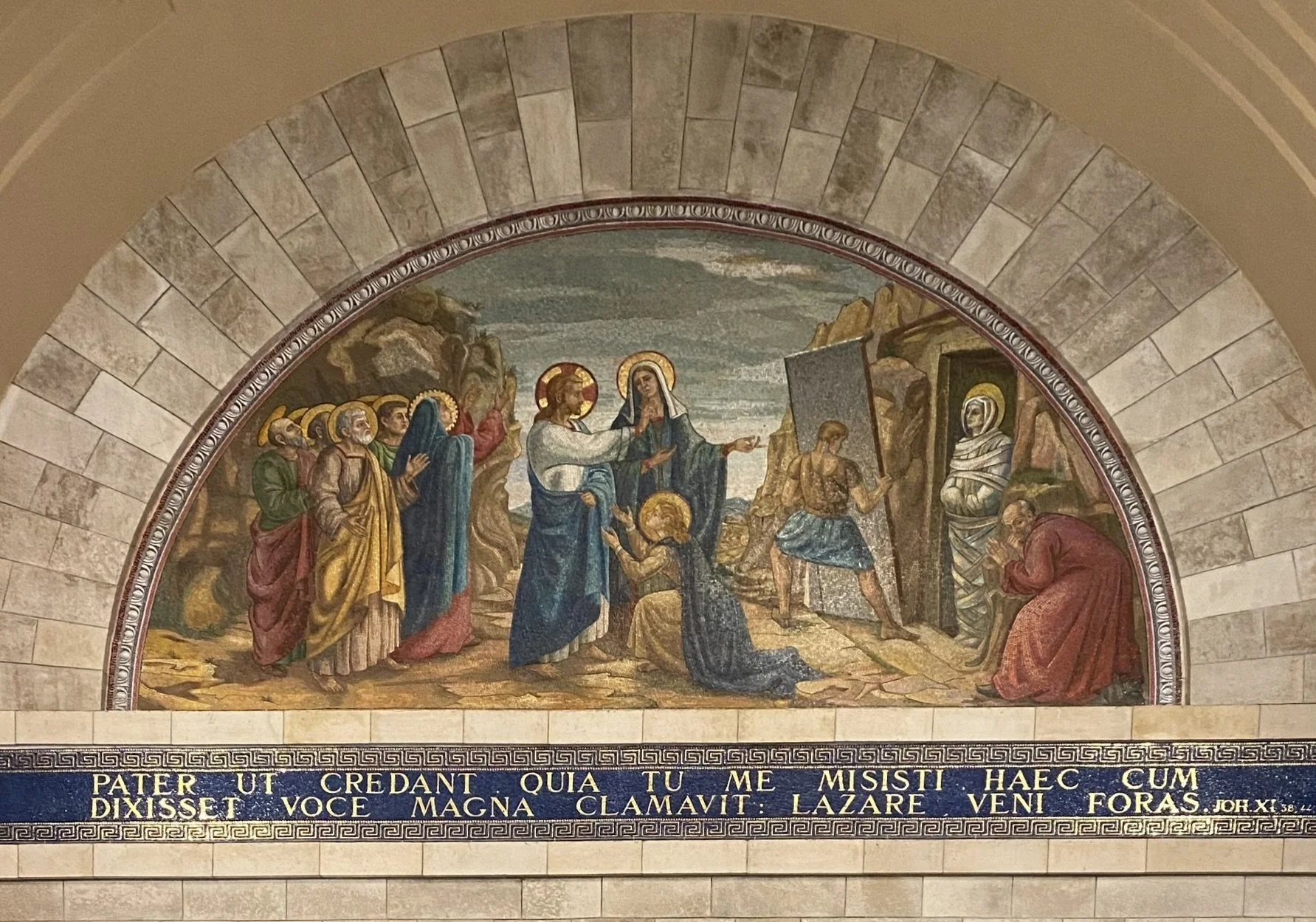
Now a certain man was ill, Lazarus of Bethany, the village of Mary and her sister Martha… The Jesus, deeply moved again, came to the tomb. It was a cave, and a stone lay against it…he cried out with a loud voice, “Lazarus, come out.” The man who had died came out, his hands and feet bound with linen strips and his face wrapped with a cloth, Jesus said to them, “Unbind him, and let him go.” John 11: 1, 38, 43 - 44
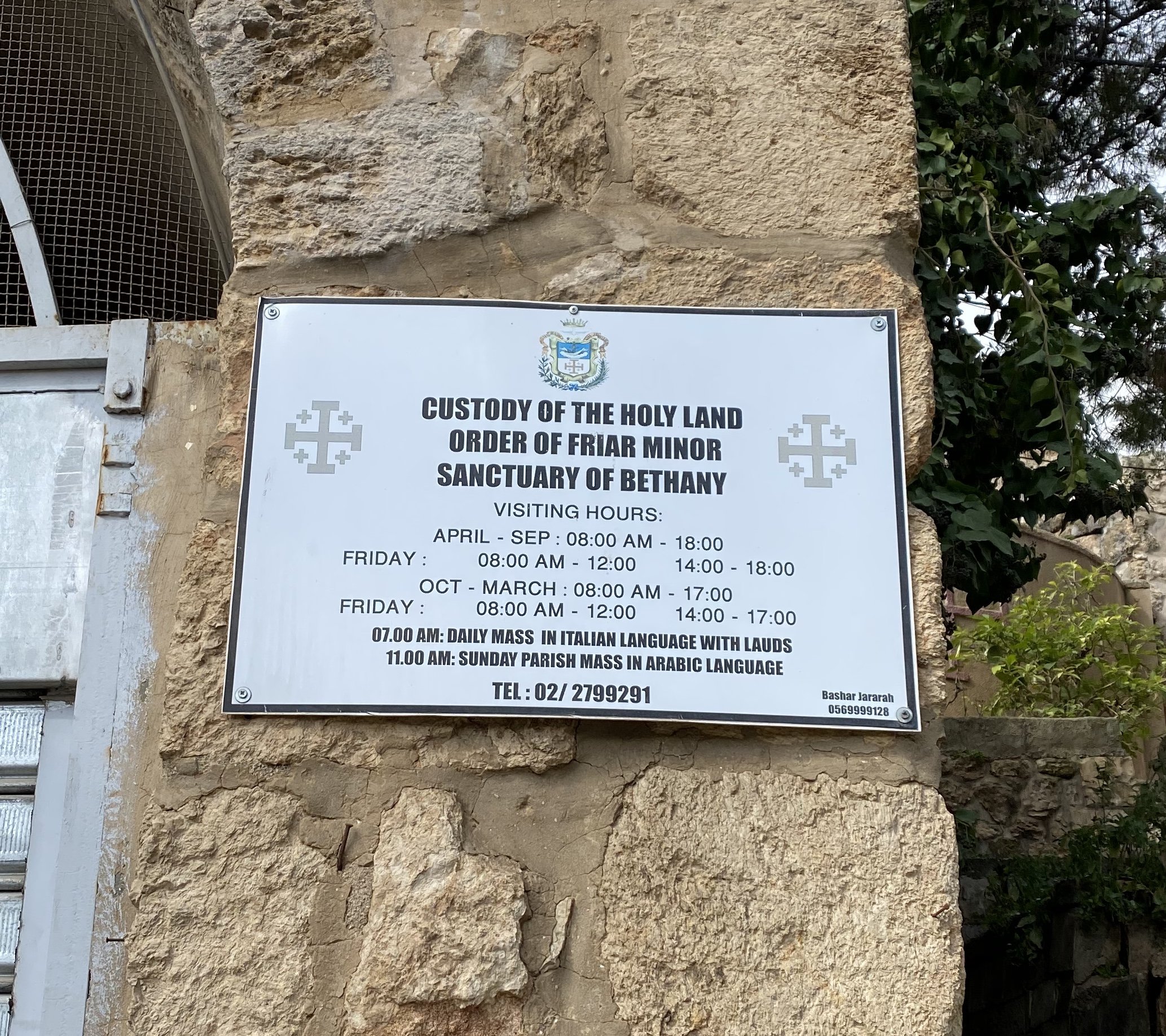
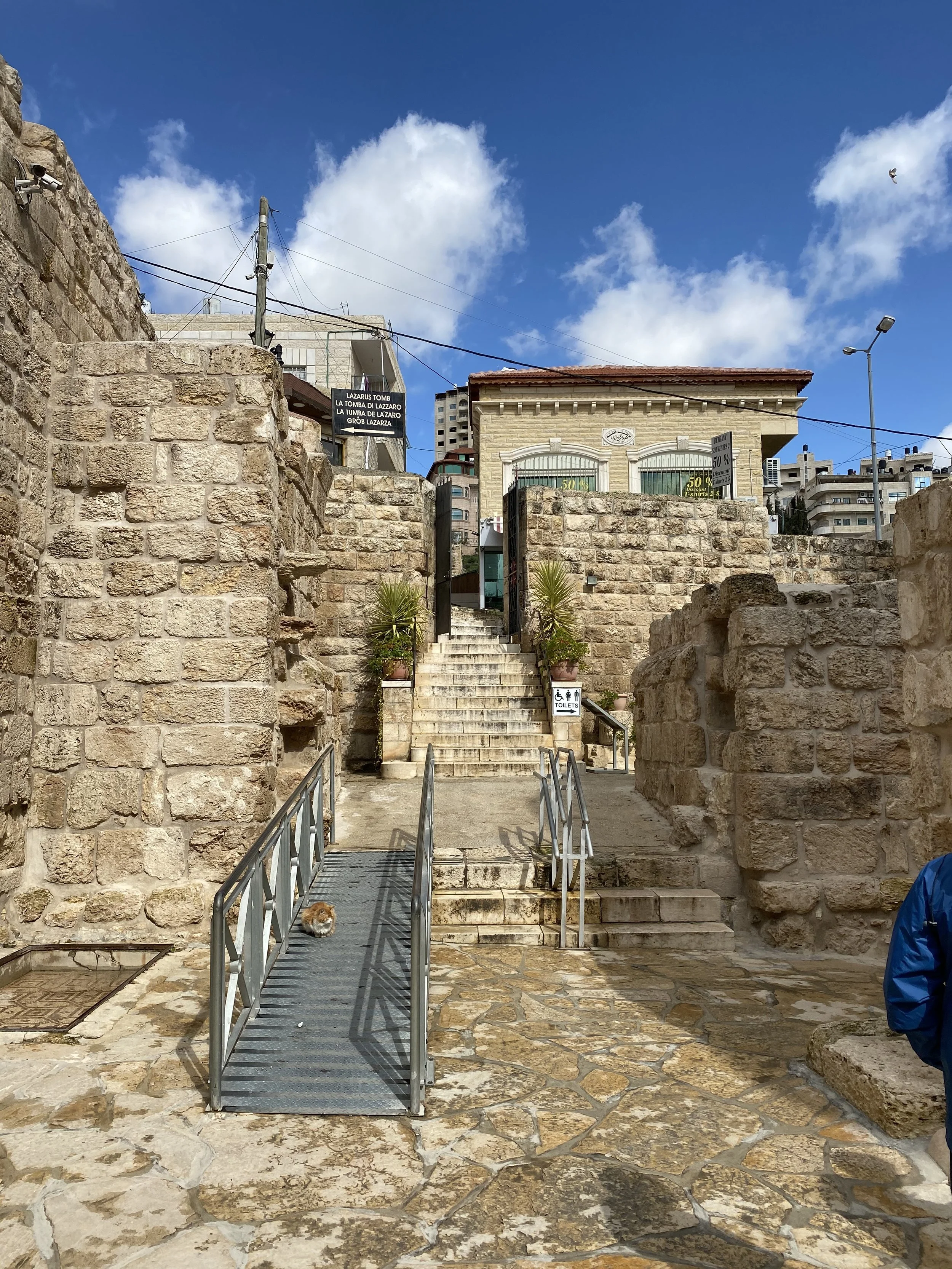
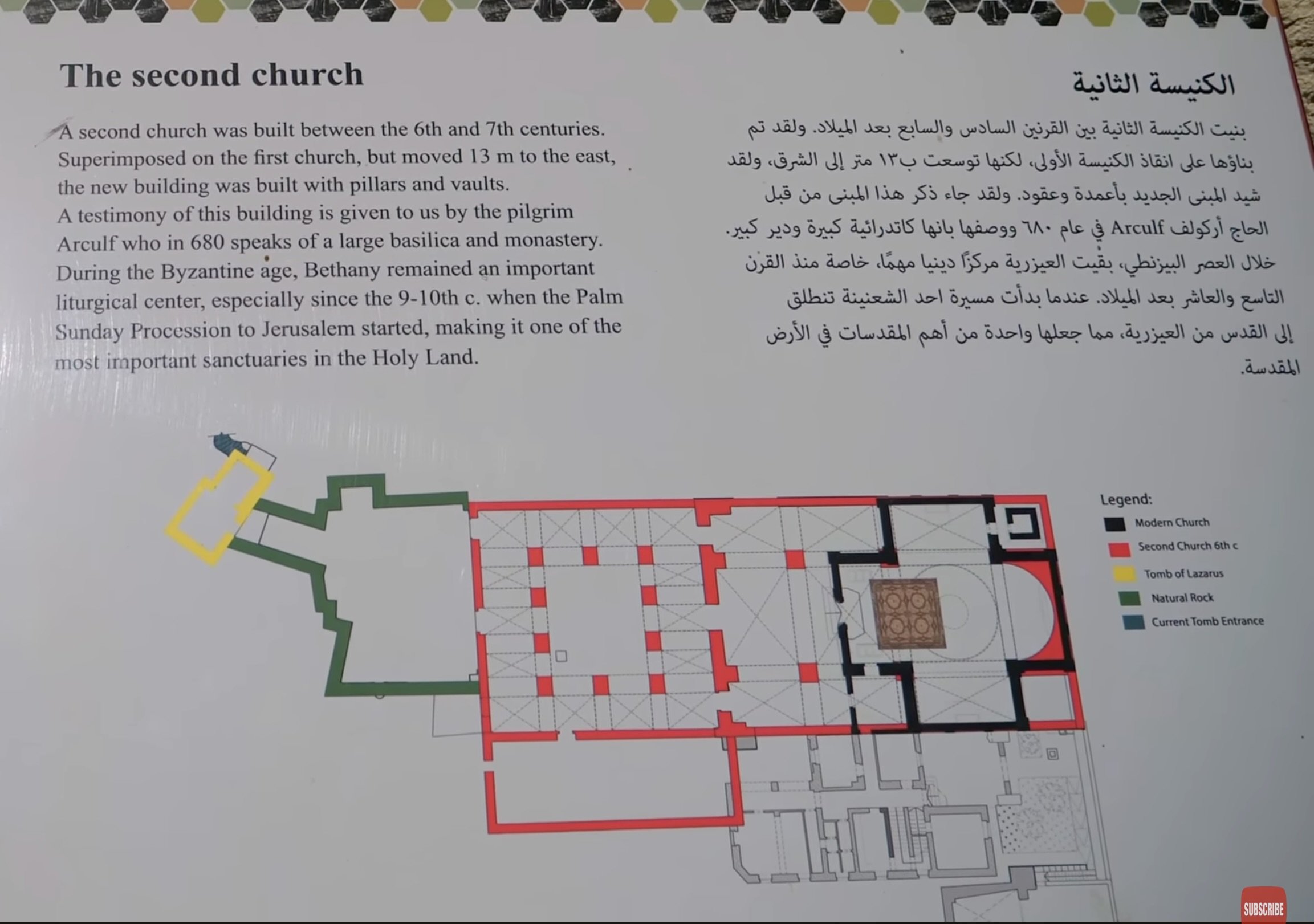
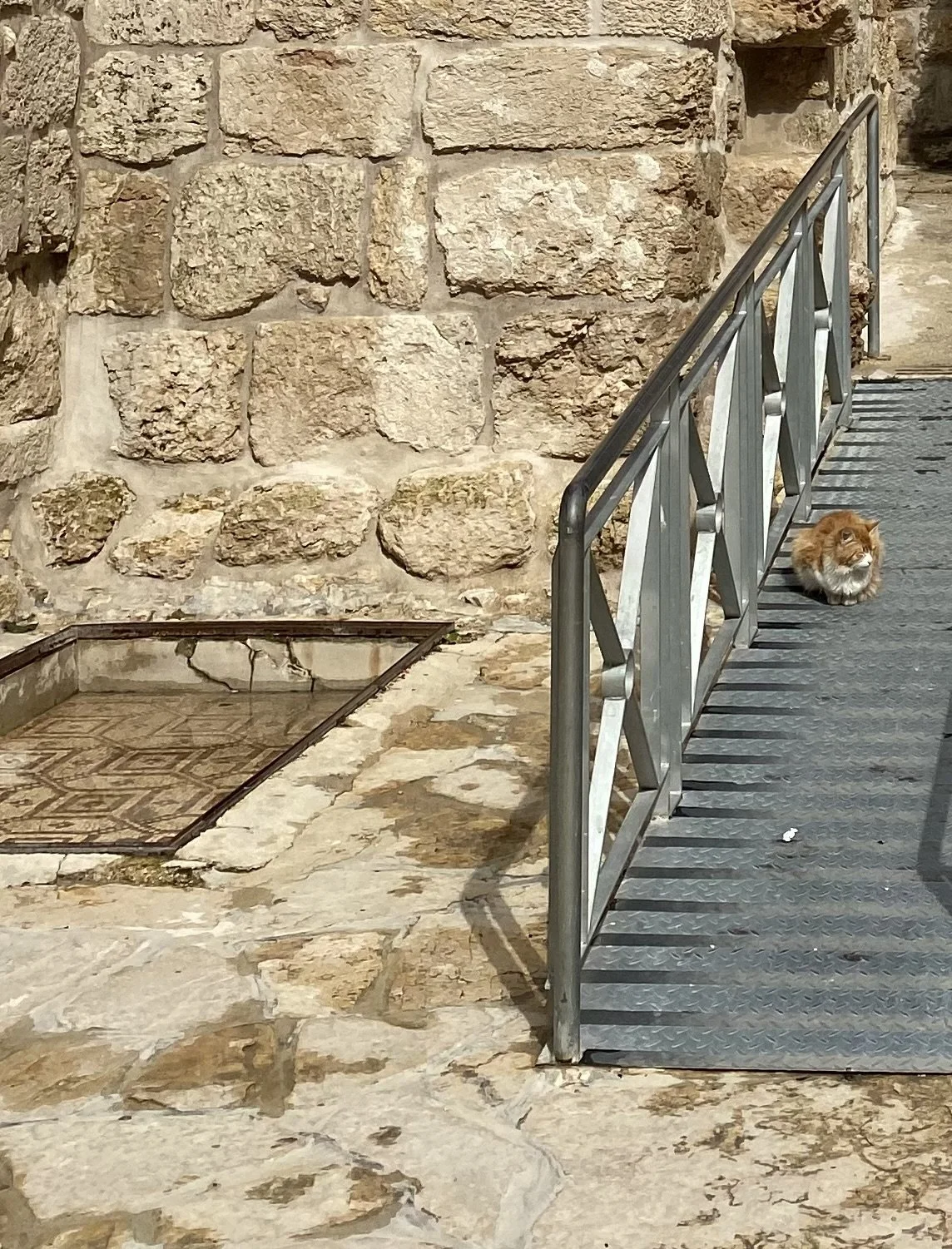
The village of Bethany still exists today, just a couple miles east of Jerusalem in the West Bank, on the slopes of the Mount of Olives. The Arabic name of the village today is al-Eizariya which means “the place of Lazarus”. Lazarus is venerated by Islam as well as by Christianity and the site of his tomb has a long history of both Christian and Islamic places of worship. The rock cut cave identified as Lazarus’ tomb is in an area that is confirmed as a cemetery in the 1st century AD. Other tombs are in the area and there is no question about the village being the Bethany of the Bible. The specific tomb claimed as the tomb of Lazarus has been a pilgrimage site for Christians since before the 4th century AD. It was written about by the famous Christian pilgrim Egeria. Since the last part of the 4th century, after Constantine legalized Christianity, there has been a church associated with the site. Today there is a Catholic Church over the site of the 1st (4th c AD) and the 2nd (6-7th c AD) churches. Nearby are a Greek Orthodox Church, an Armenian Church, and the al-‘Uzair Mosque.
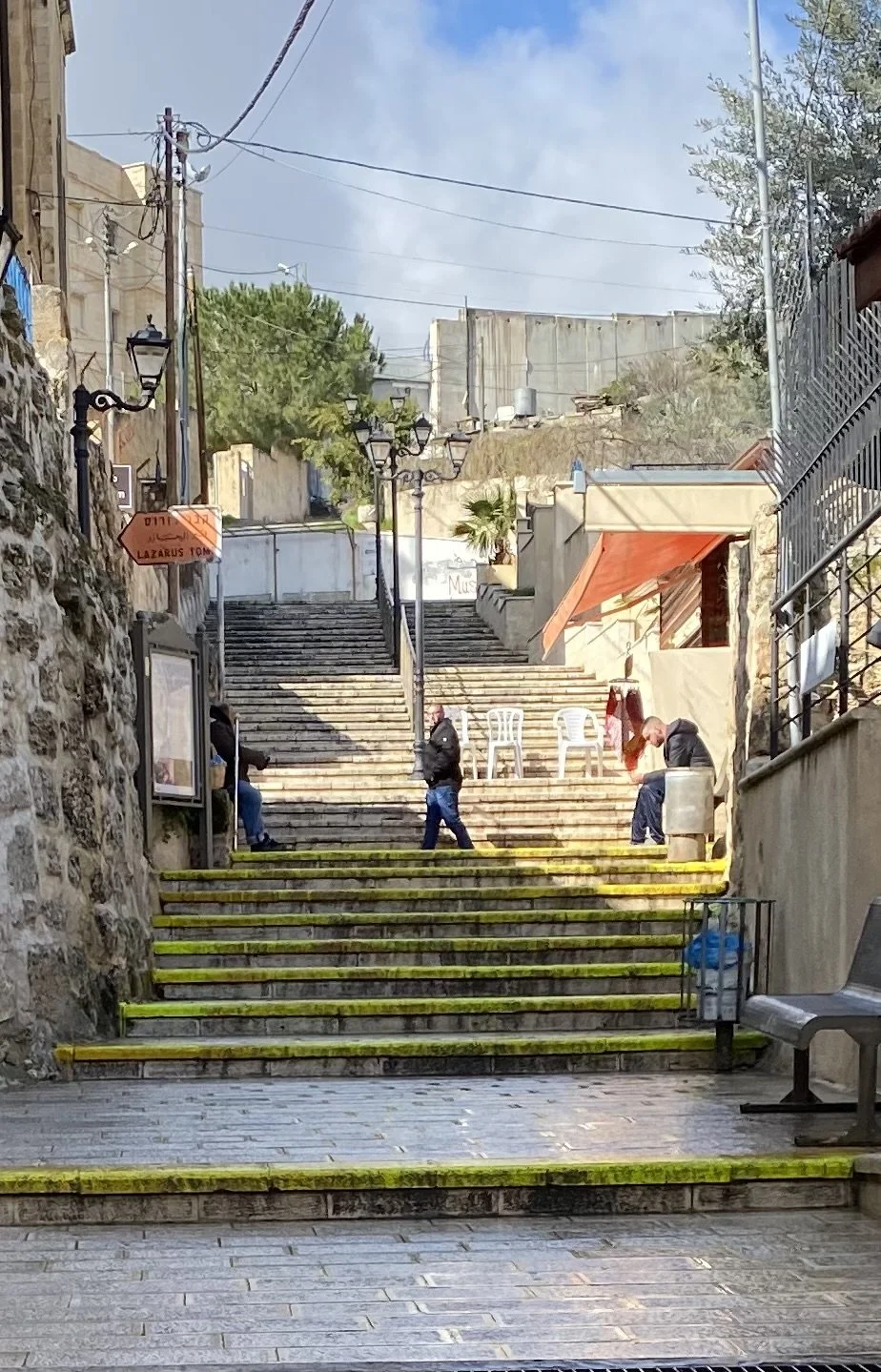
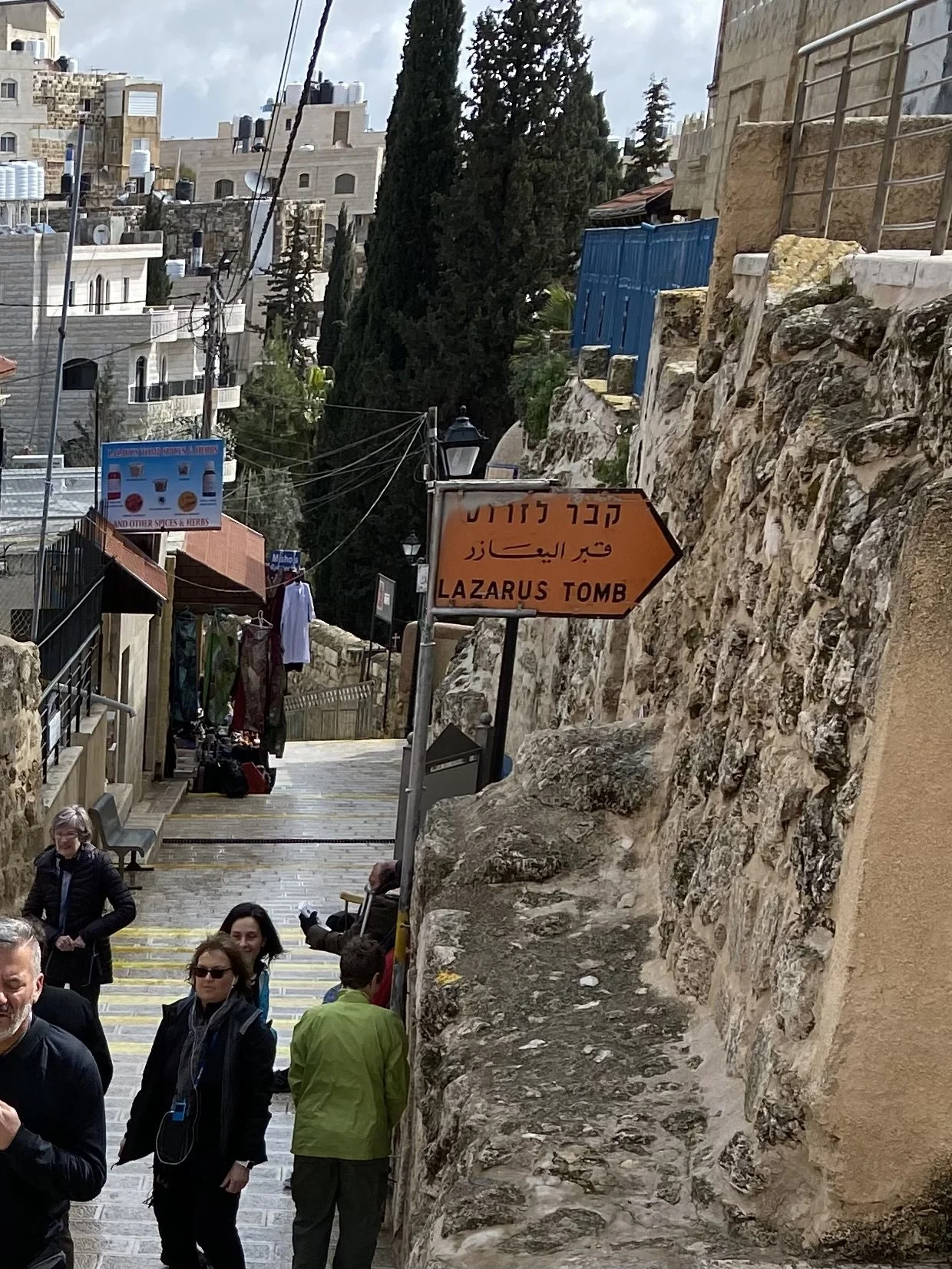
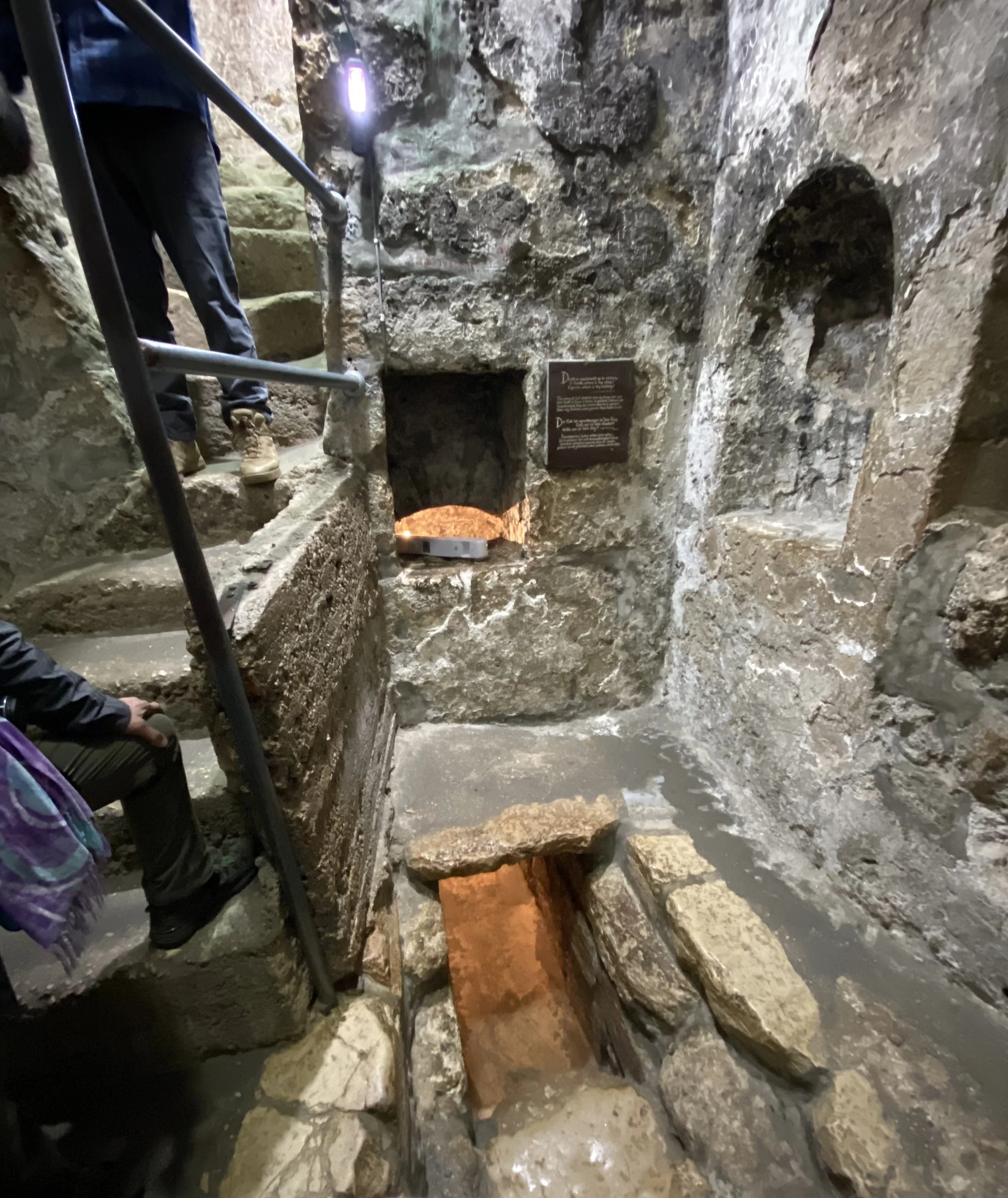
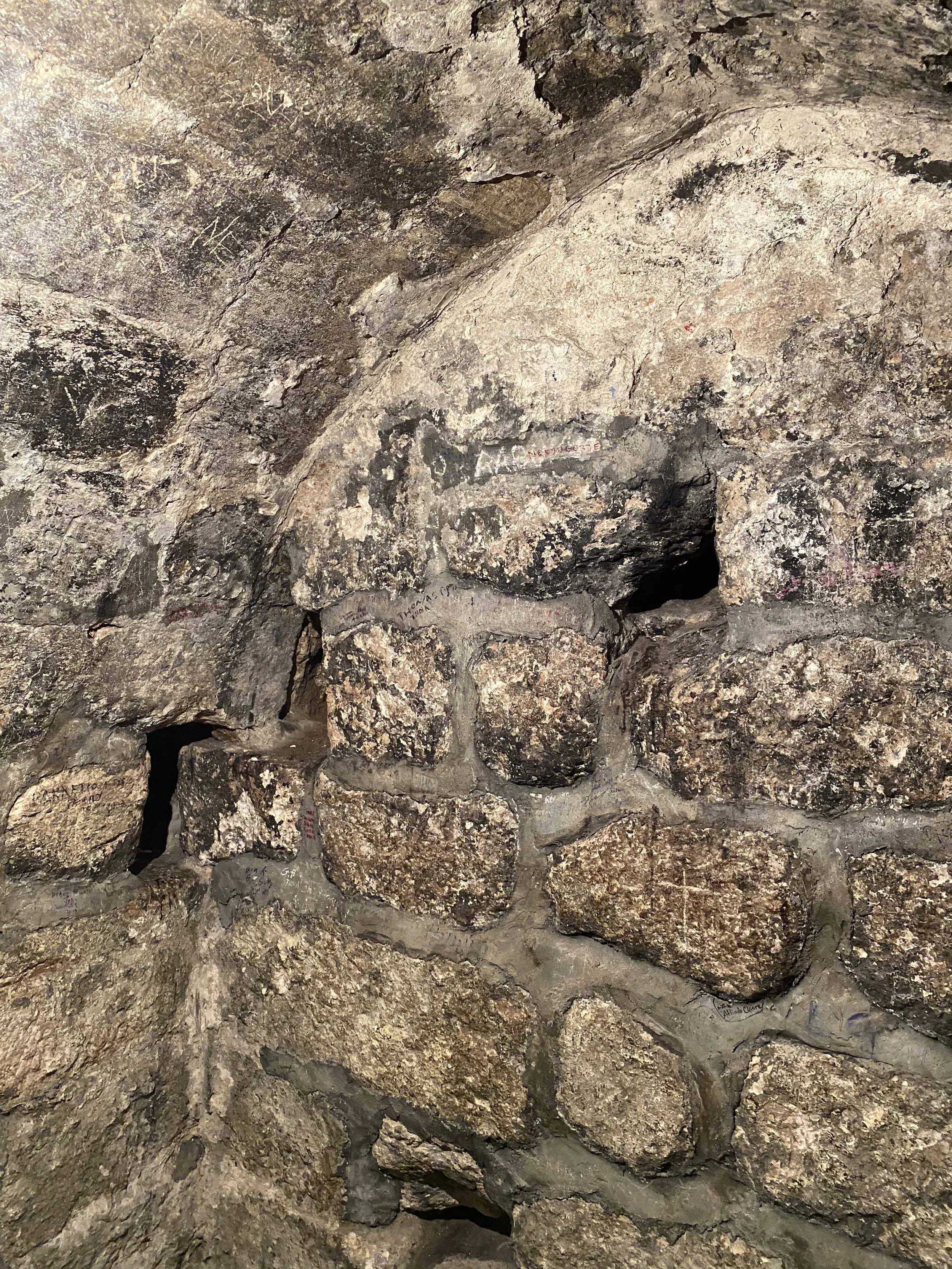
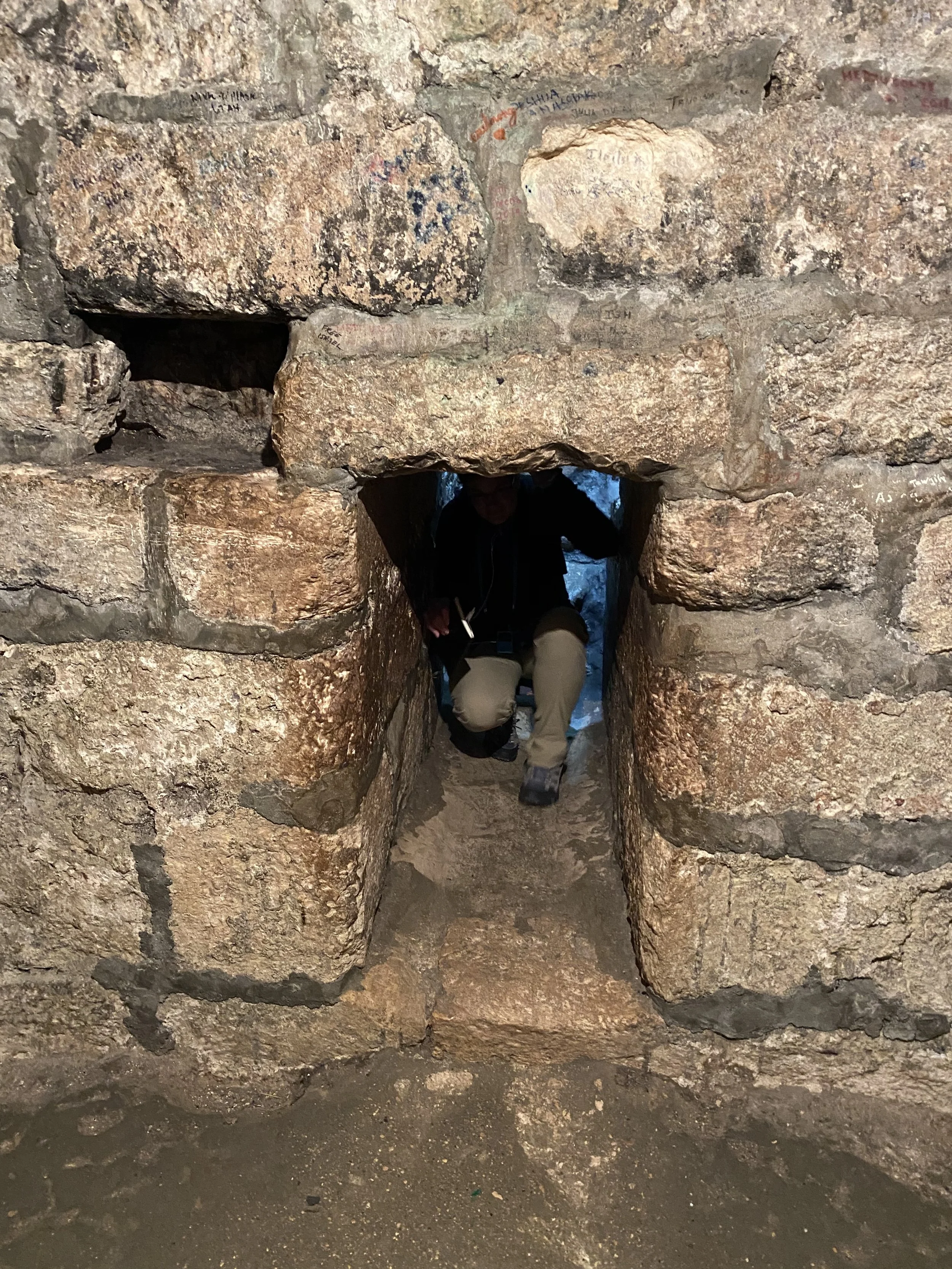
Just off of a steep pedestrian street, a small entrance leads into the 1st c tomb. The space is tight and you descend 20 or so steps to get down to the 1st century layer of the tomb. The tomb is carved into the limestone. There are niches and ledges that are common in 1st c Jewish tombs of the second temple era. There are no decorative elements, just a simple burial site.
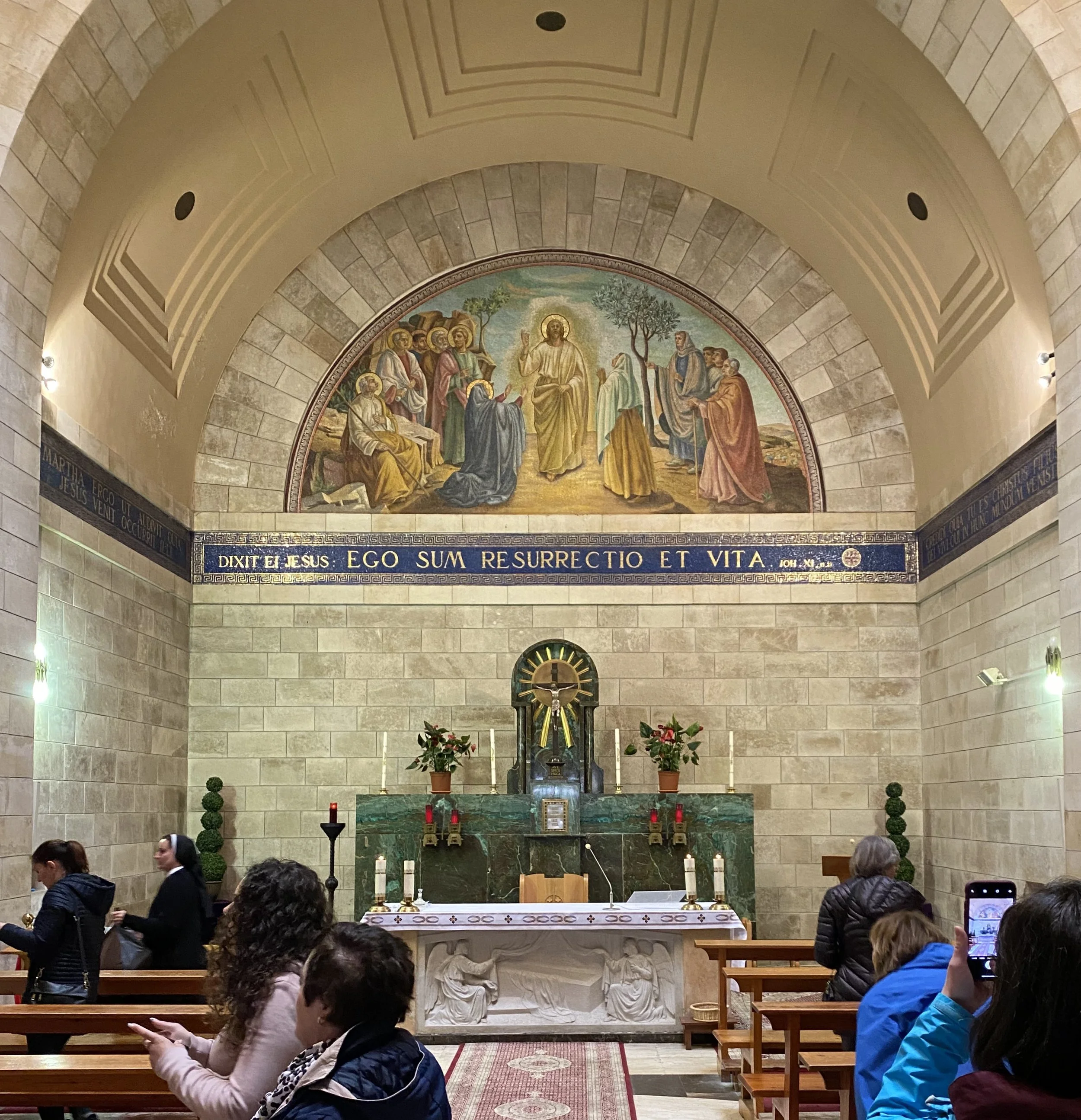
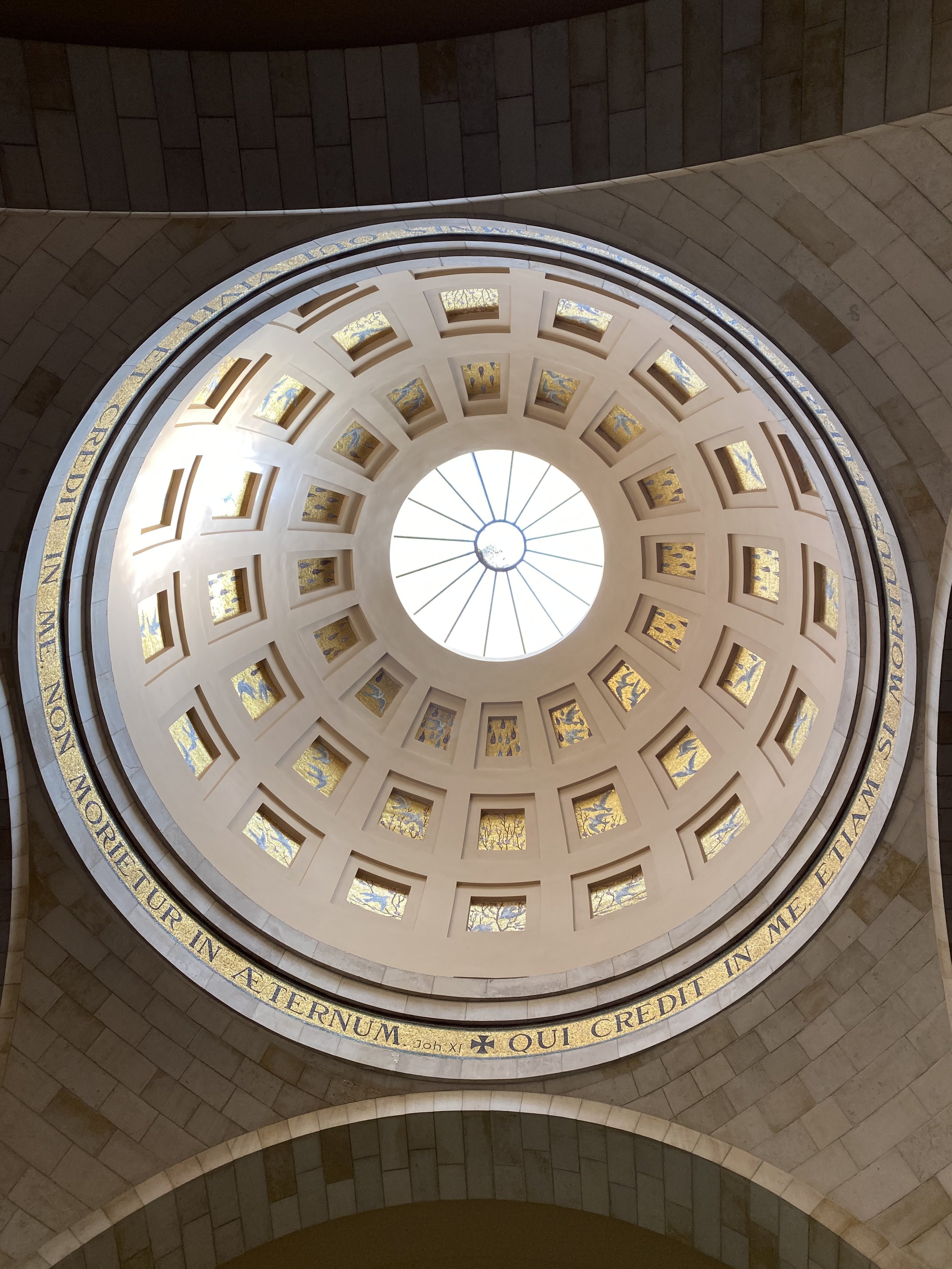
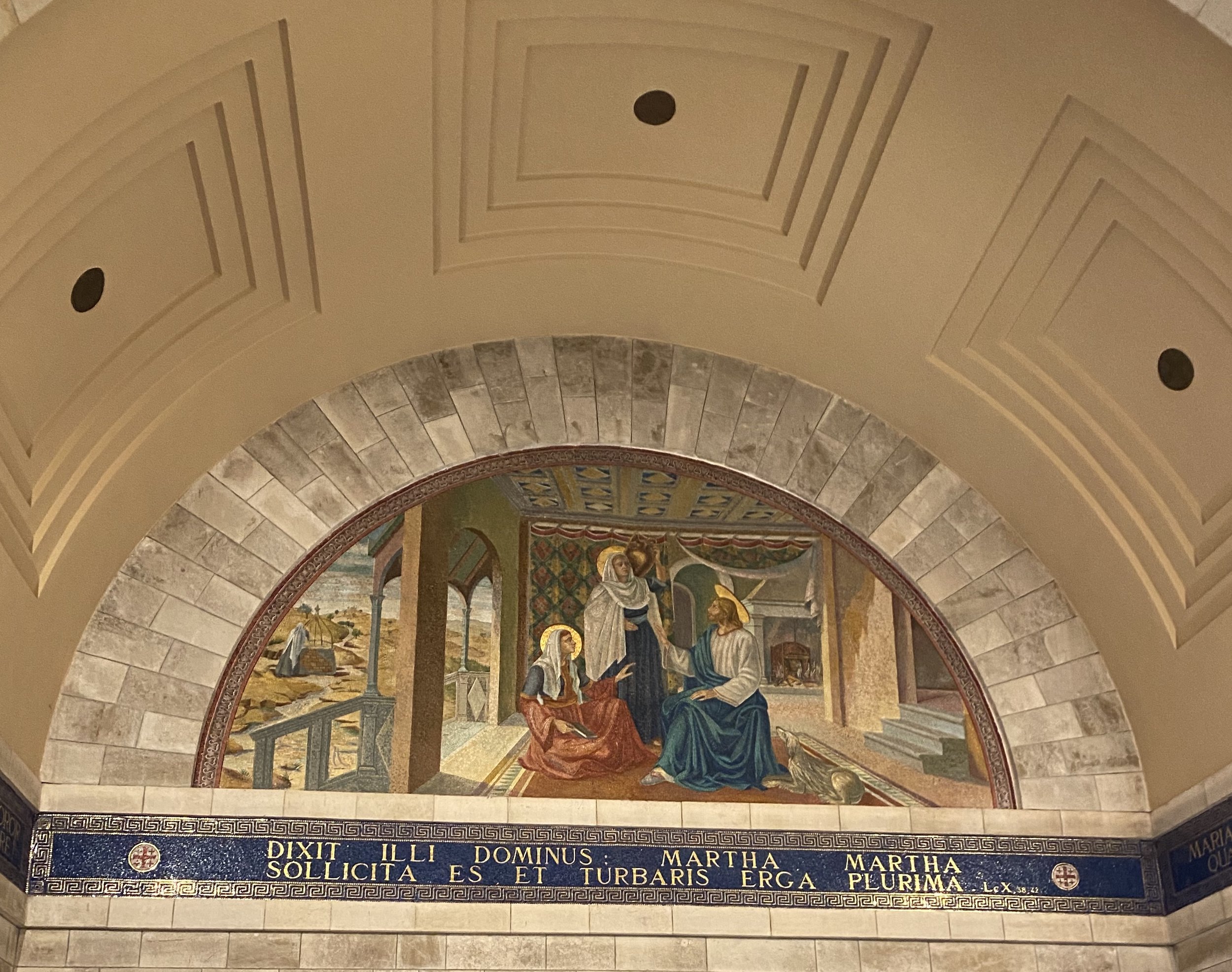
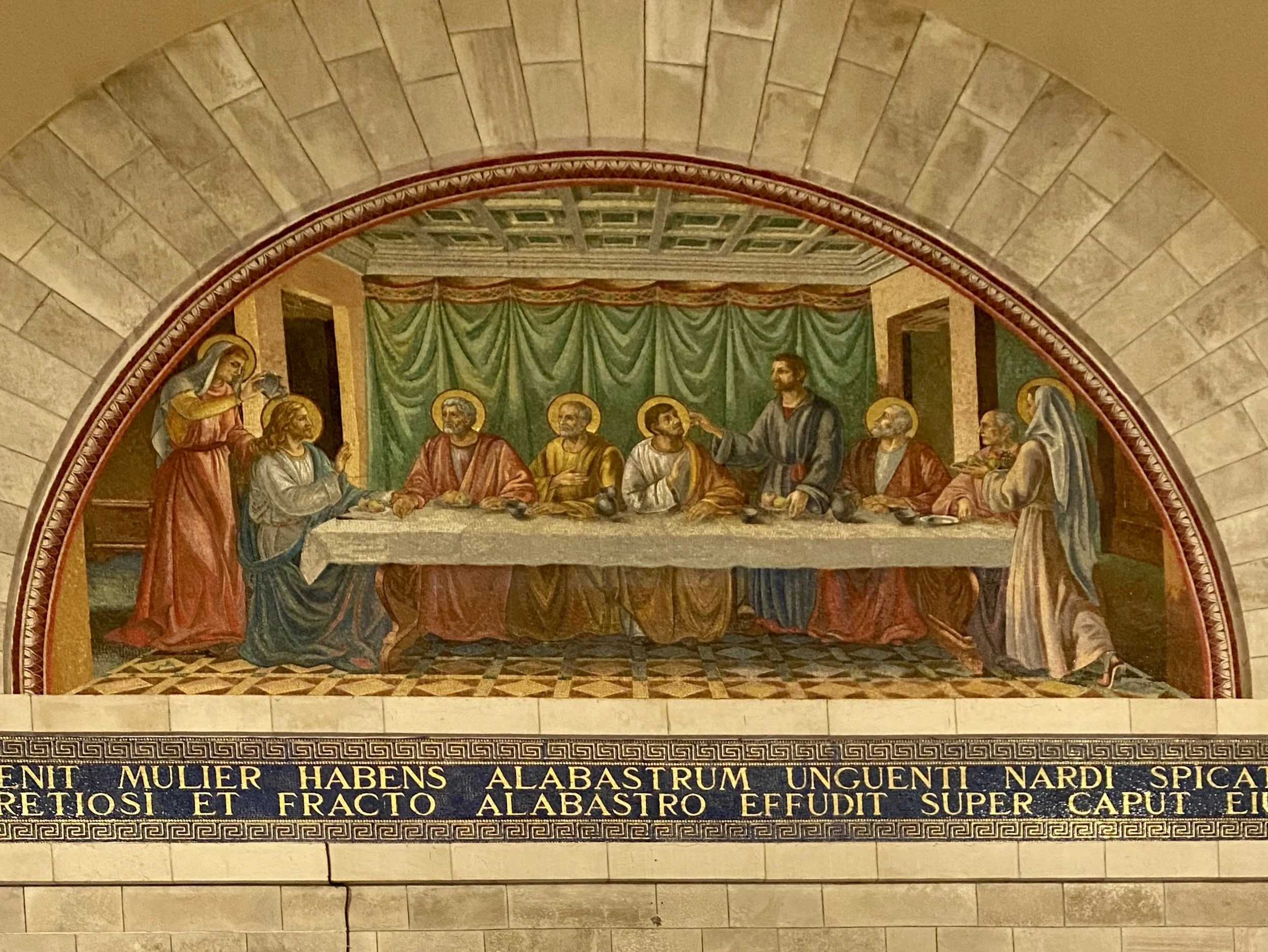
The current Church of Lazarus was designed by Antonio Barluzzi in the 1950’s. The design elements reflect a tomb like feeling (no windows), with the only light coming from the top of the dome symbolizing the resurrection of Lazarus. Mosaics in the church depict biblical scenes that occurred in Bethany: the raising of Lazarus, Jesus with Mary and Martha, Mary anointing Jesus’ feet.
We posted on this site a few years ago and are excited to re-visit it soon in September 2026. Hoping to do a better job observing the architectural remains of the earlier churches at this site! A powerful place to reflect on the example of faith even in a time of great sadness and of Jesus’s victory over death which is ours as well as Lazarus’s!
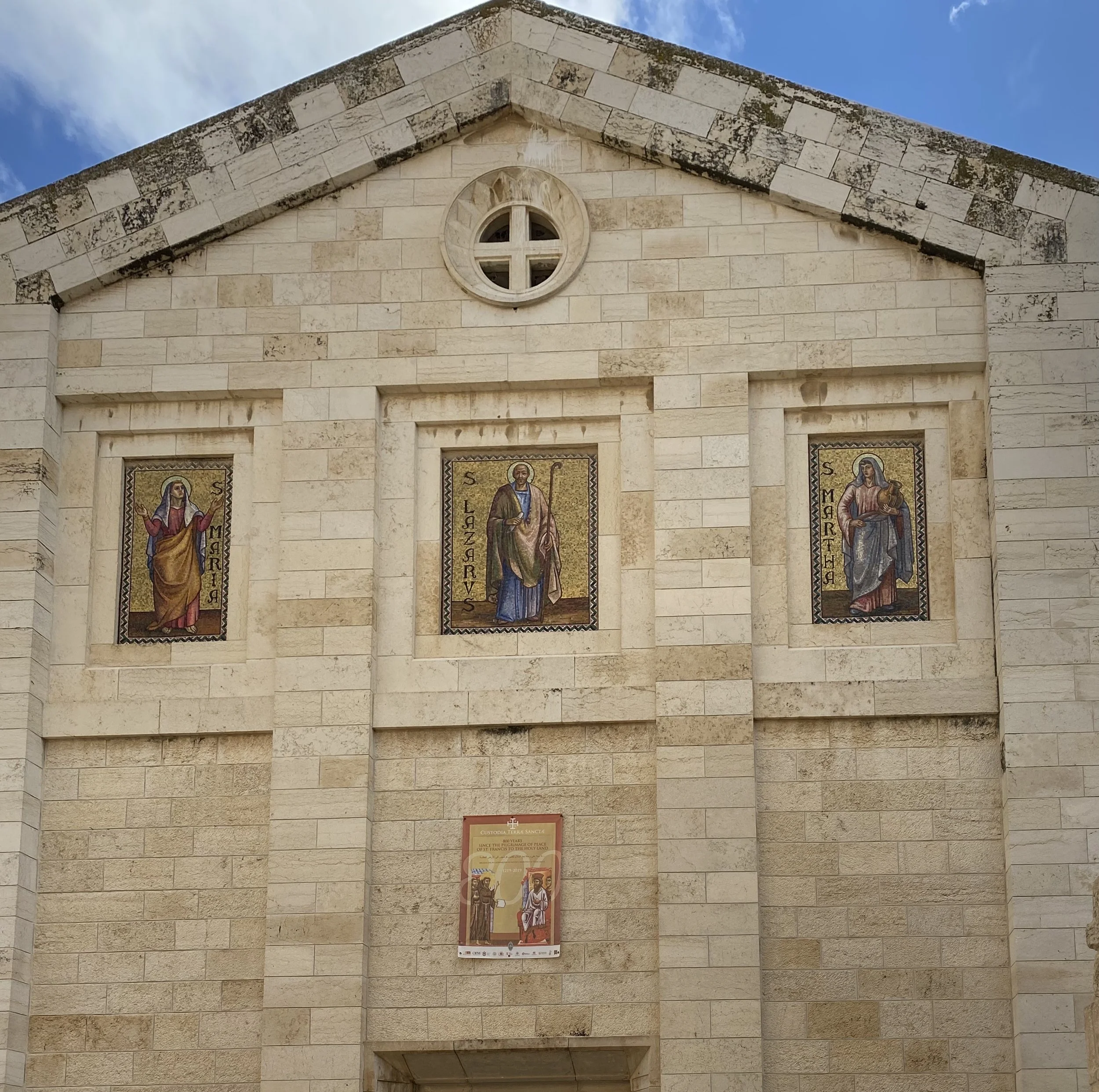
The Church of Lazarus at Bethany in Israel (modern day al-Eizariya) designed in the 1950’s by Antonio Barluzzi and situated over the site of the 4th and 6th - 7th c AD churches.