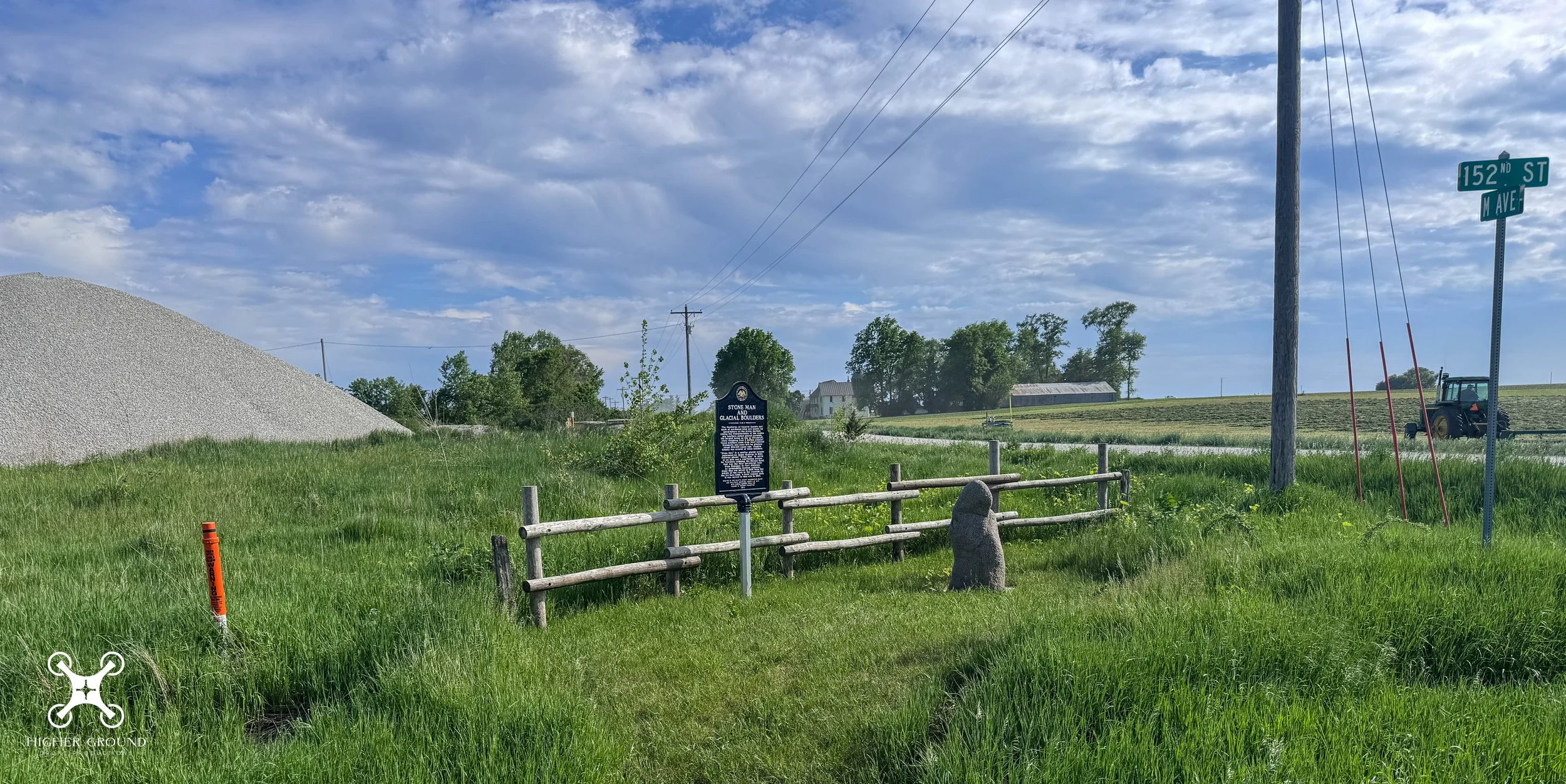
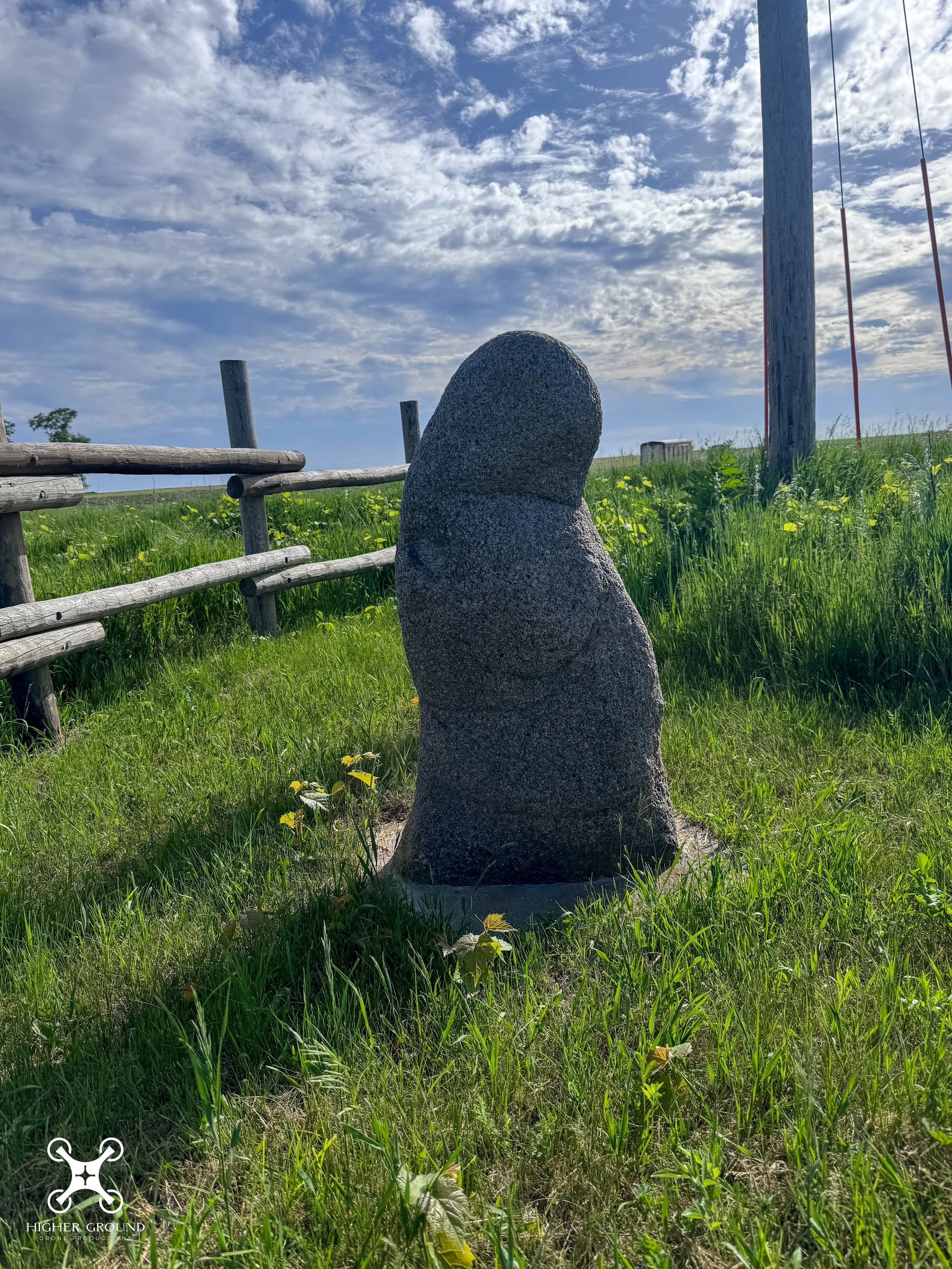
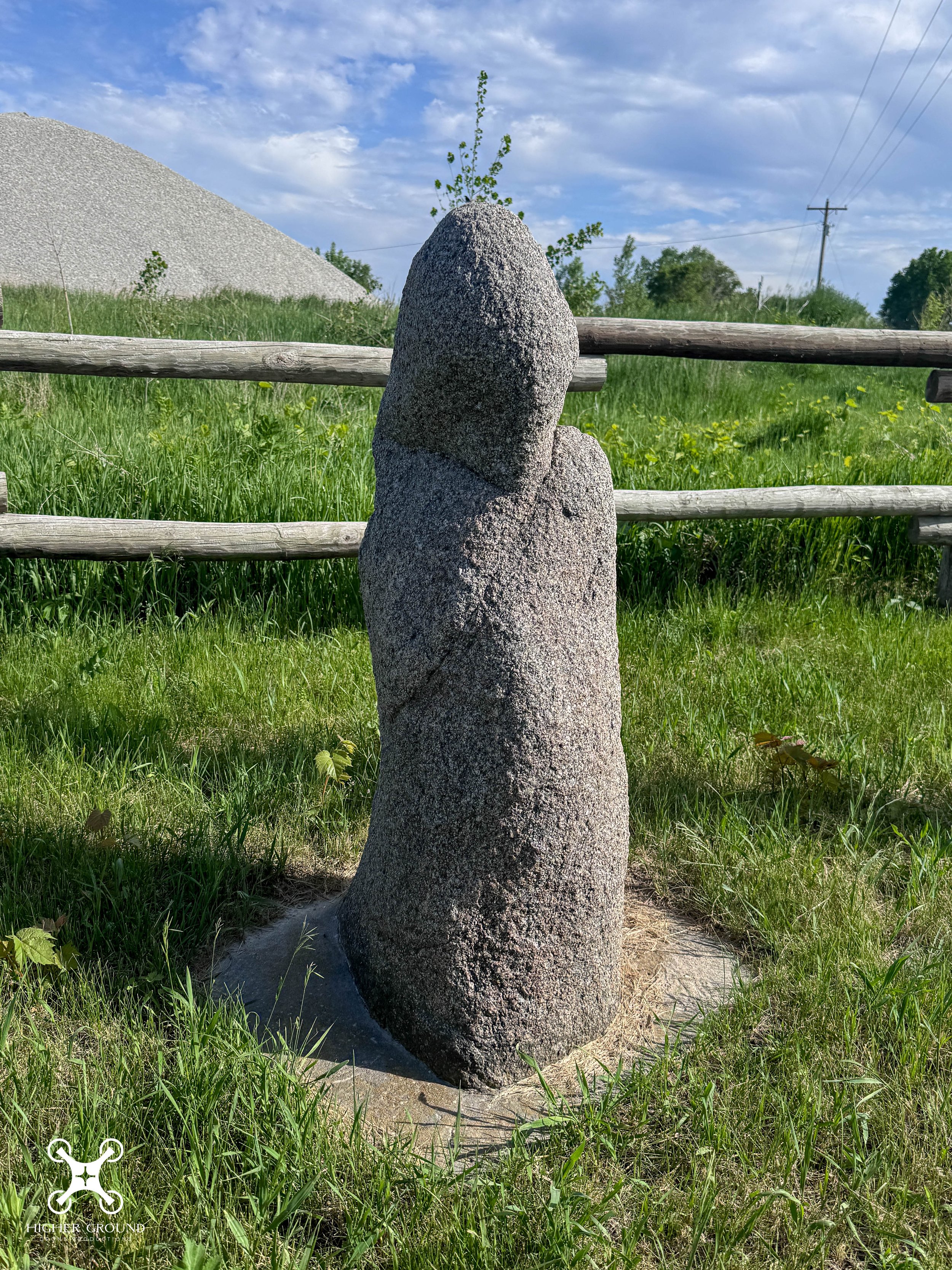
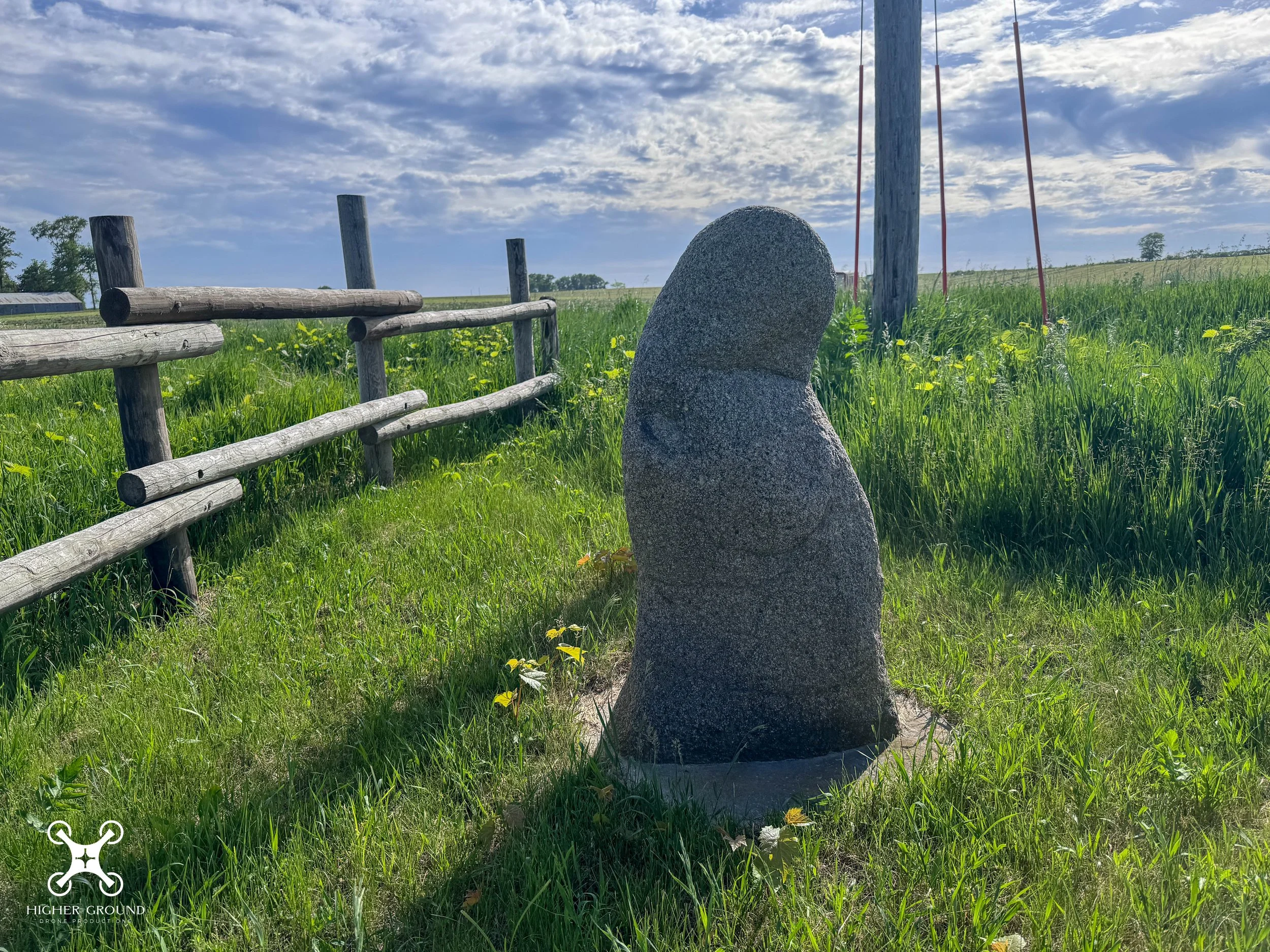
Stone Man - very glacial erratic!
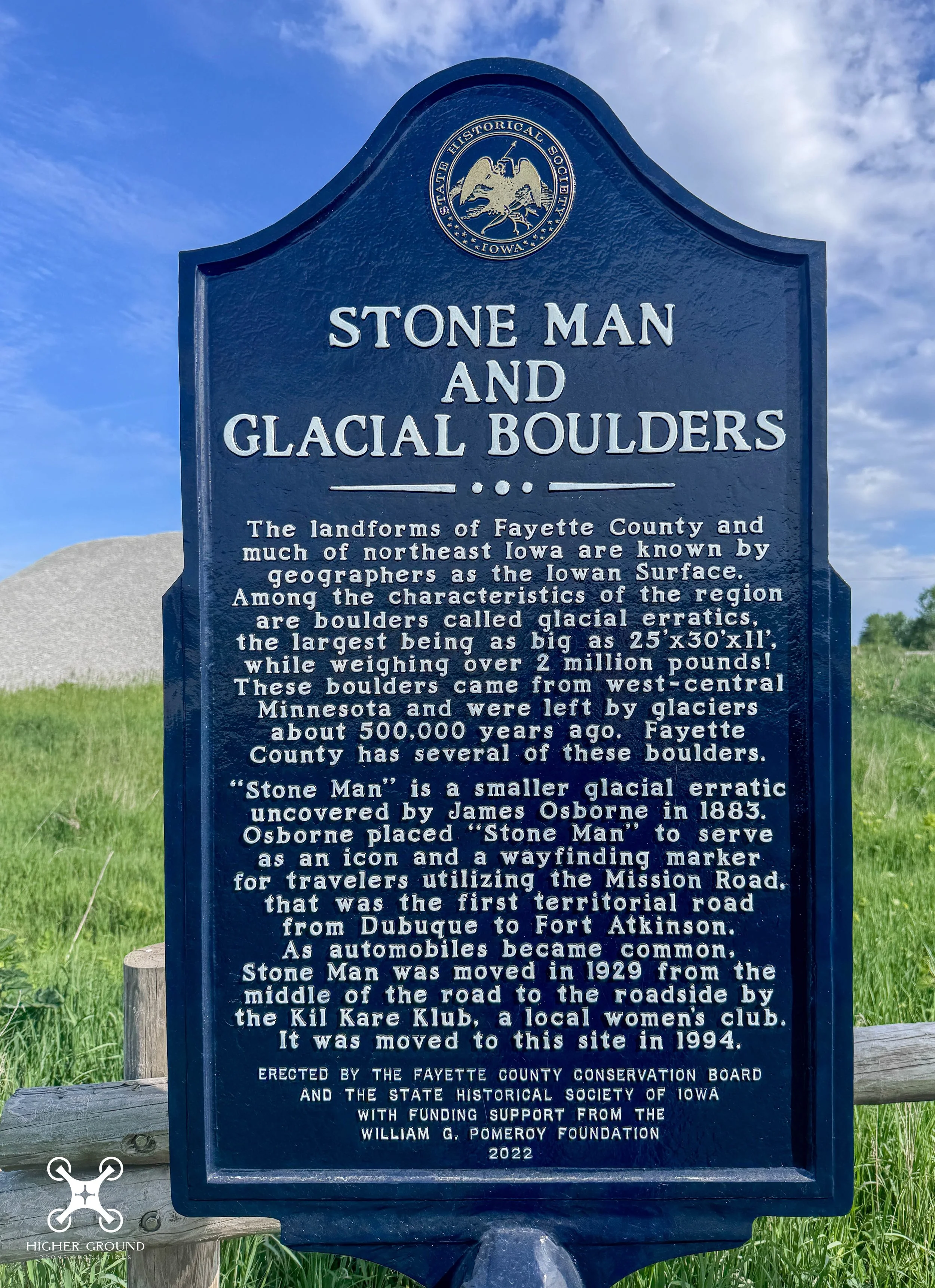
STONE MAN AND GLACIAL BOULDERS
Yes Glacial erratic is an official geological term. Where is your mind?
The landforms of Fayette County and much of northeast Iowa are known by geographers as the lowan Surface.
Among the characteristics of the region are boulders called glacial erratics, the largest being as big as 25'x 30'x 11’, and weighing over 2 million pounds! These boulders came from west-central Minnesota and were left by glaciers many years ago.
Fayette County Iowa has several of these boulders.
"Stone Man" is a smaller glacial erratic uncovered by James Osborne in 1883.
Osborne placed "Stone Man" to serve as an icon and a wayfinding marker for travelers utilizing the Mission Road, that was the first territorial road from Dubuque to Fort Atkinson. As automobiles became common, Stone Man was moved in 1929 from the middle of the road to the roadside by the Kil Kare Klub, a local women's club. It was moved to it’s current site near the road in the middle of no where in 1994.
This weathered stone was deposited by ancient ice sheets roughly 500,000 years ago and historically served as a prominent wayfinding landmark for travelers. Glacial erratics are large rocks and stones picked up by massive moving ice sheets during an ice age and dropped miles away as the ice melted. They are called "erratic" because their rock type does not match the local underlying bedrock, often originating from distant regions like Canada or northern shields.
Beyond the Stone Man in Iowa, early settlers and Native Americans used prominent glacial erratics as boundary markers, meeting places, navigational guides, and focal points in local folklore.