“… And he [ Uzziah] built towers in the wilderness and cut out many cisterns, …Moreover Uzziah had an army of soldiers, fit for war, in divisions” 2 Chronicles 26:10-11
“Hezekiah the son of Ahaz, King of Judah began to reign…he did what was right in the eyes of the Lord…He removed the high places and broke the pillars and cut down the Ashram..” 2Kings 18:1, 4
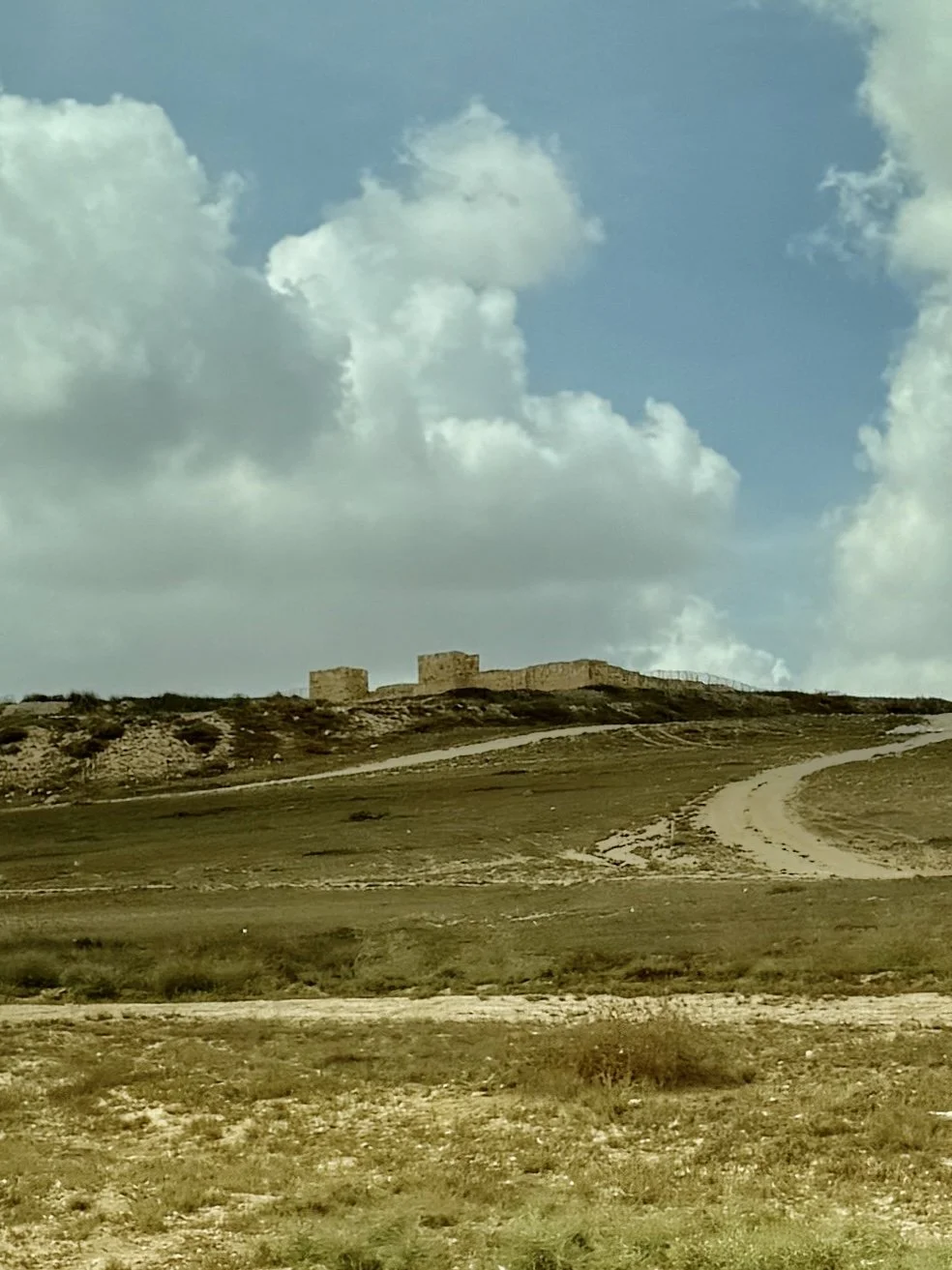
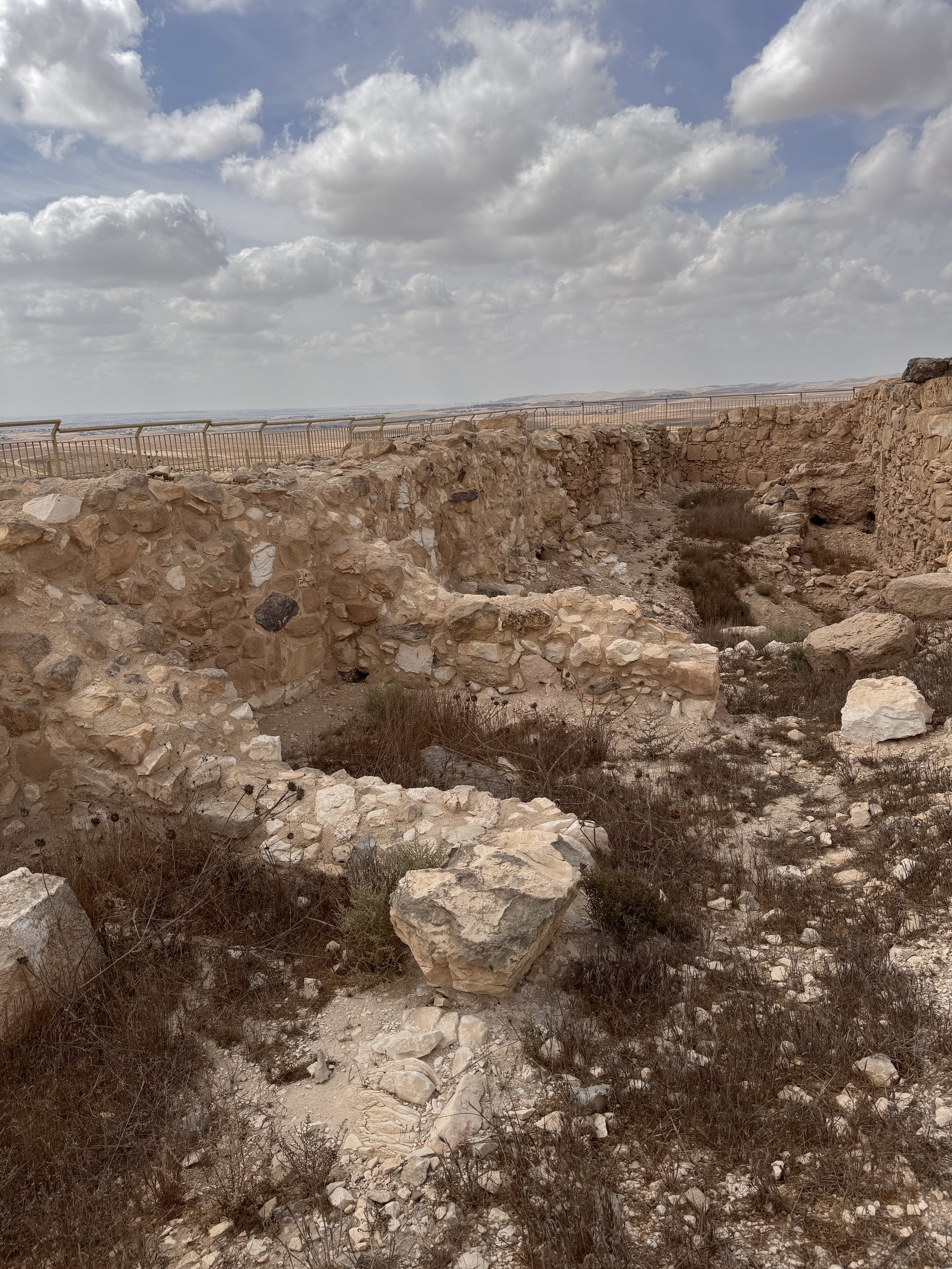
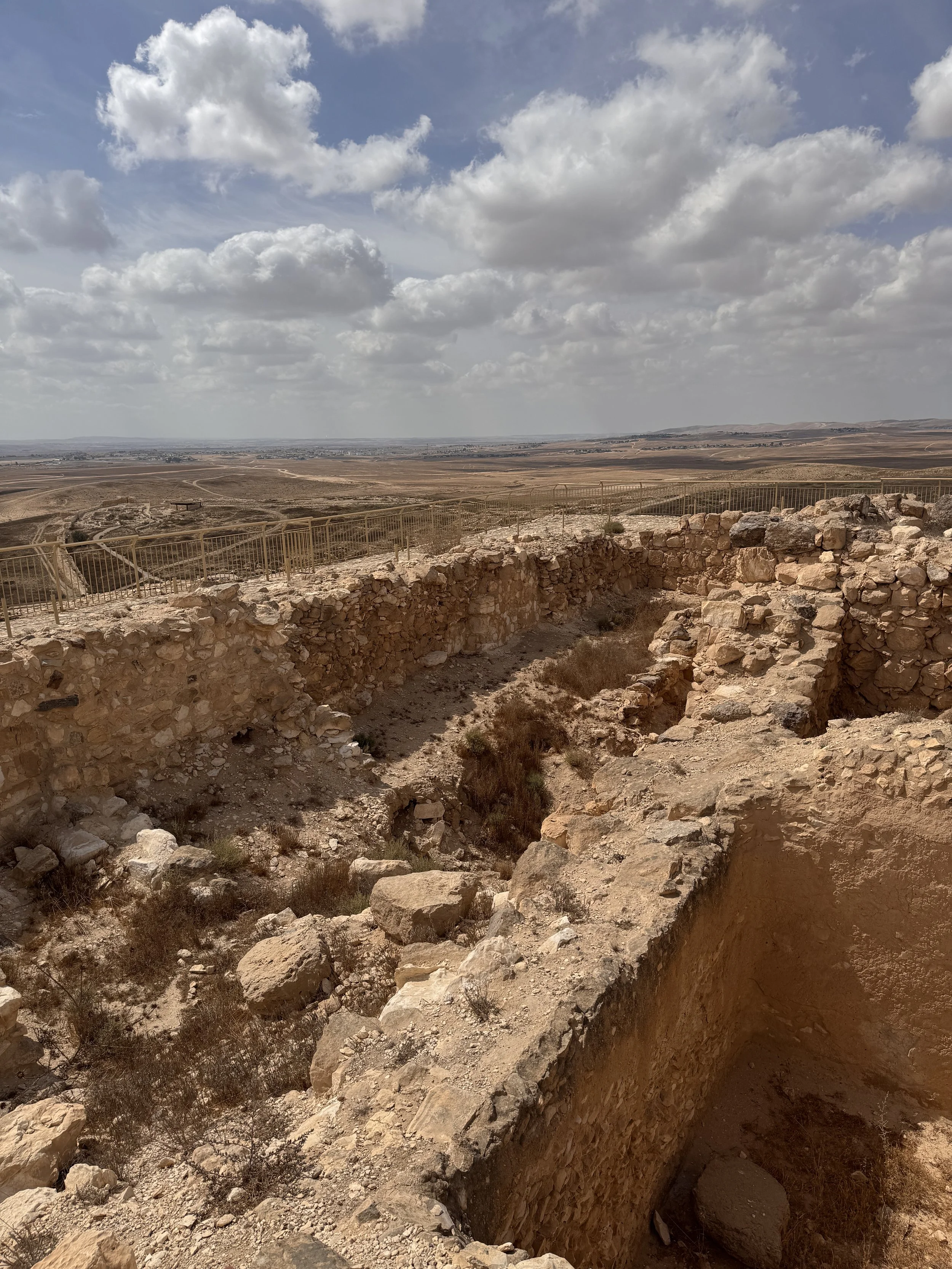
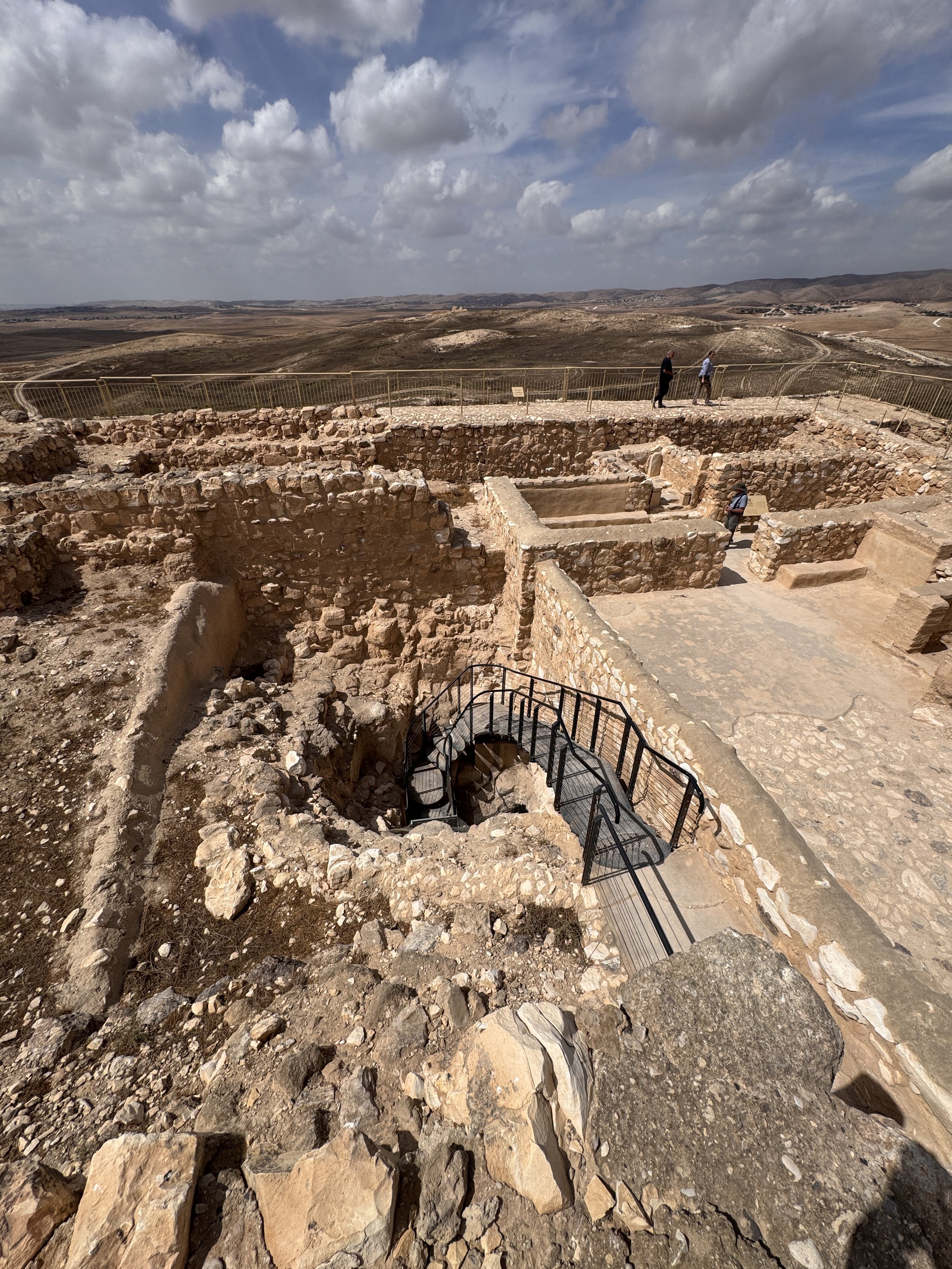
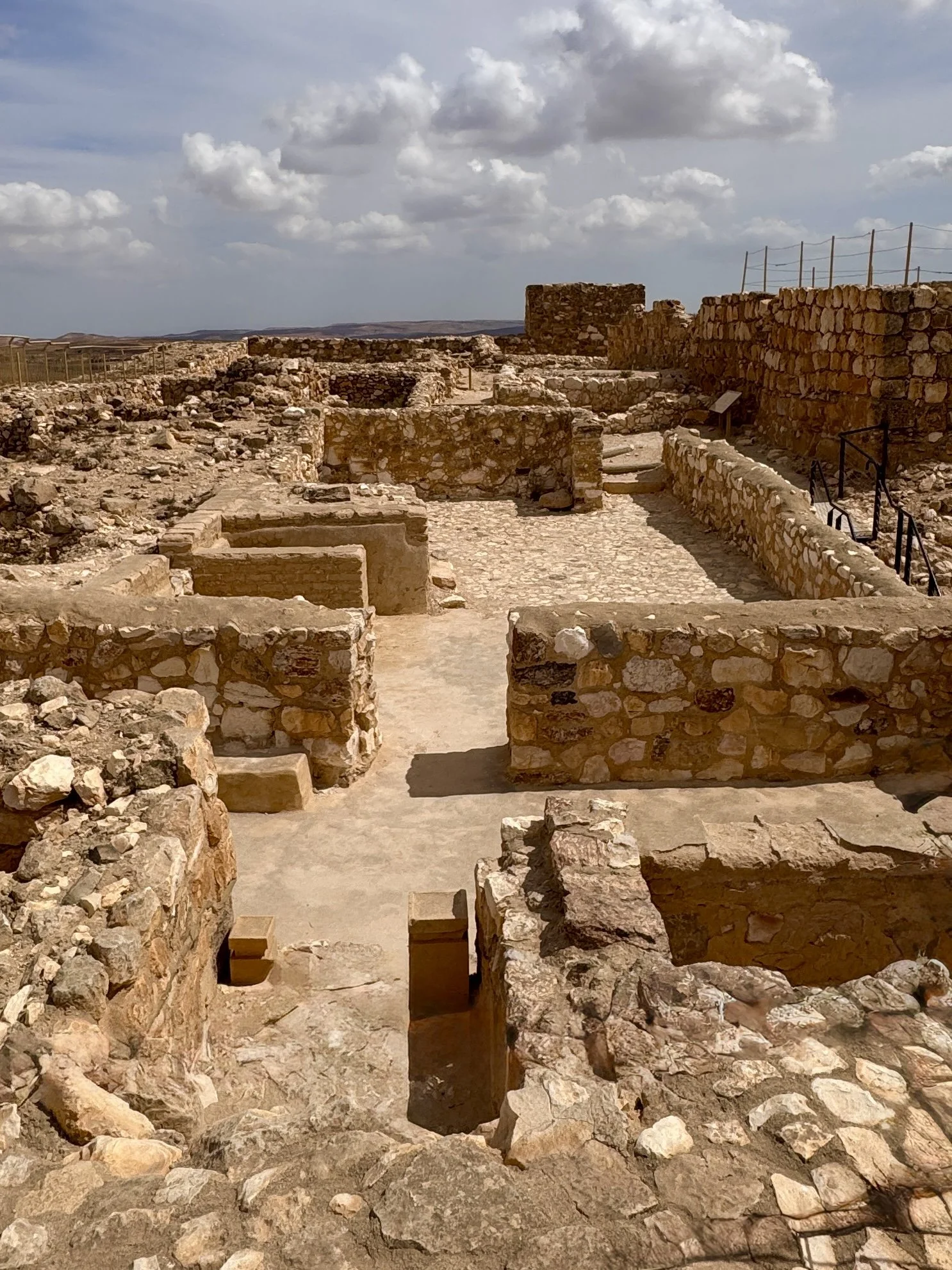
The Iron Age Arad fortress is an example of the network of fortresses that guarded ancient trade routes in the Negev. Built / rebuilt / fortified by various kings of United Monarchy and of Judah. The fortress was likely first built at the time of the reign of King Solomon. In 926/924 B.C. the Egyptians conquered Judea including the fortress of Arad, (1 Kings 14:25). There are temple inscriptions in Karnak (Egypt) listing Arad as one of the cities conquered by Sheshonq (Shishak). It was rebuilt and lasted until the 586 destruction by Babylon. The remains that we walked through are from the 8th c BC time of the kingdom of Judah.
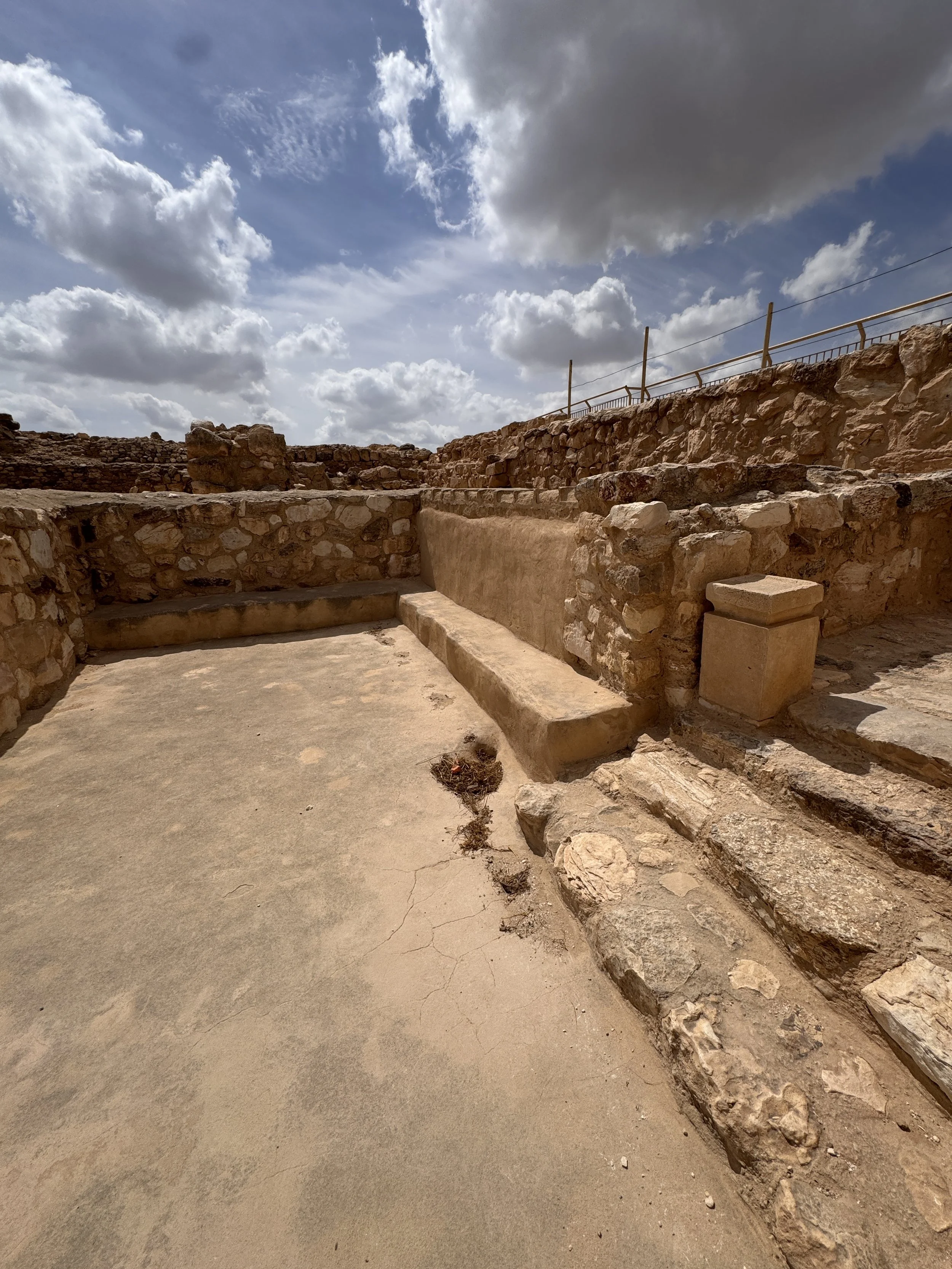
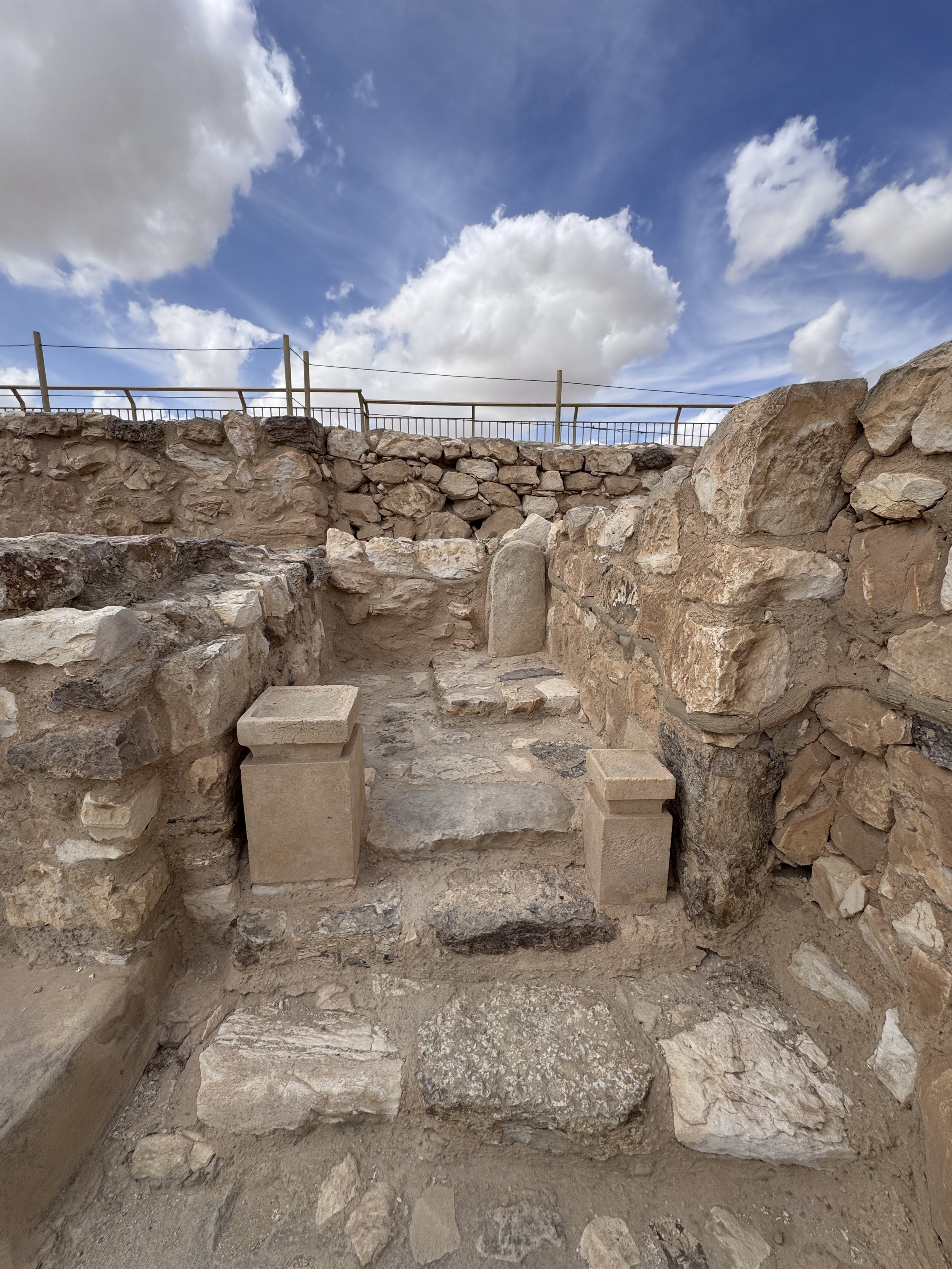
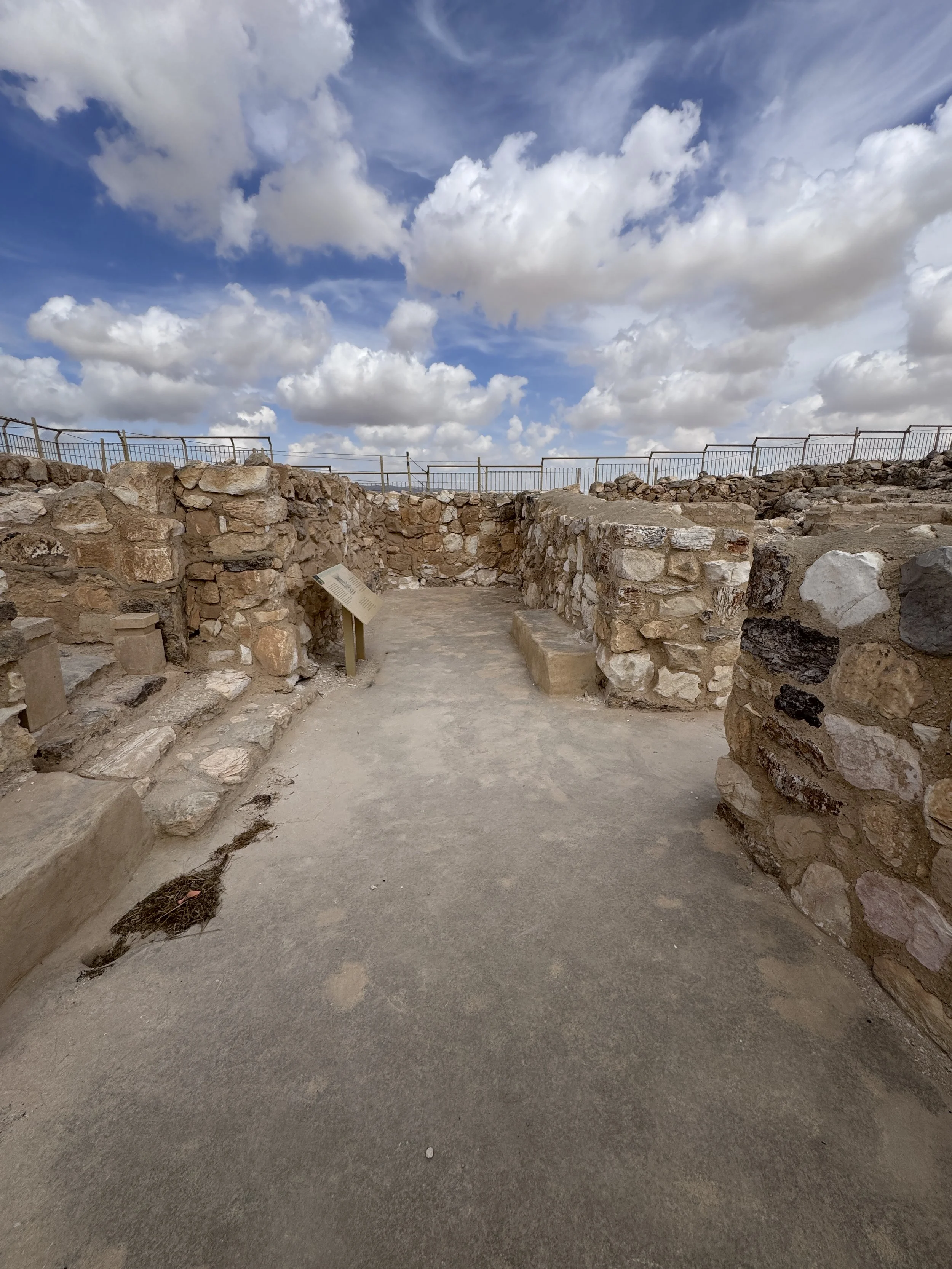
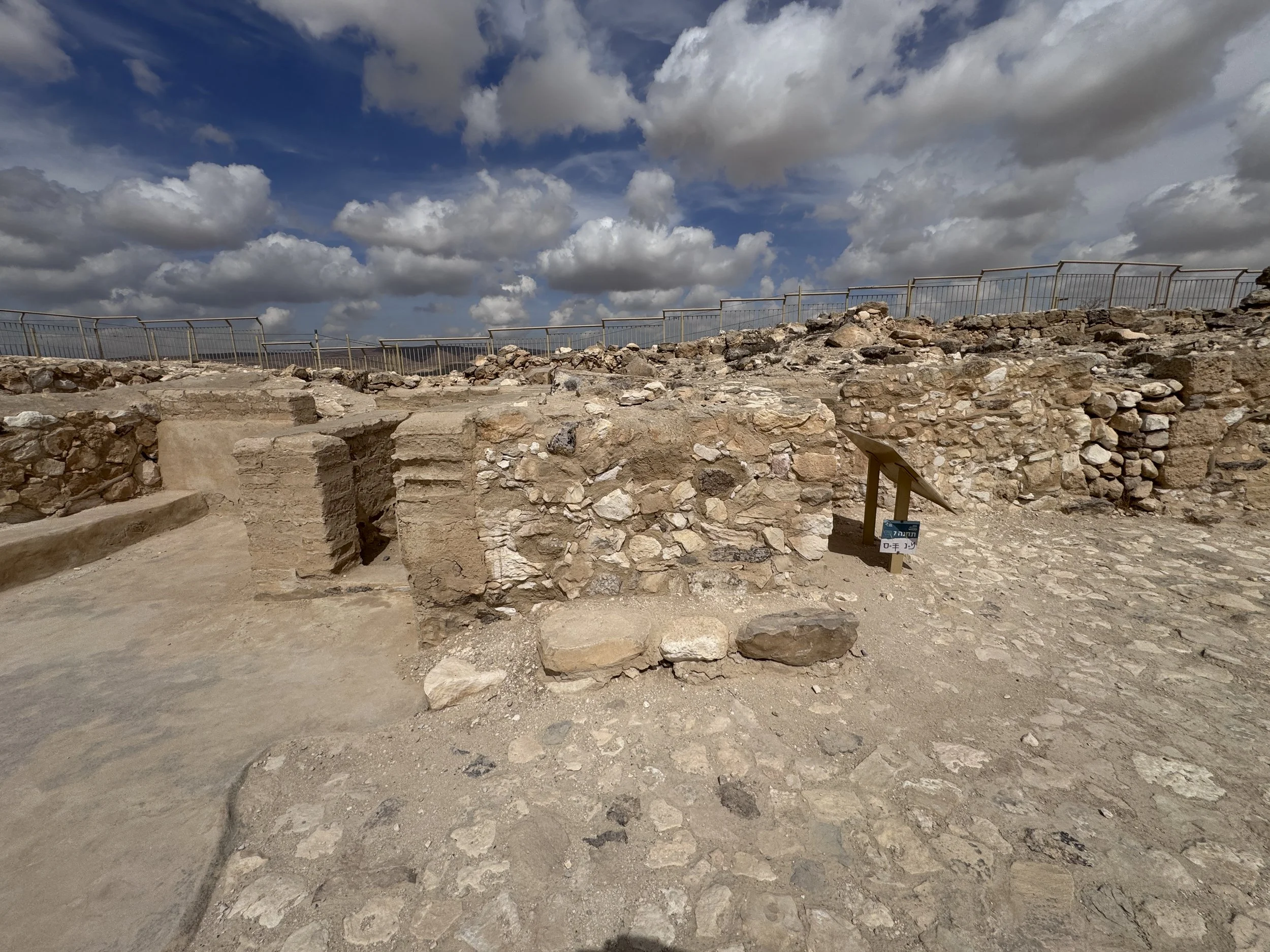
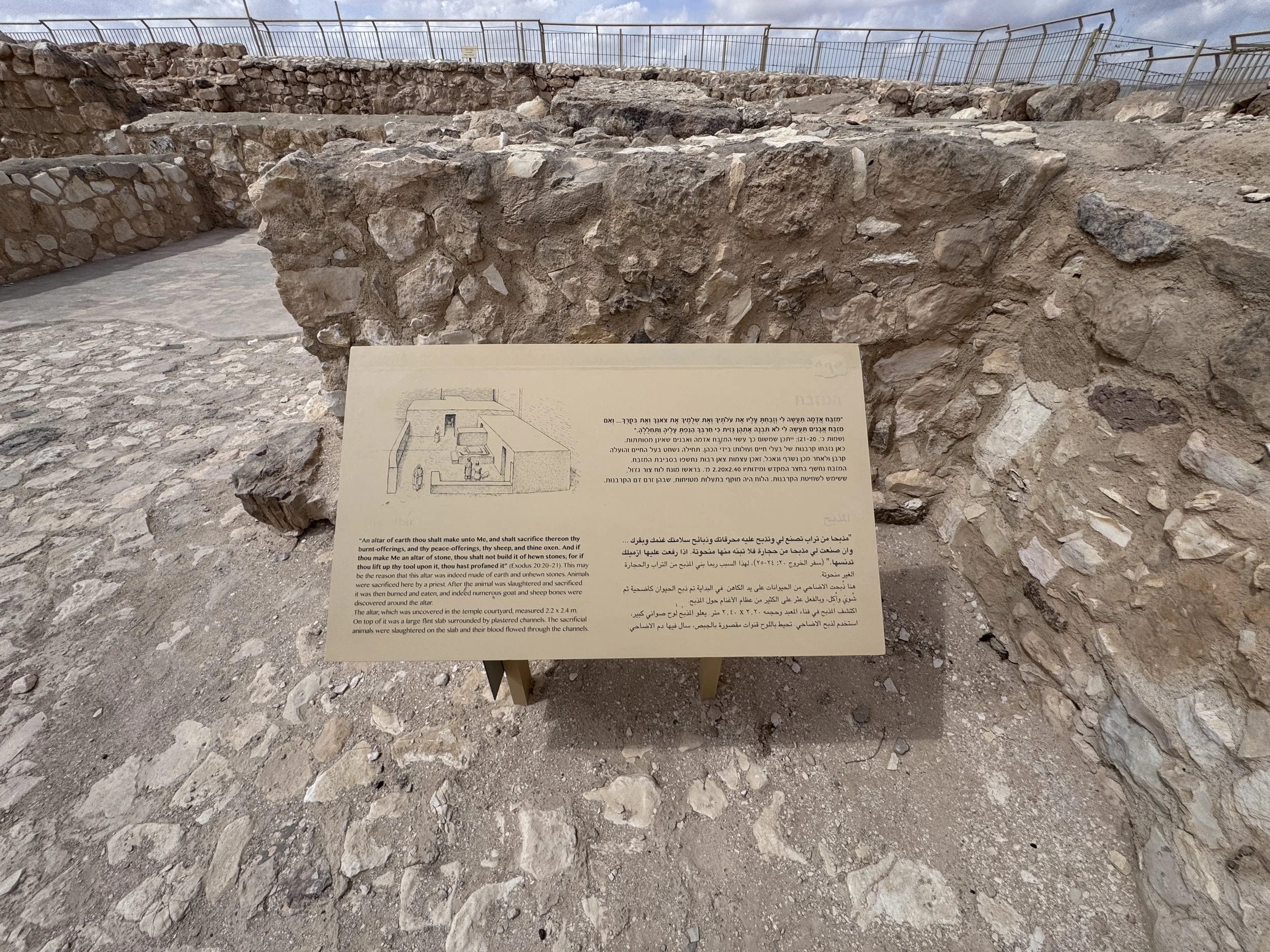
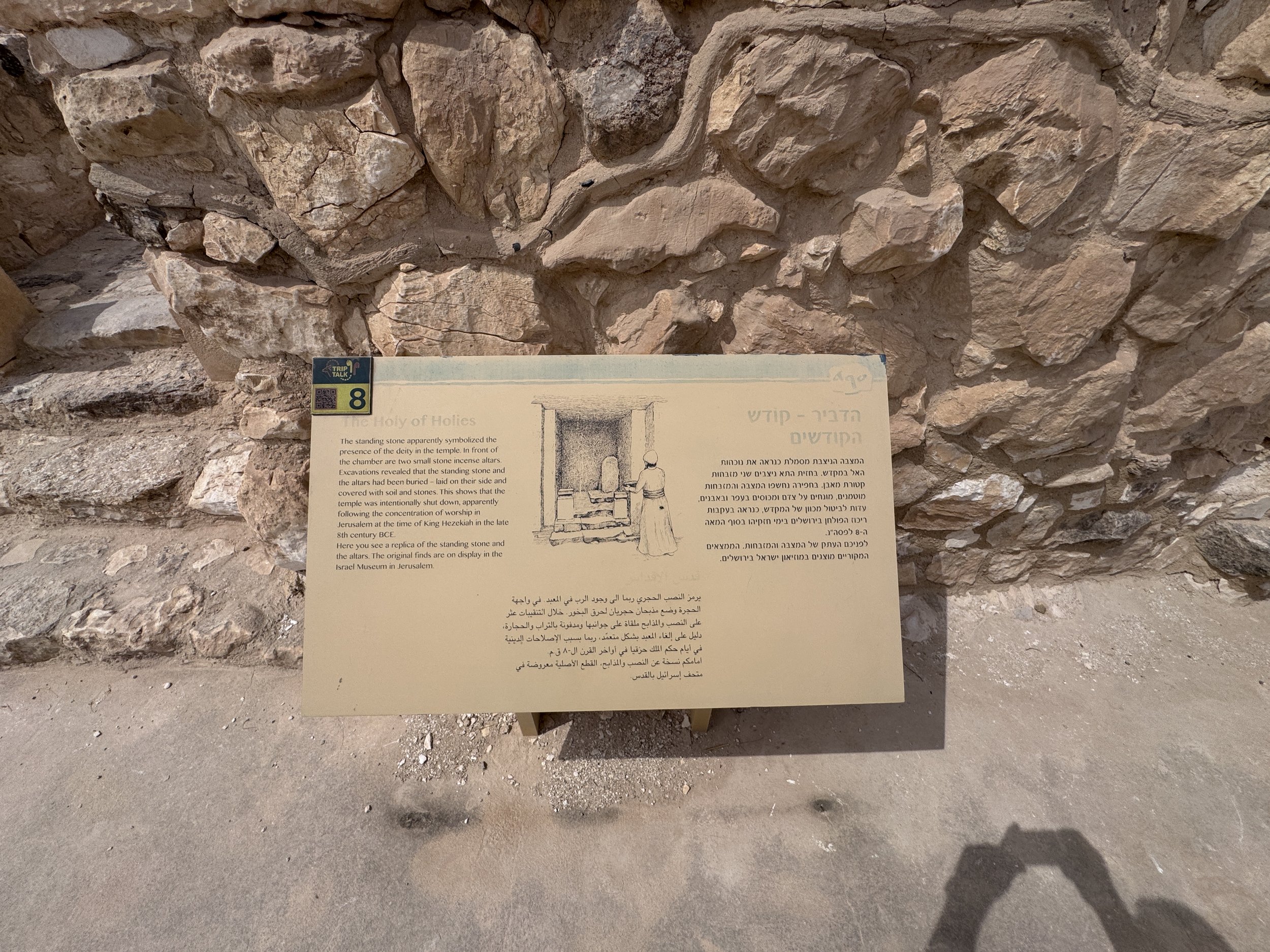
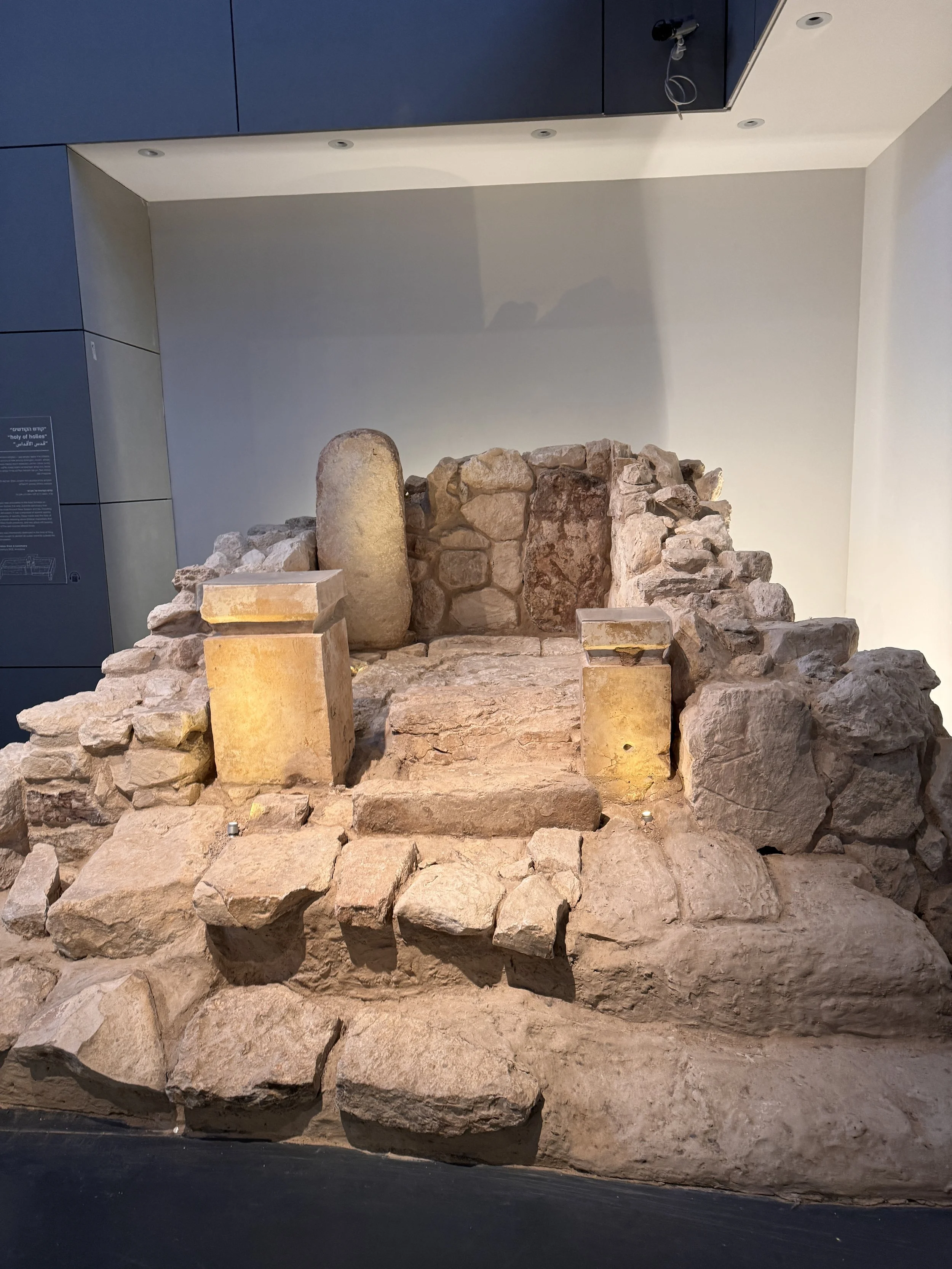
The fortress has a temple area mirroring the tabernacle. Standing stones were found lying down and covered in the holy of Holies with incense altars that had cannabis and frankincense residue. Archeologists believe the temple area was decommissioned and deliberately buried either during the reforms of king Hezekiah or as protection from the invasion of Sennacherib of Assyria in 700 BC. It is certain that the temple was deliberately “decommissioned”, but reasons are conjecture. The original incense altars and standing stones are now in the Israel museum with replicas left at the archeological site.
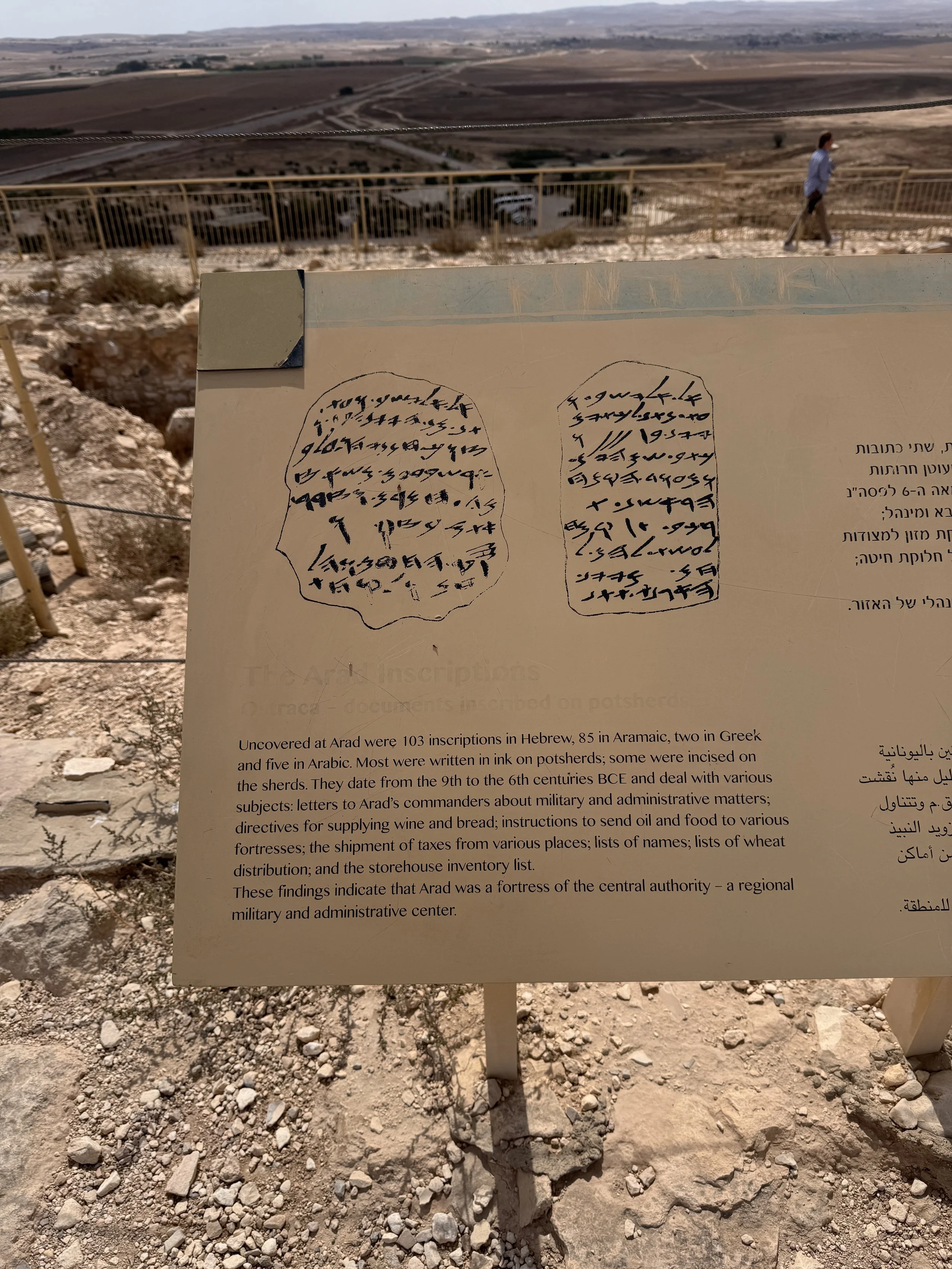
More than 100 ostraca (ink on potsherds) were found here from the 9th to 6th c BC making this the largest 1st temple era collection in Israel. The inscriptions were supply lists, administrative letters, military letters and show that Arad was an important military center.
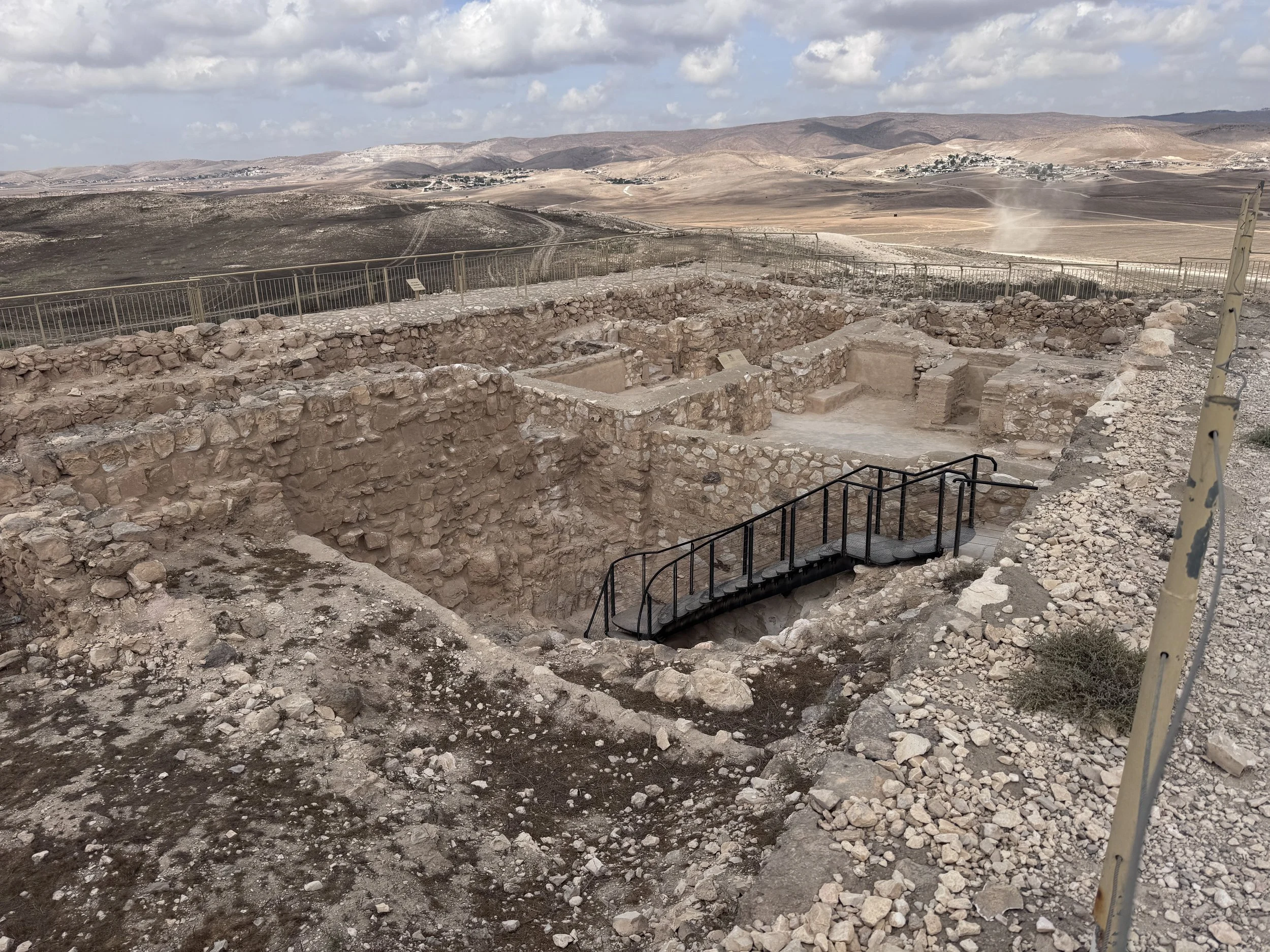
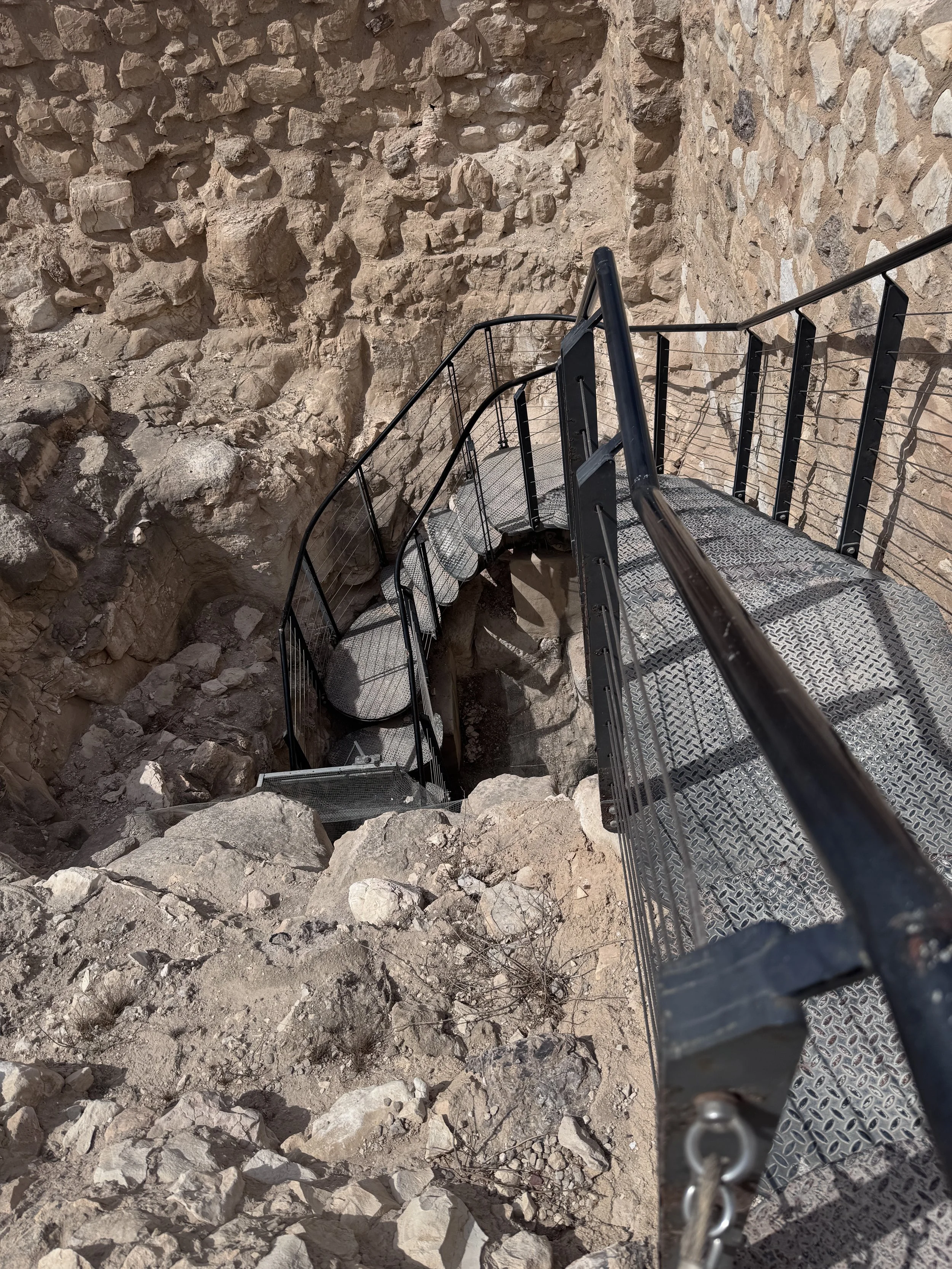
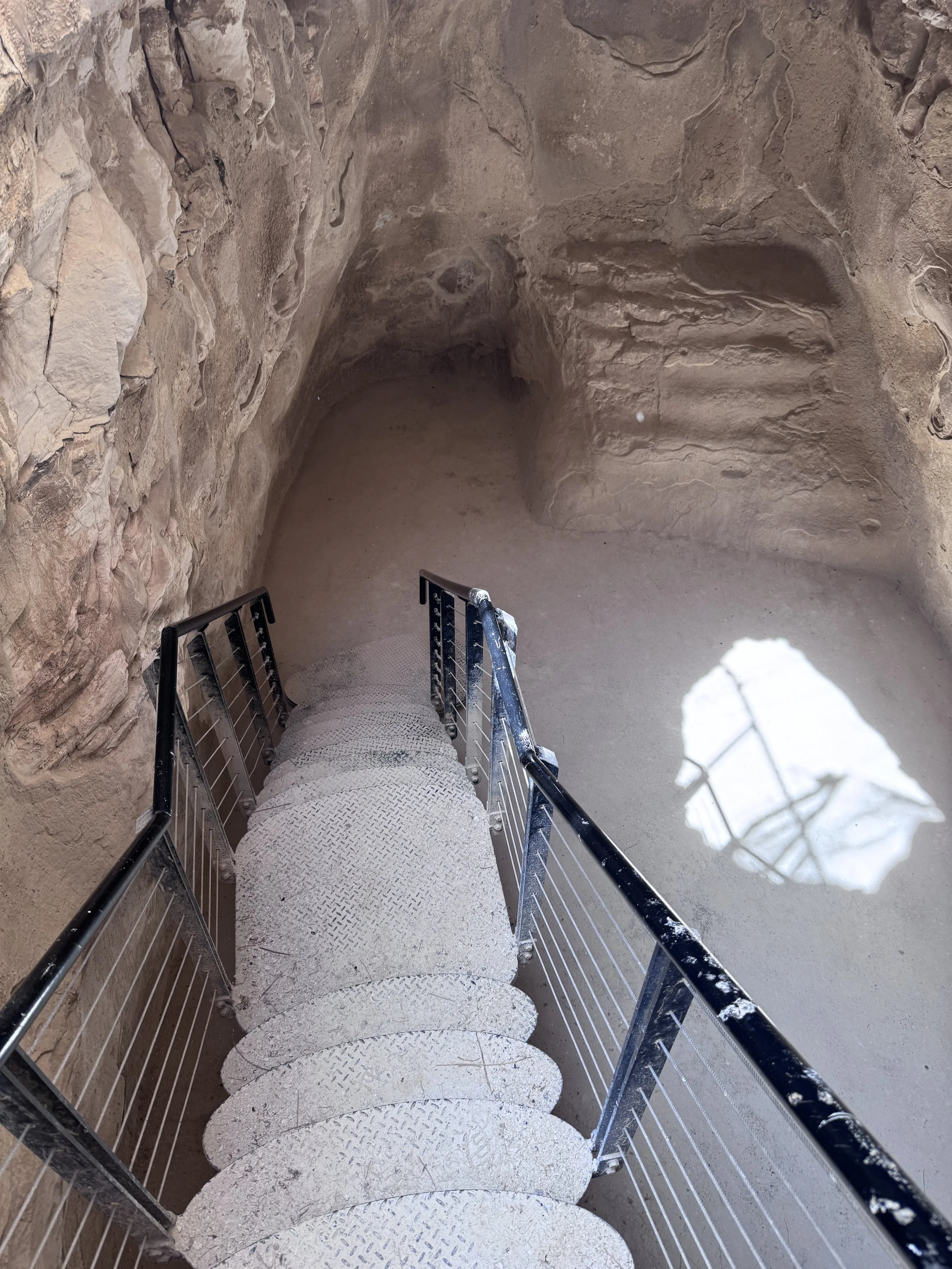
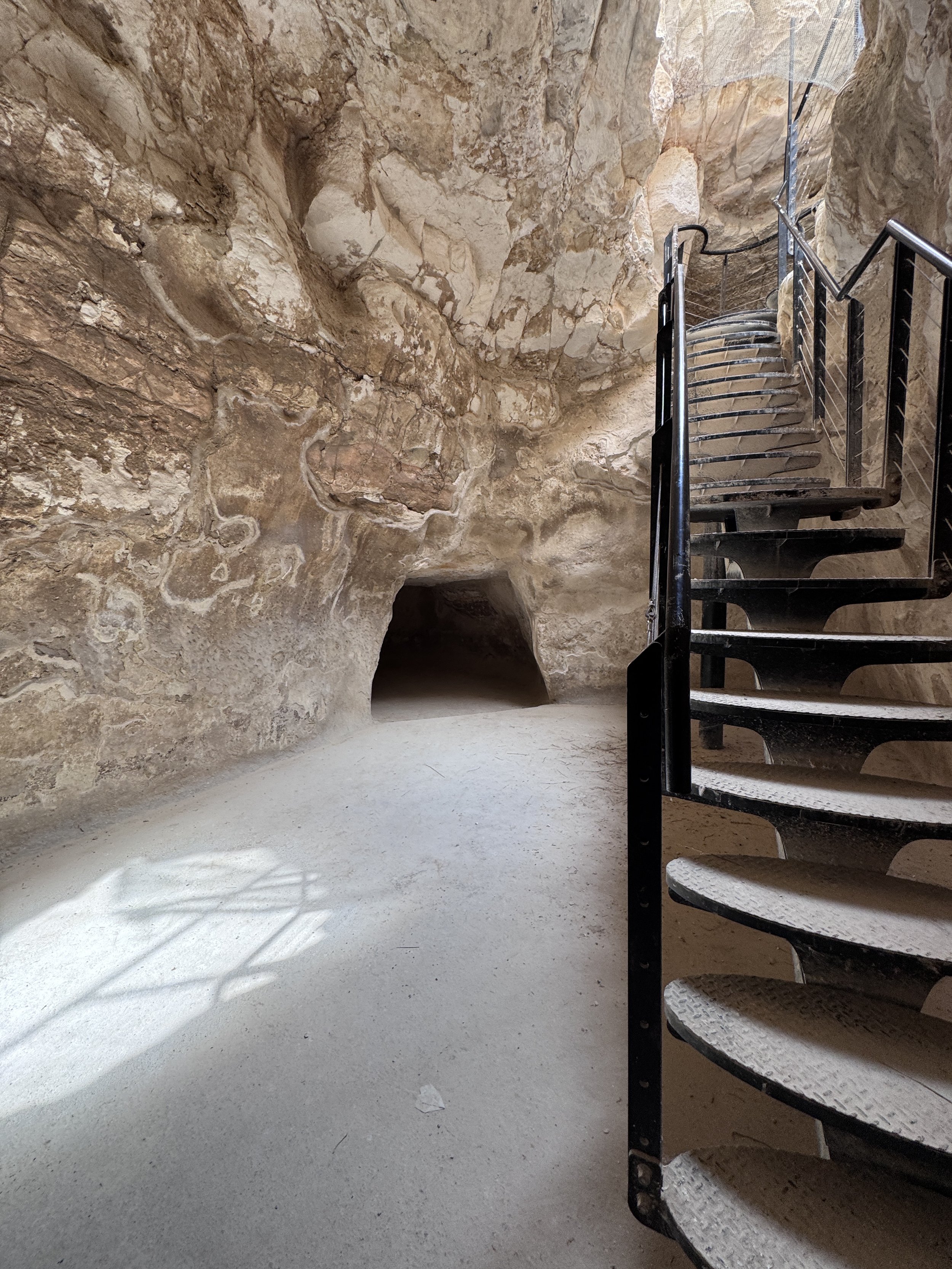
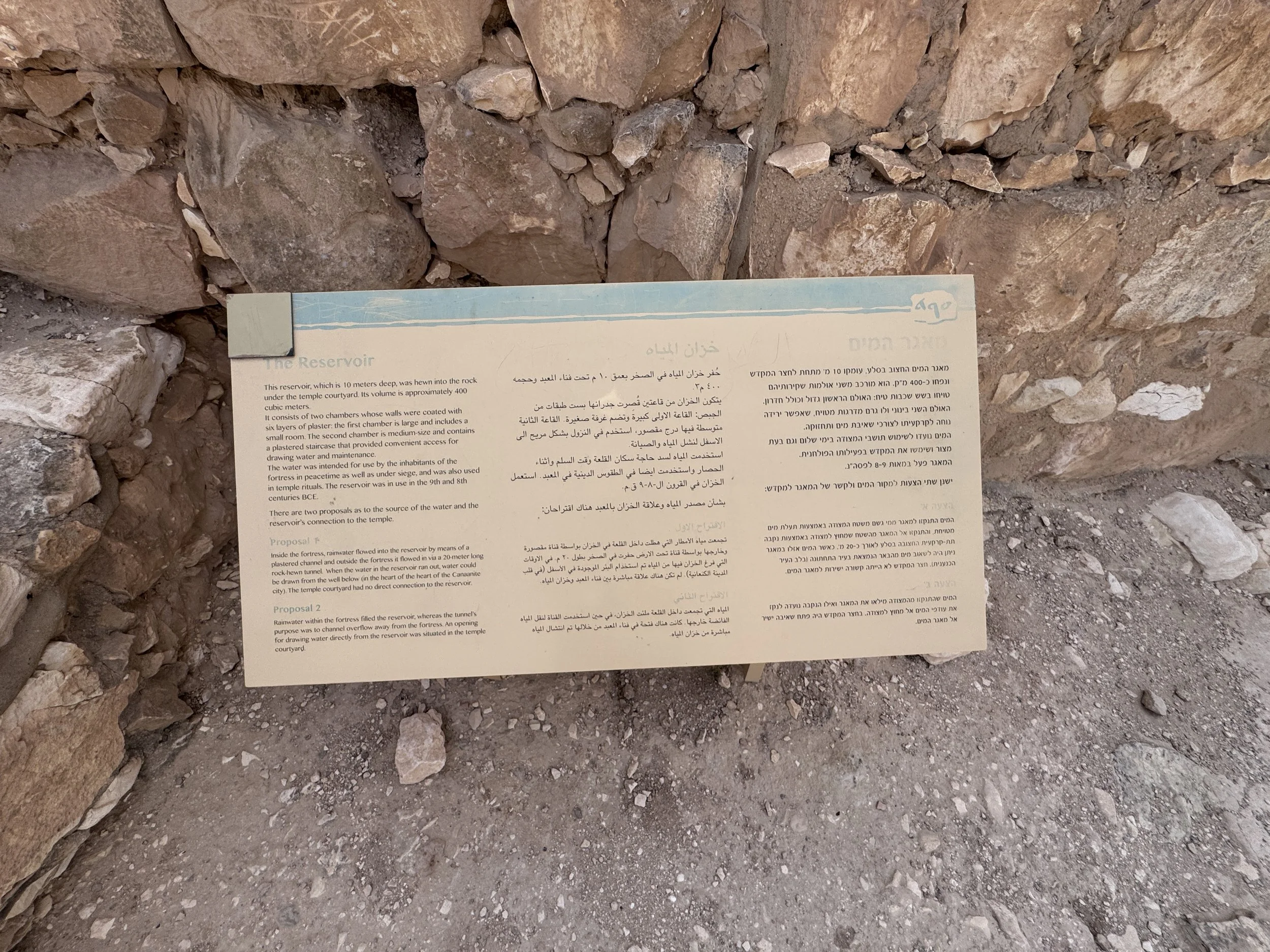
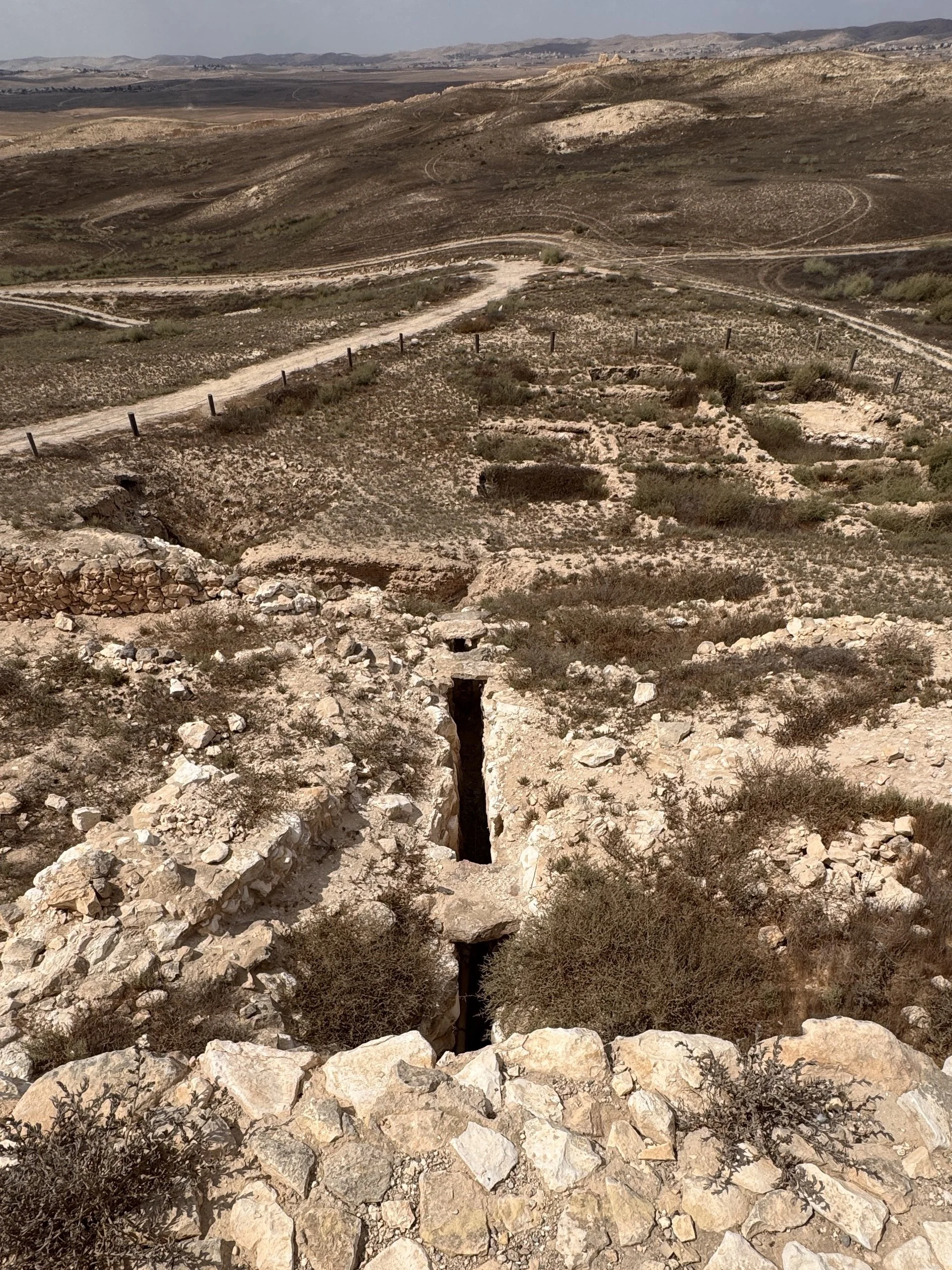
One amazing feature of the fortress is its cistern. We were able to walk to the bottom and see the plastered walls and the incredible engineering that went into the water system. There is a channel that leads out from the fortress toward the massive cistern in the even more ancient Bronze Age ruins below. How it all actually worked isn’t completely understood.
Wonderful place to visit in the northern Negev to get a feel for how Judah protected itself and took advantage of trade routes passing through the promised land!
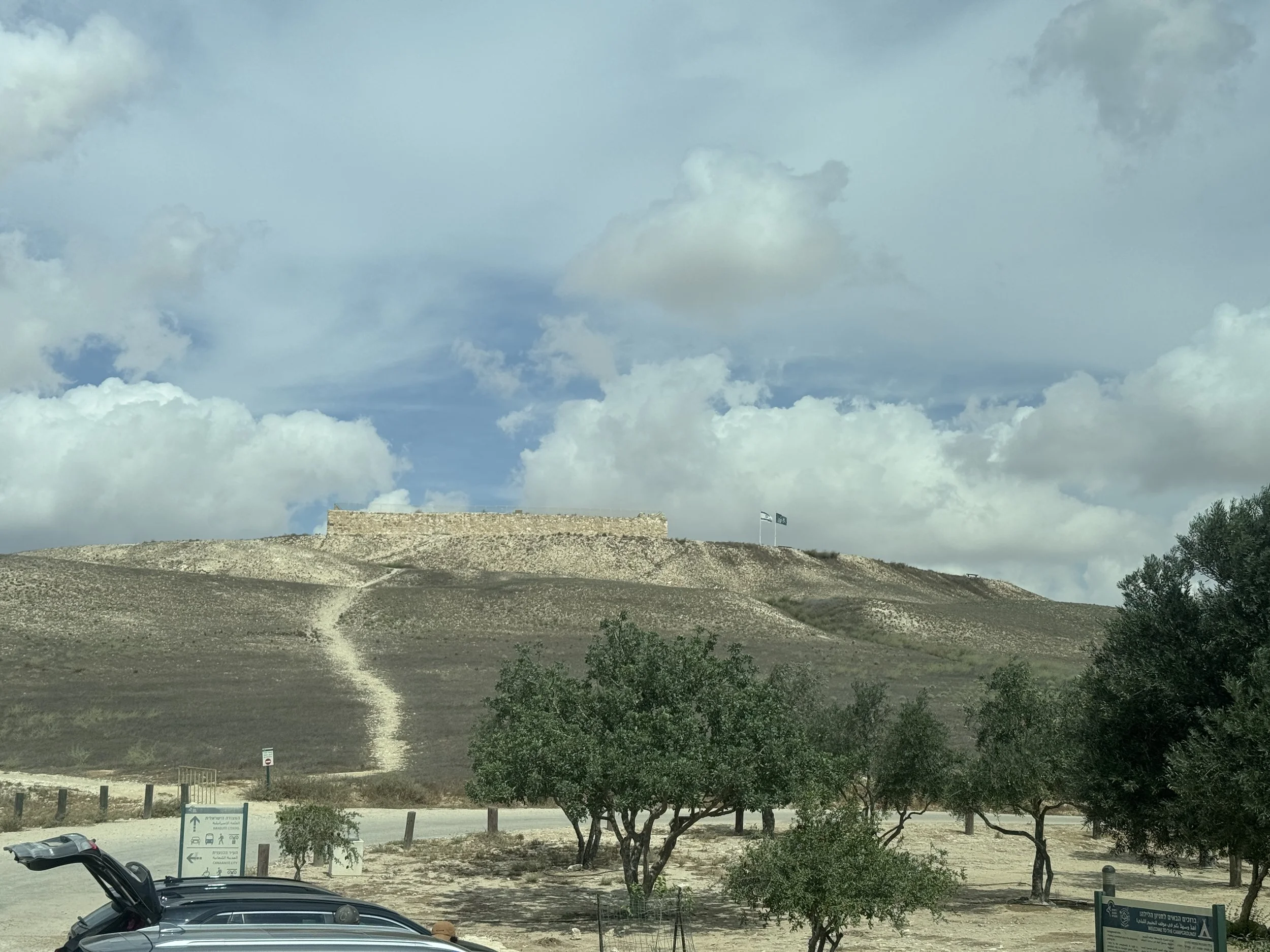
Tell Arad in the northeastern Negev of Israel
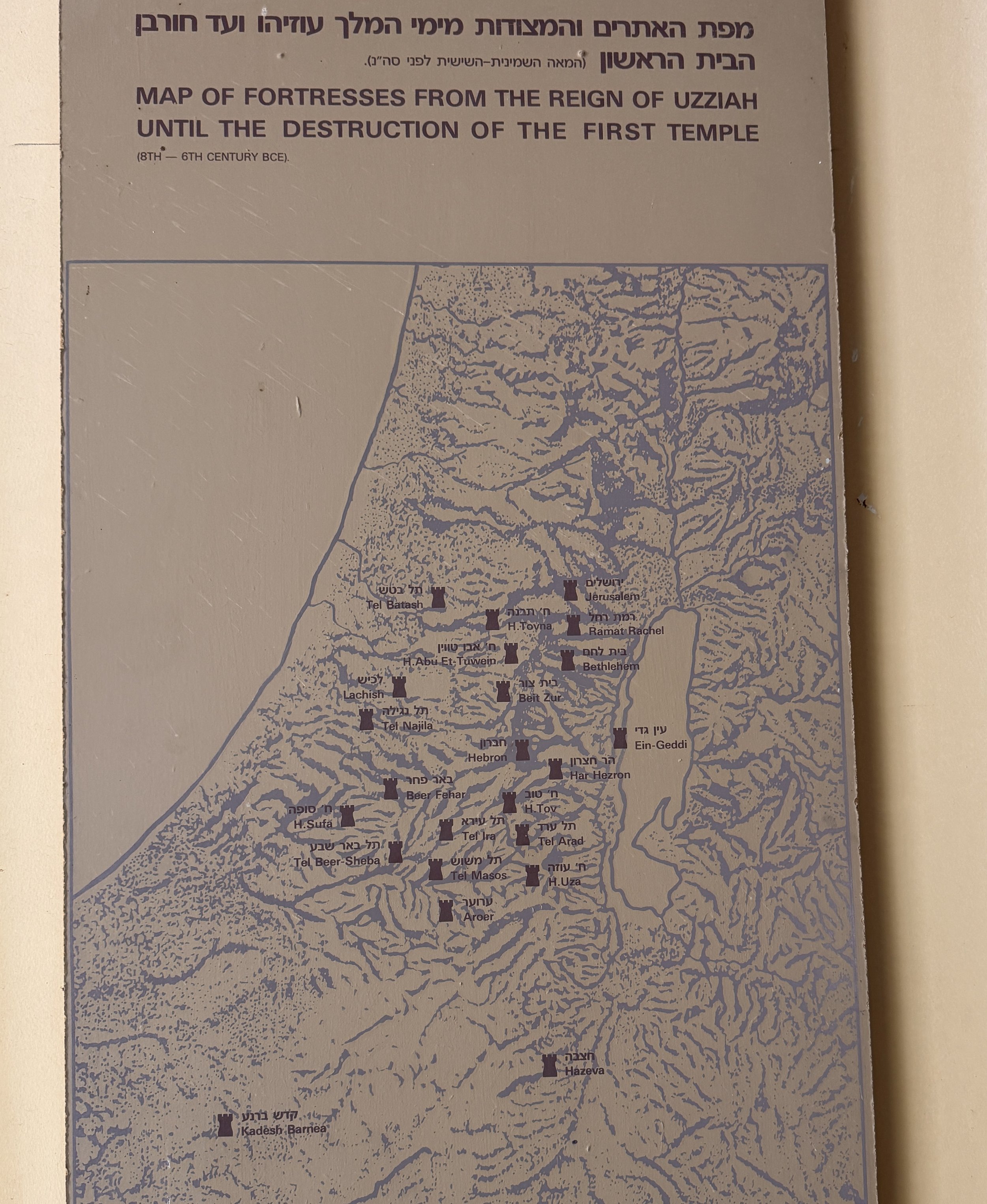
May of the fortresses of Judea