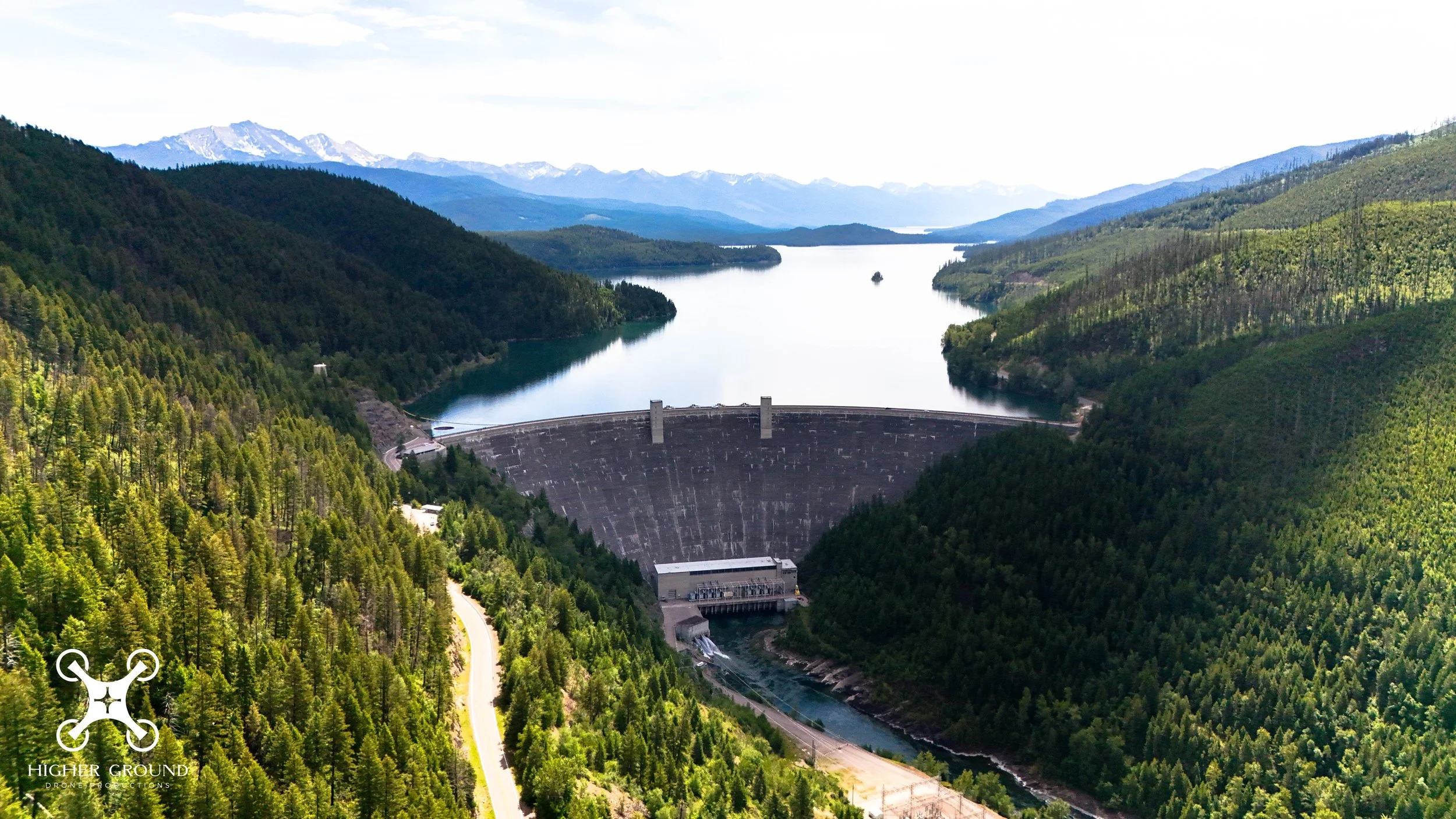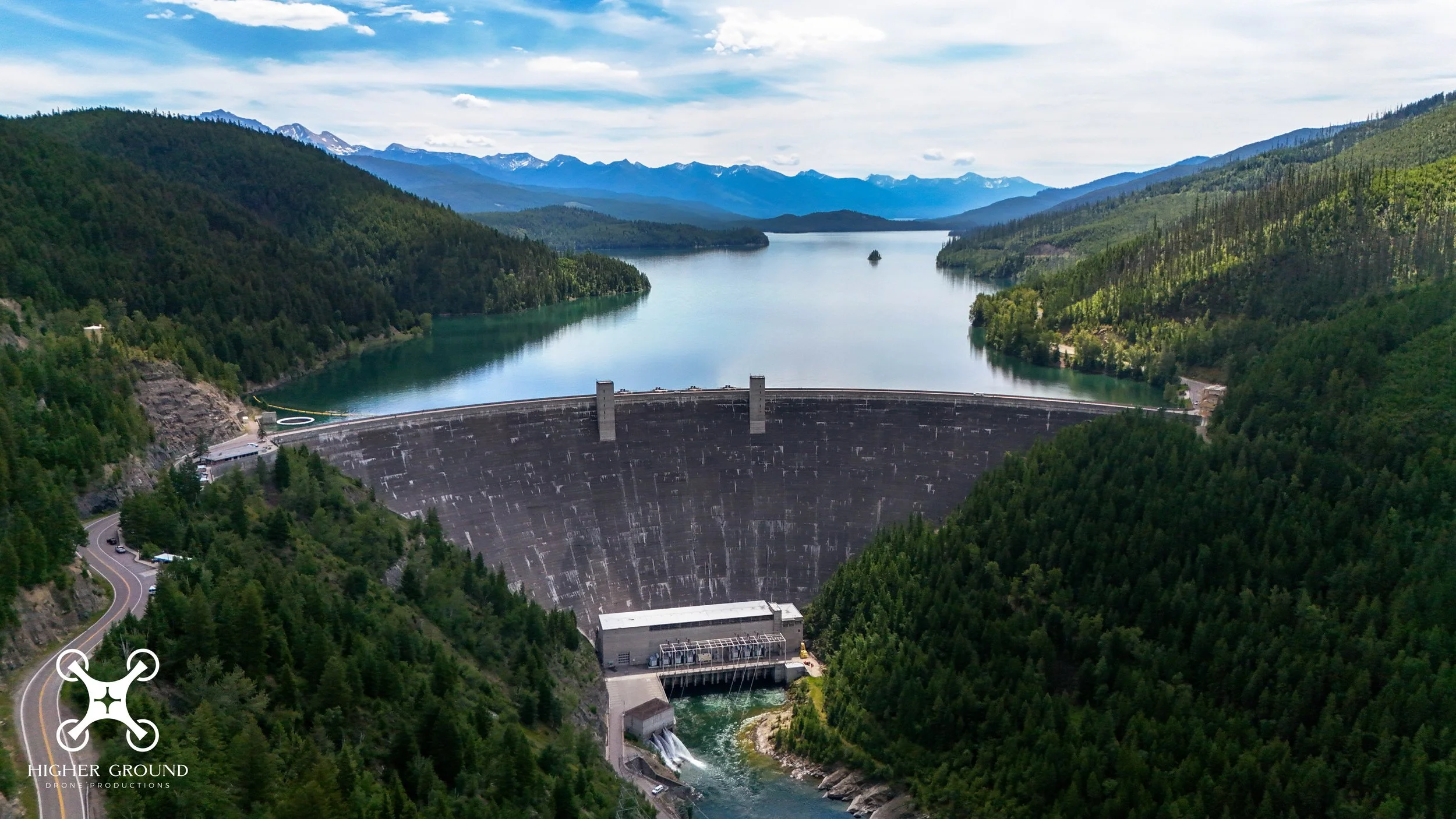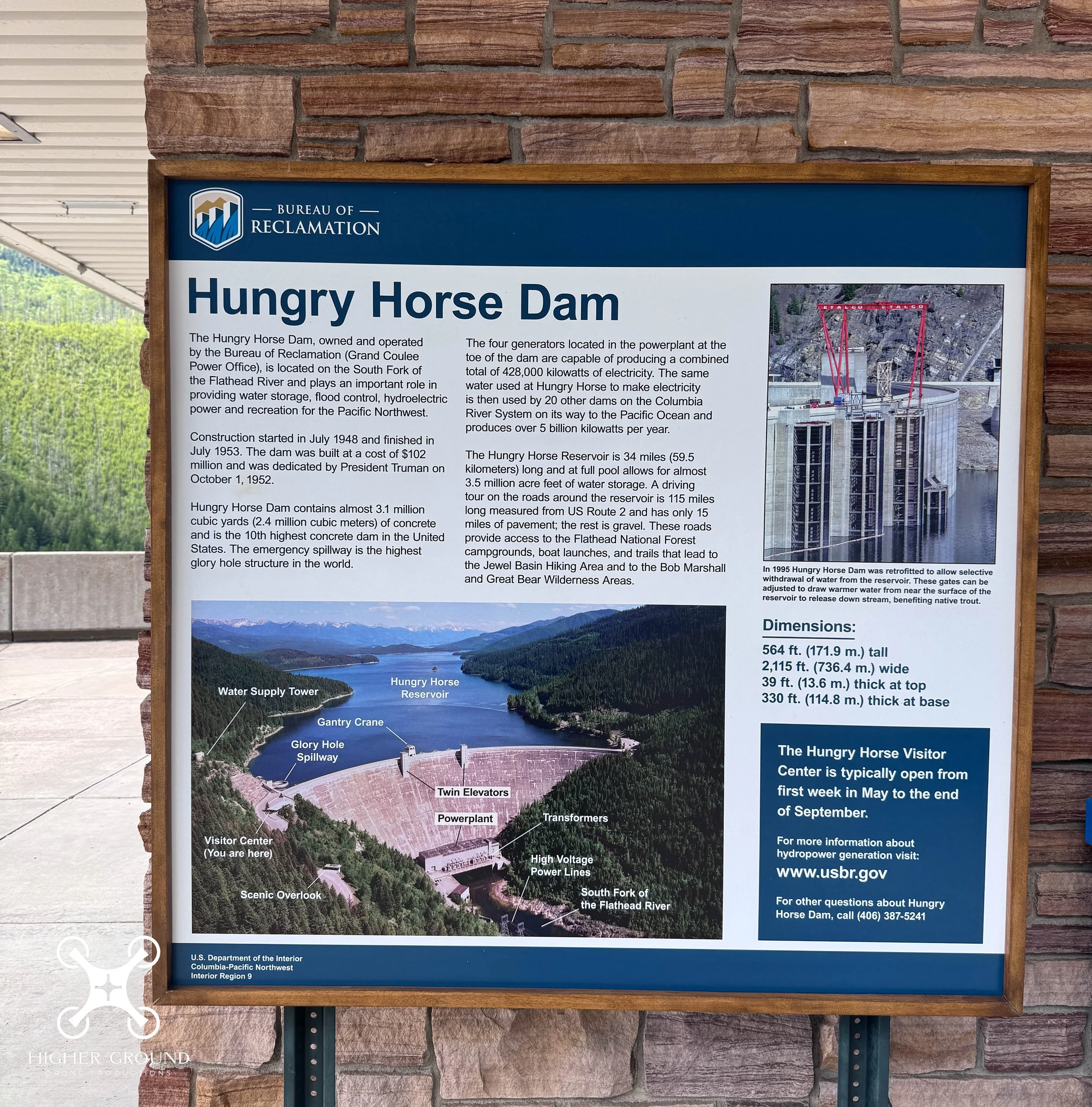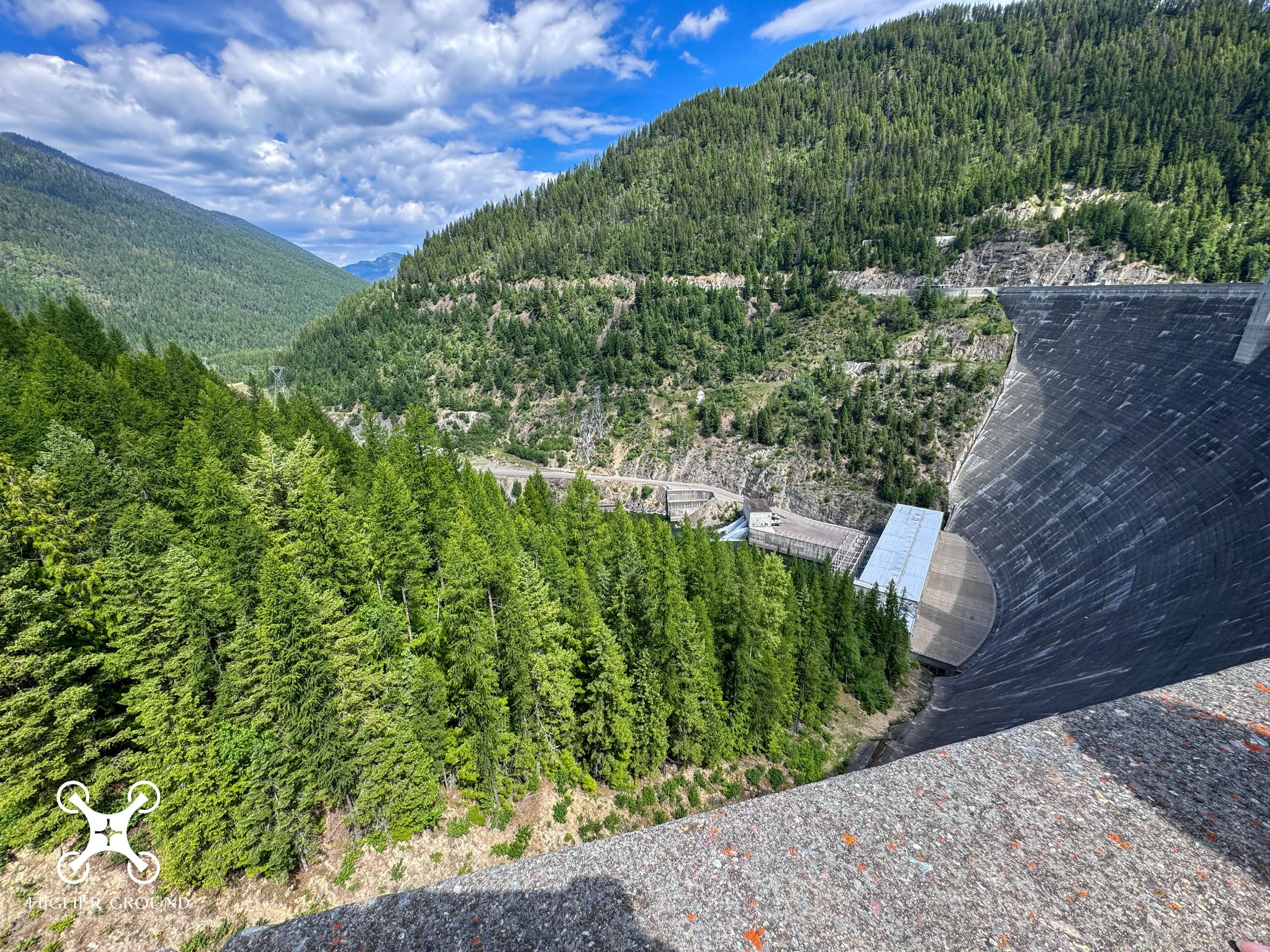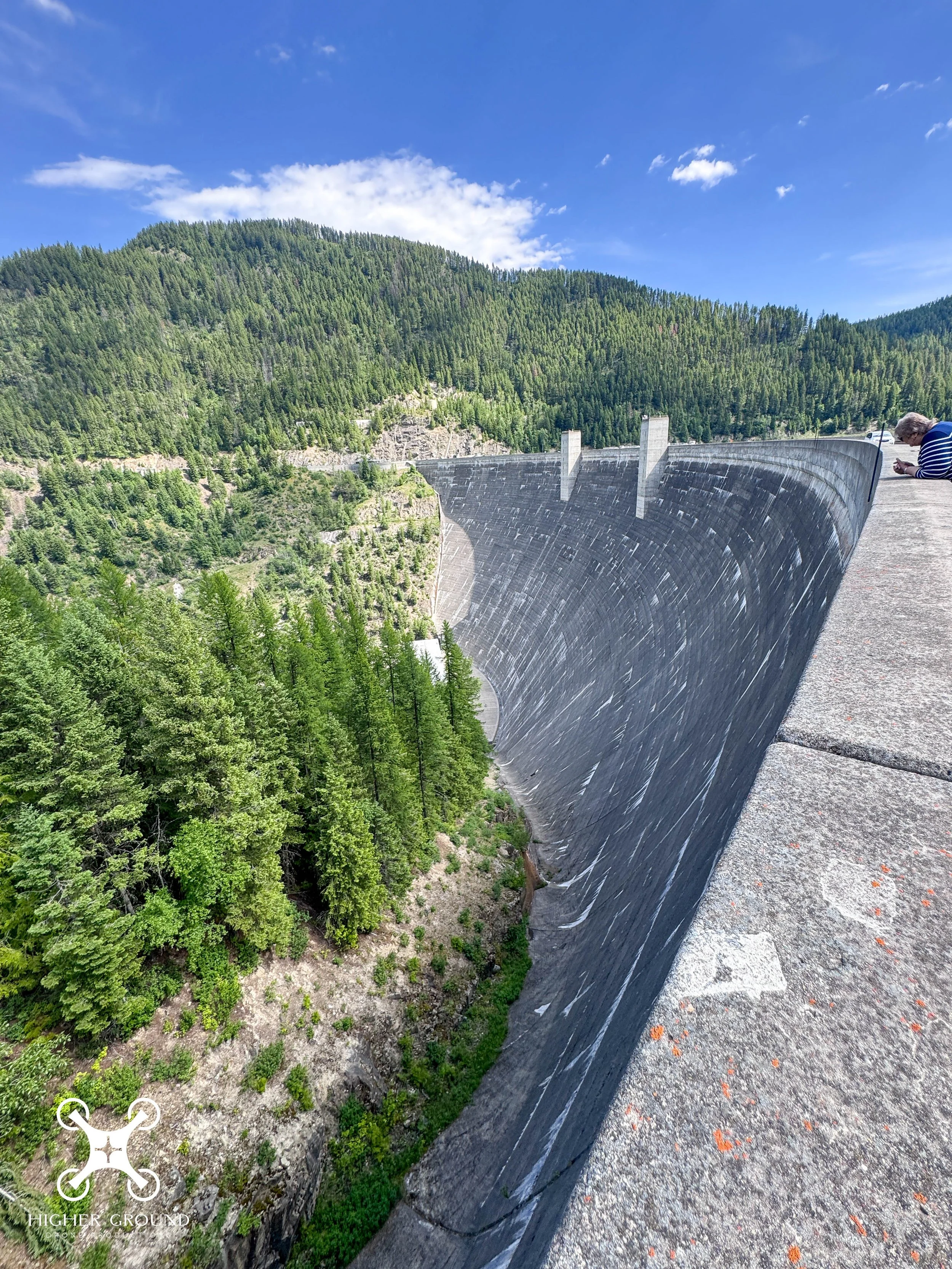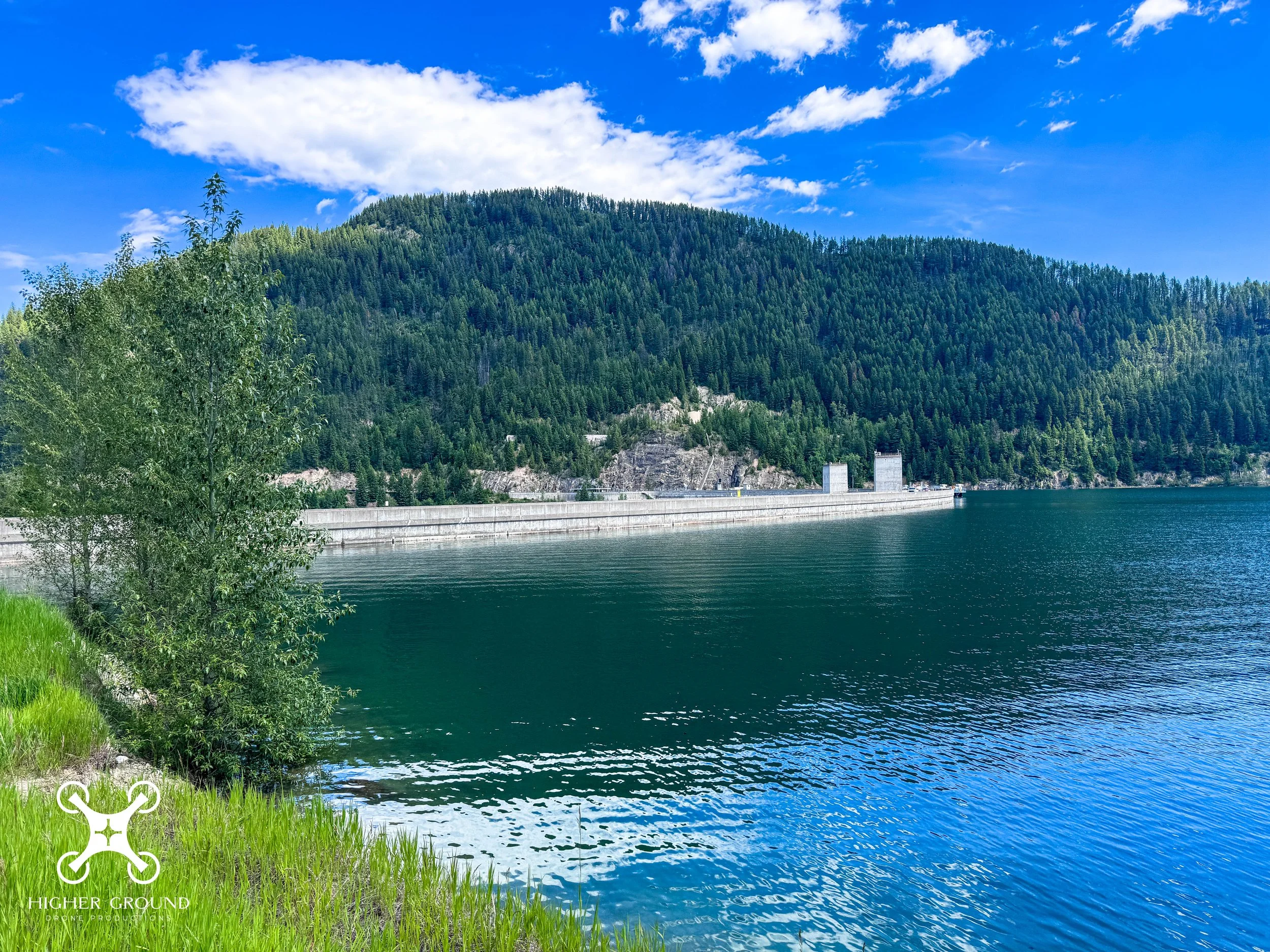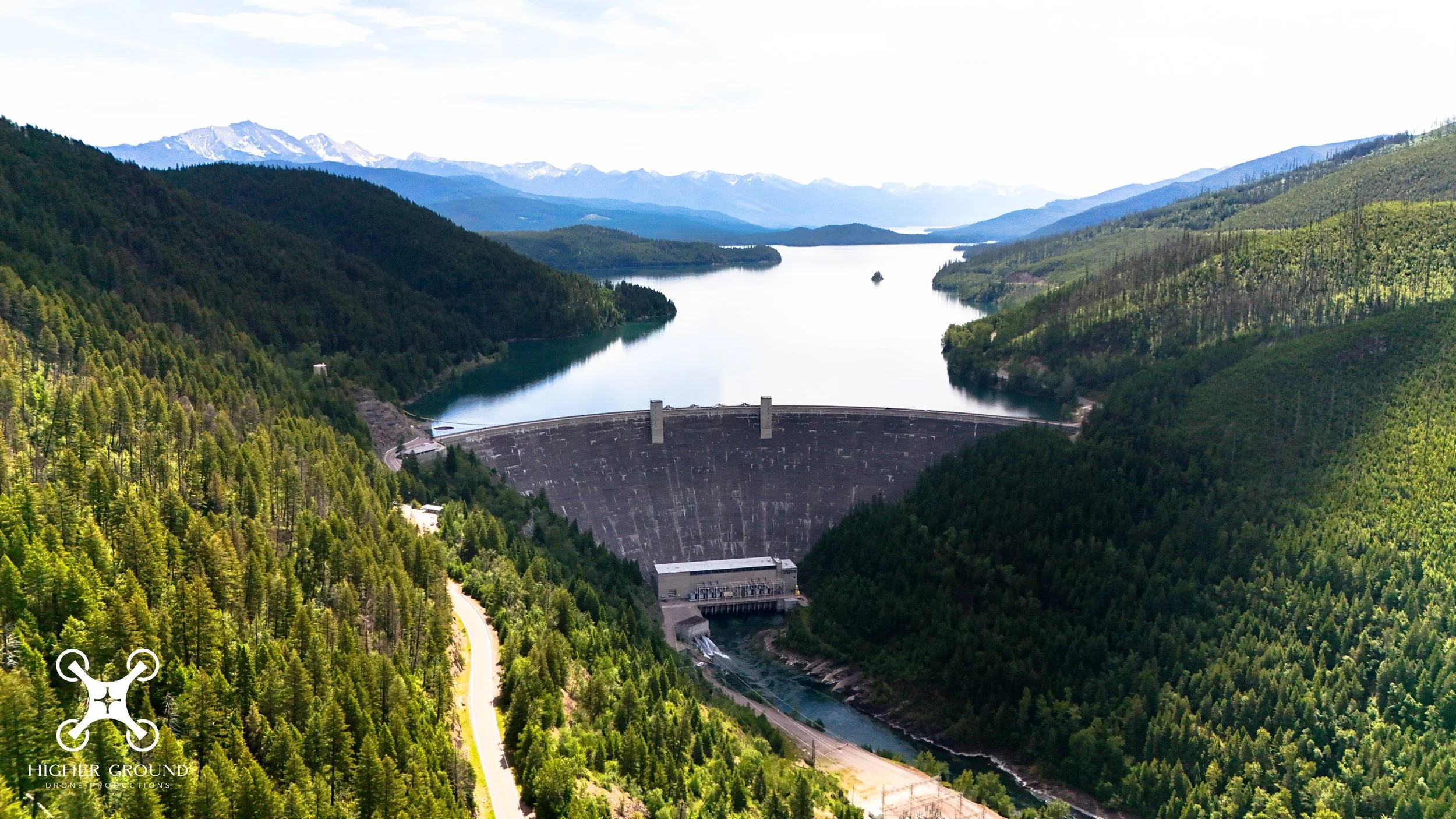
Hungry Horse Dam is a concrete arch dam standing 564 feet high on the South Fork of the Flathead River in Flathead County, Montana, completed between 1948 and 1953 by the Bureau of Reclamation.
Height & Length: 564 feet tall and 2,100 to 2,115 feet along the crest.
Spillway: Features a "morning-glory" concrete ring spillway with a 490-foot drop, which is the highest of its kind in the world.
Reservoir: Creates the 34-mile-long Hungry Horse Reservoir, covering 22,500 acres.
Purposes: Provides hydroelectric power, flood risk management, and seasonal flow augmentation for fish habitats.
The engineering and construction of the Hungry Horse Dam (1948–1953) stands as a monument to post-WWII American civil engineering. Constructed by the U.S. Bureau of Reclamation at a cost of roughly $108 million, it was at the time of its completion the third-highest and fourth-largest concrete dam in the world. The construction and engineering history is marked by groundbreaking concrete innovations, intense environmental challenges, and aggressive land-clearing techniques
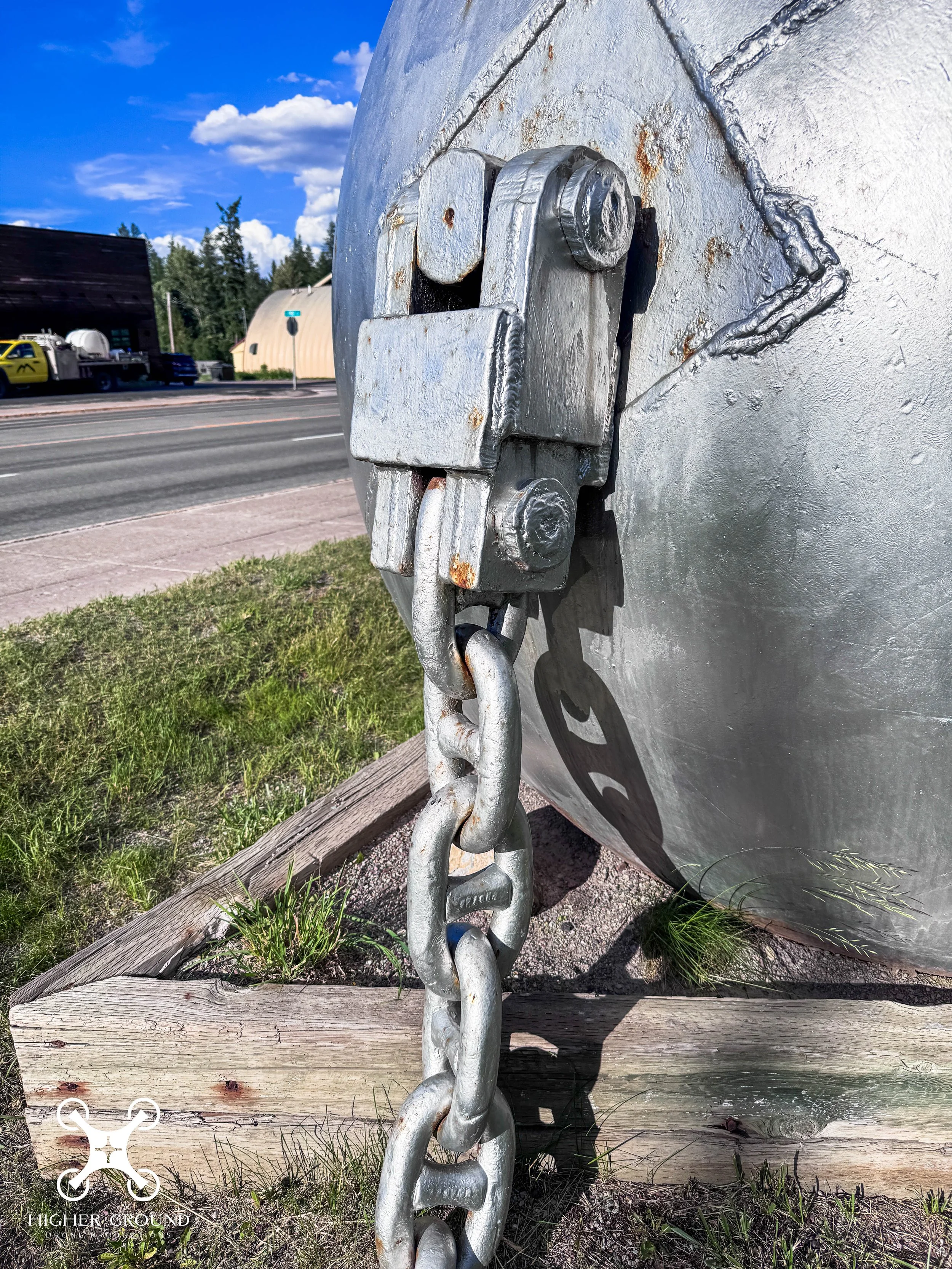
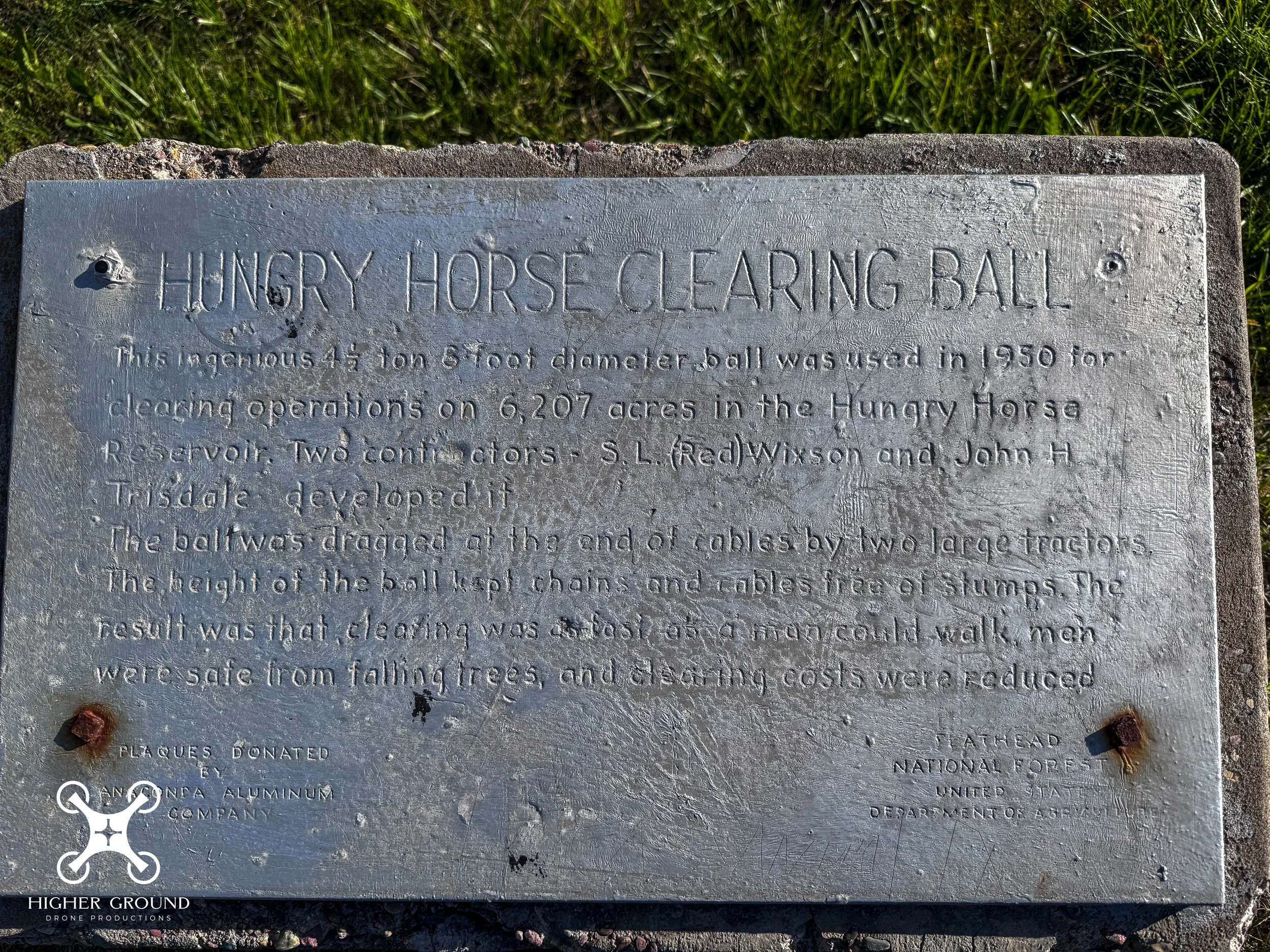
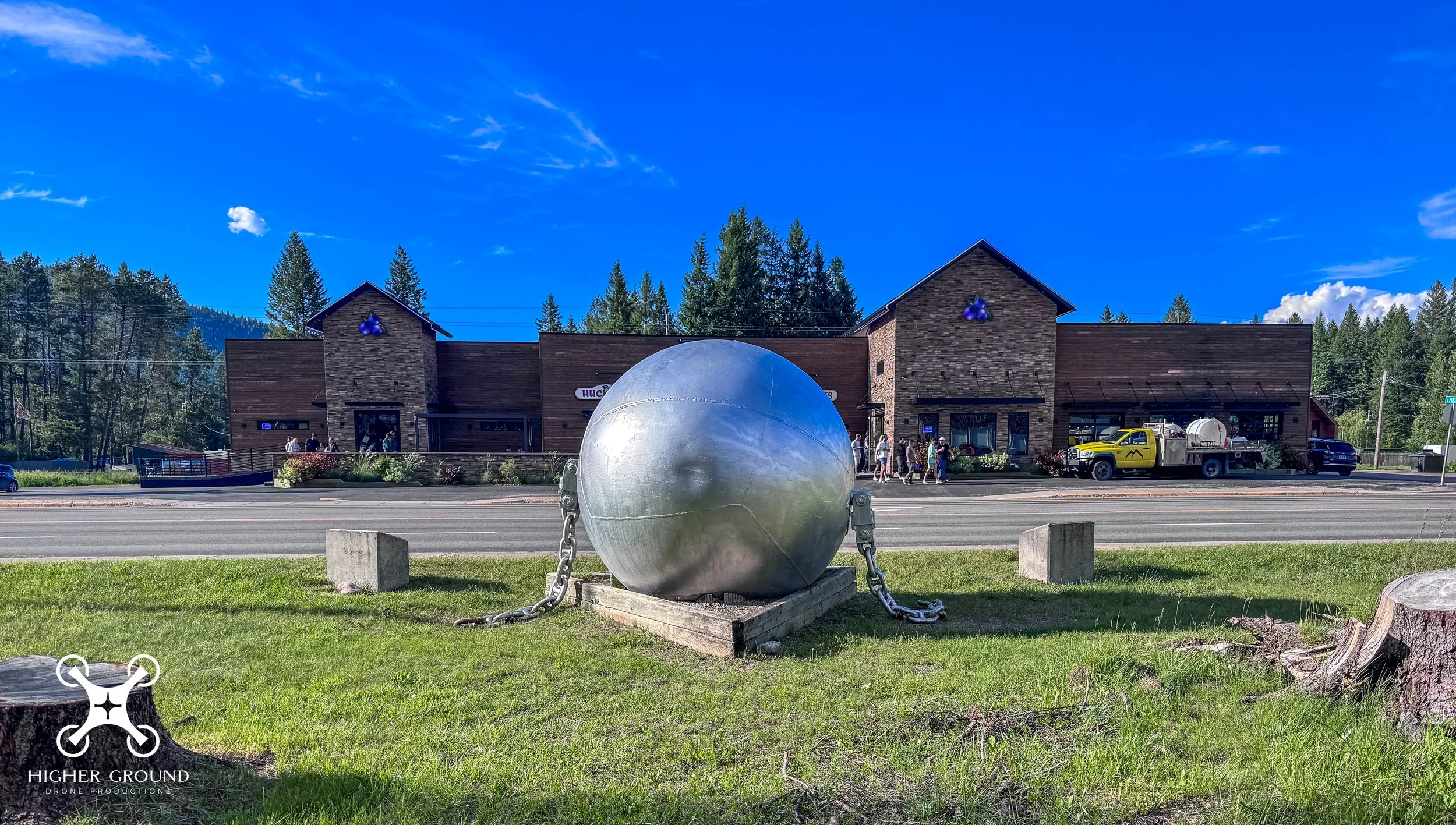
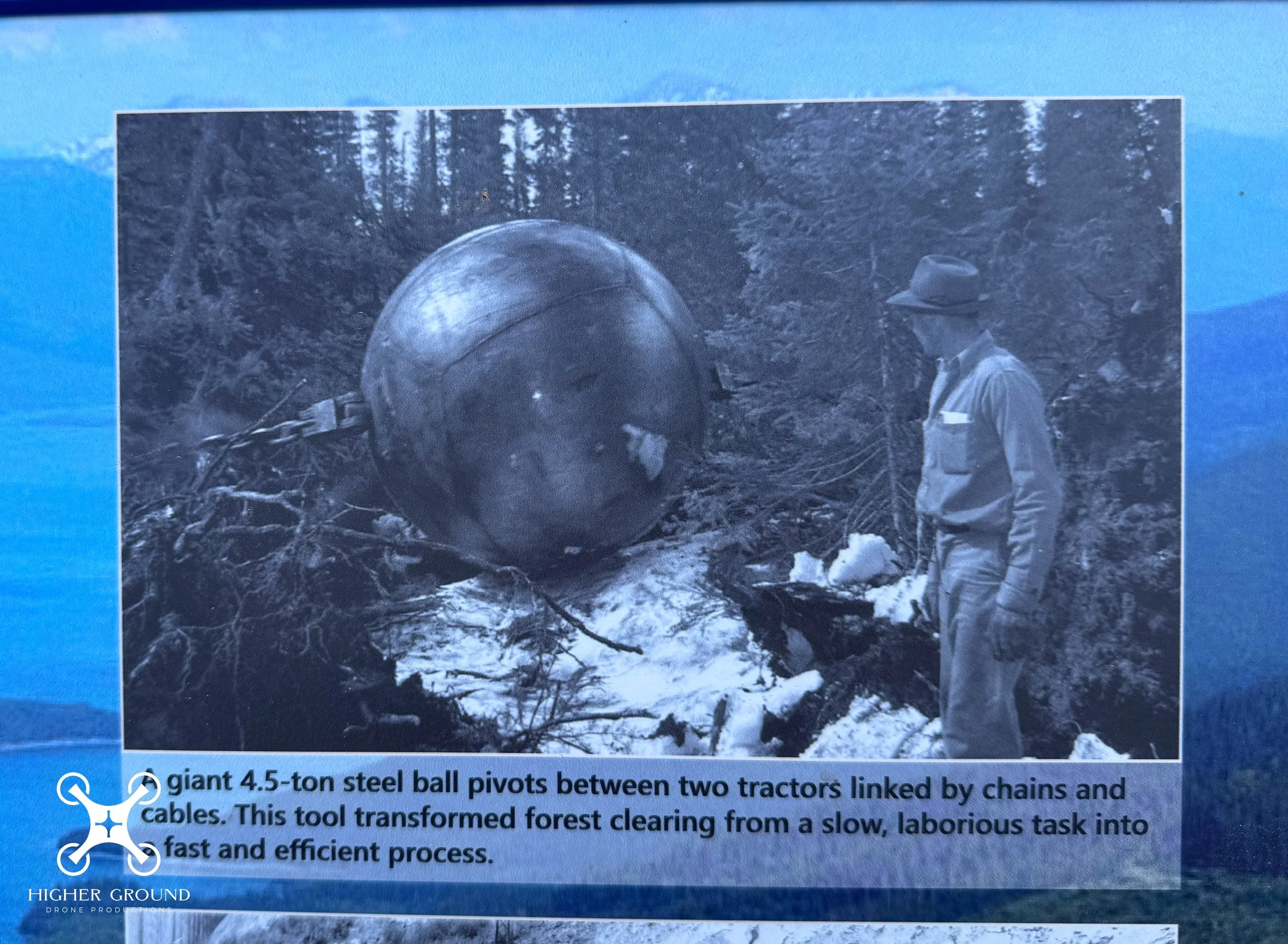
Clearing 20,000 acres of dense, rugged Montana forest to make way for the 34-mile reservoir was a logistical nightmare. To speed up the process, logging contractors invented a novel and aggressive method known as "Operation Highball": Pairs of heavy, modified bulldozers were tethered together using thick steel cables. Welded in the center of the cable was a 4.5-ton, 8-foot-diameter hollow steel ball. As the bulldozers drove parallel through the woods, the giant steel ball acted as an anchor, dragging the cable close to the ground and instantly snapping or uprooting entire swaths of heavy timber. A prototype of this clearing ball remains on display near the highway leading to the dam today.
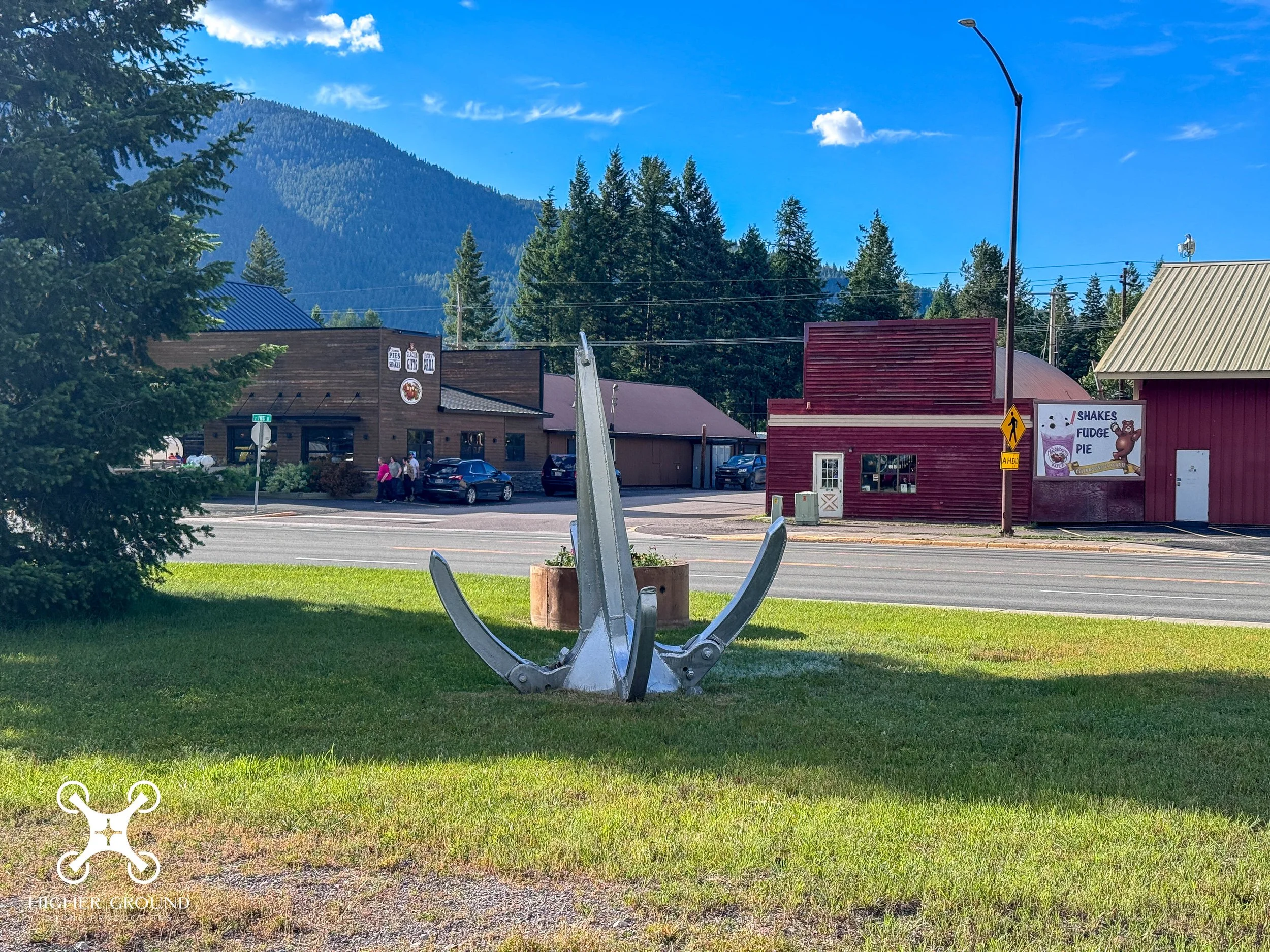
The big hook you see near the land-clearing ball is actually a gigantic, heavy-duty mechanical swivel. While it looks like a hook or a giant clasp, its engineering purpose was crucial to keeping the "Operation Highball" system from tearing itself apart. As the two bulldozers moved parallel through the dense forest, the 4.5-ton steel ball rolled and spun rapidly along the ground. Without a massive swivel hook at the ends, the heavy 1-inch steel cables would quickly twist, knot, and snap under the immense pressure. The hook/swivel assembly connected the main cable wrapped around the ball to the winch lines of the tractors. It allowed the ball to rotate freely on its internal steel shaft and bearings as it smashed through trees, absorbing the brutal, erratic jerks of uprooting timber.
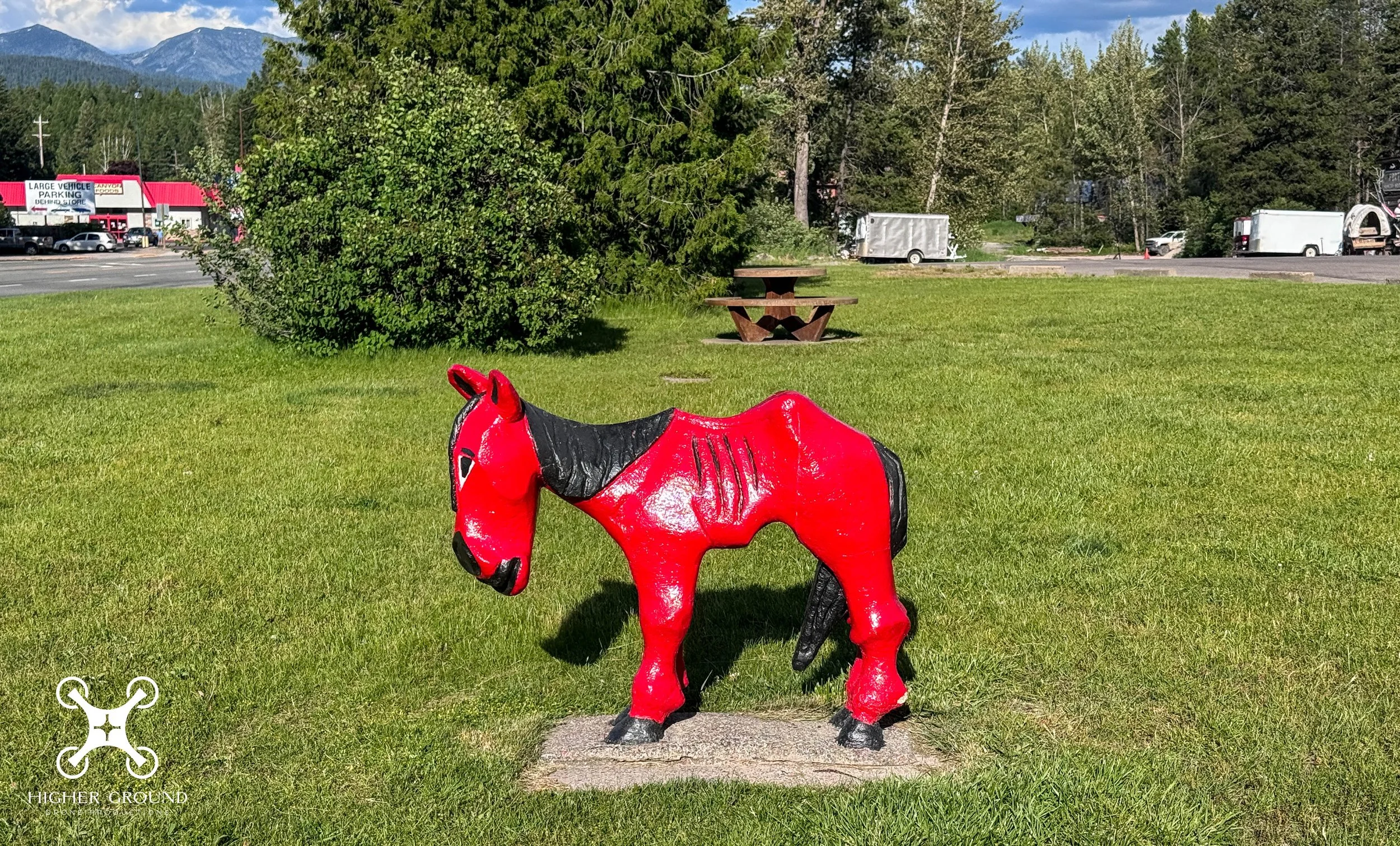
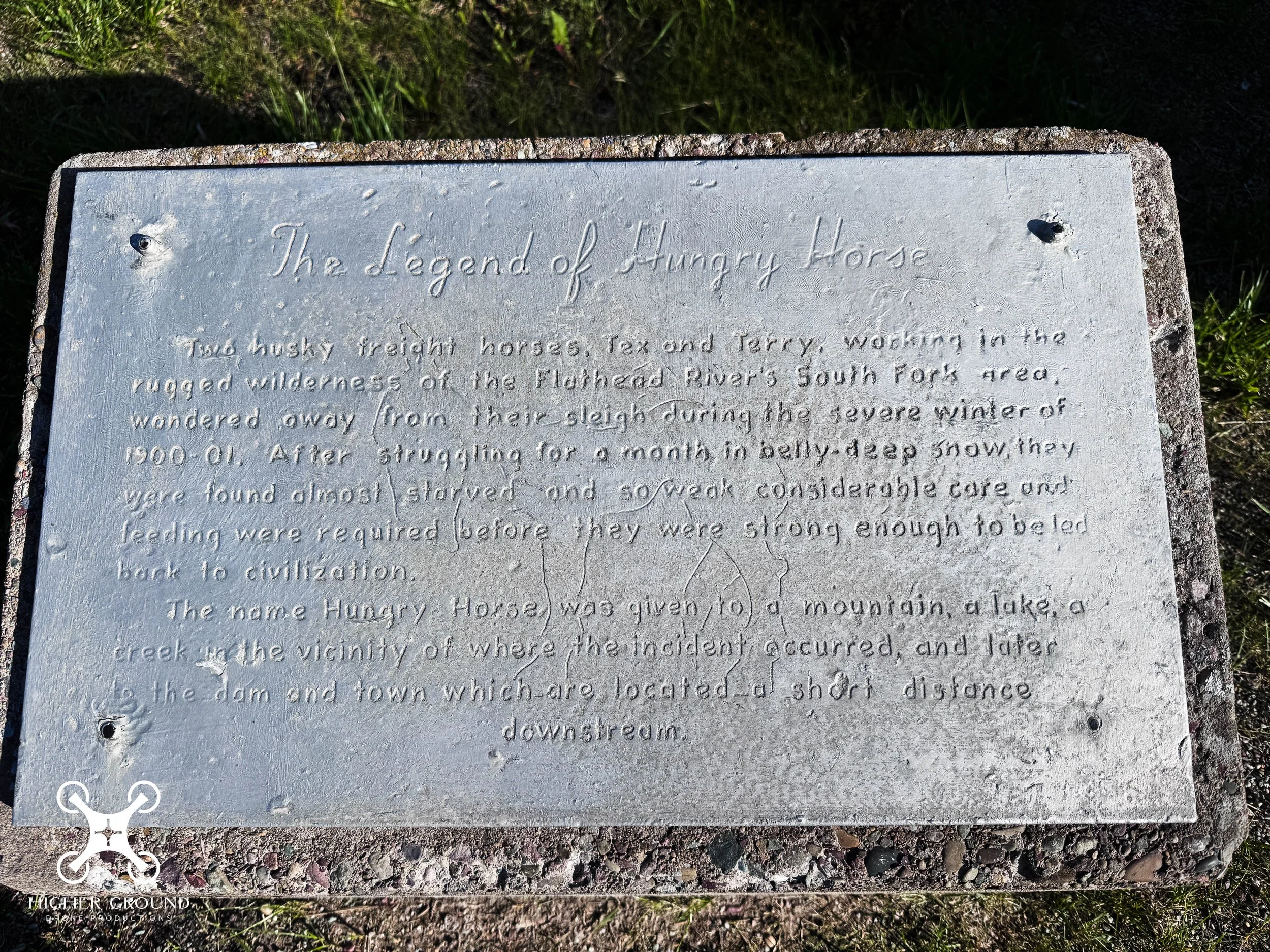
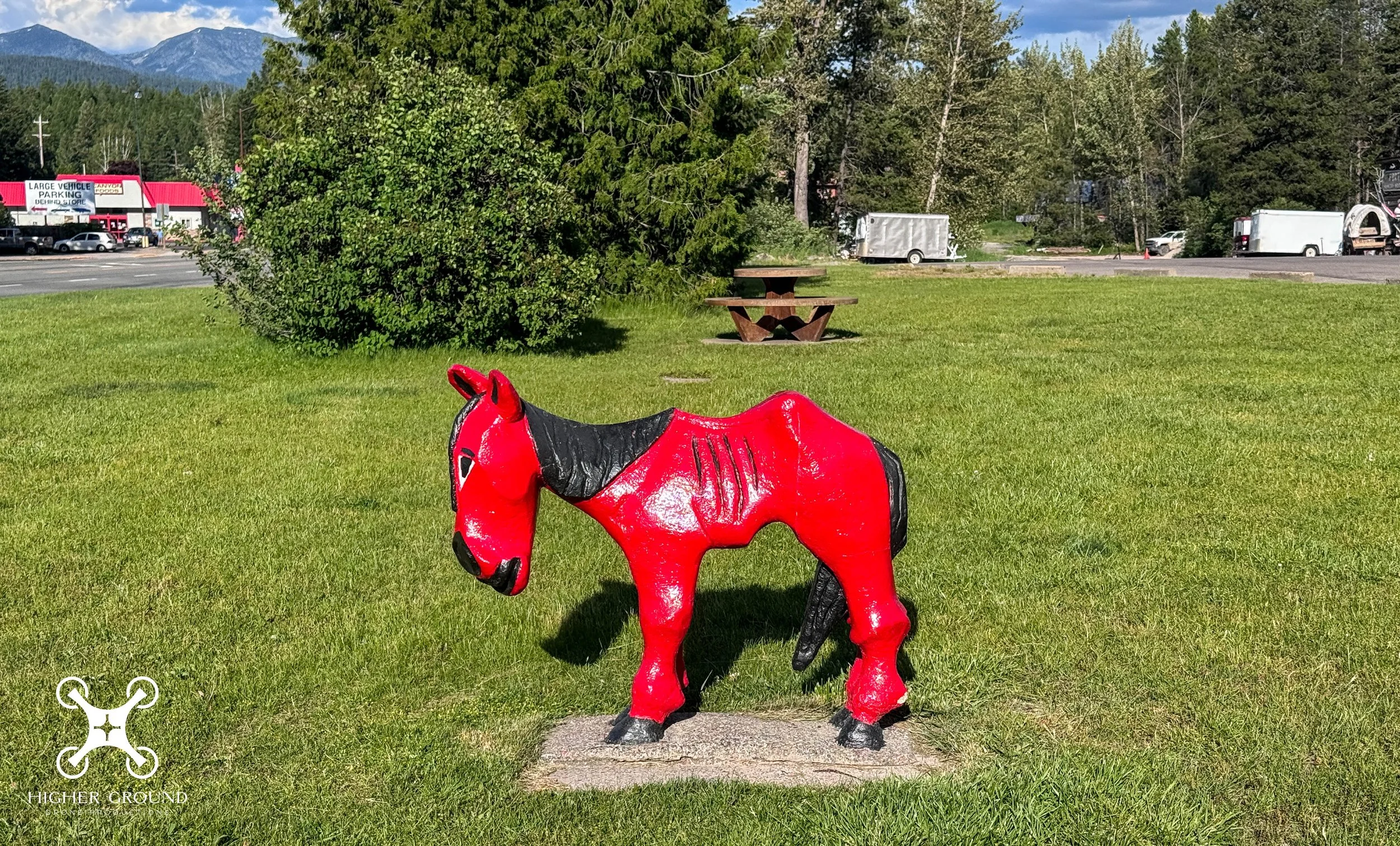
The Legend: The name "Hungry Horse" comes from a local winter ordeal in 1900–1901 involving two freight horses named Tex and Terry (also locally referenced as Tex and Jerry). The horses wandered away from their sleigh into deep mountain snow and remained lost for a month. When finally found, they were severely starved. Though they survived, the dramatic incident lent its name to a nearby mountain, lake, creek, and eventually the downstream town and dam.