Don’t Delete A Picture! Hagia Sophia
Don’t delete a picture - you never know what you might see in it later!!
We’ve learned that lesson dozens of times over the course our trips to Biblical lands. It just happened again the other day…
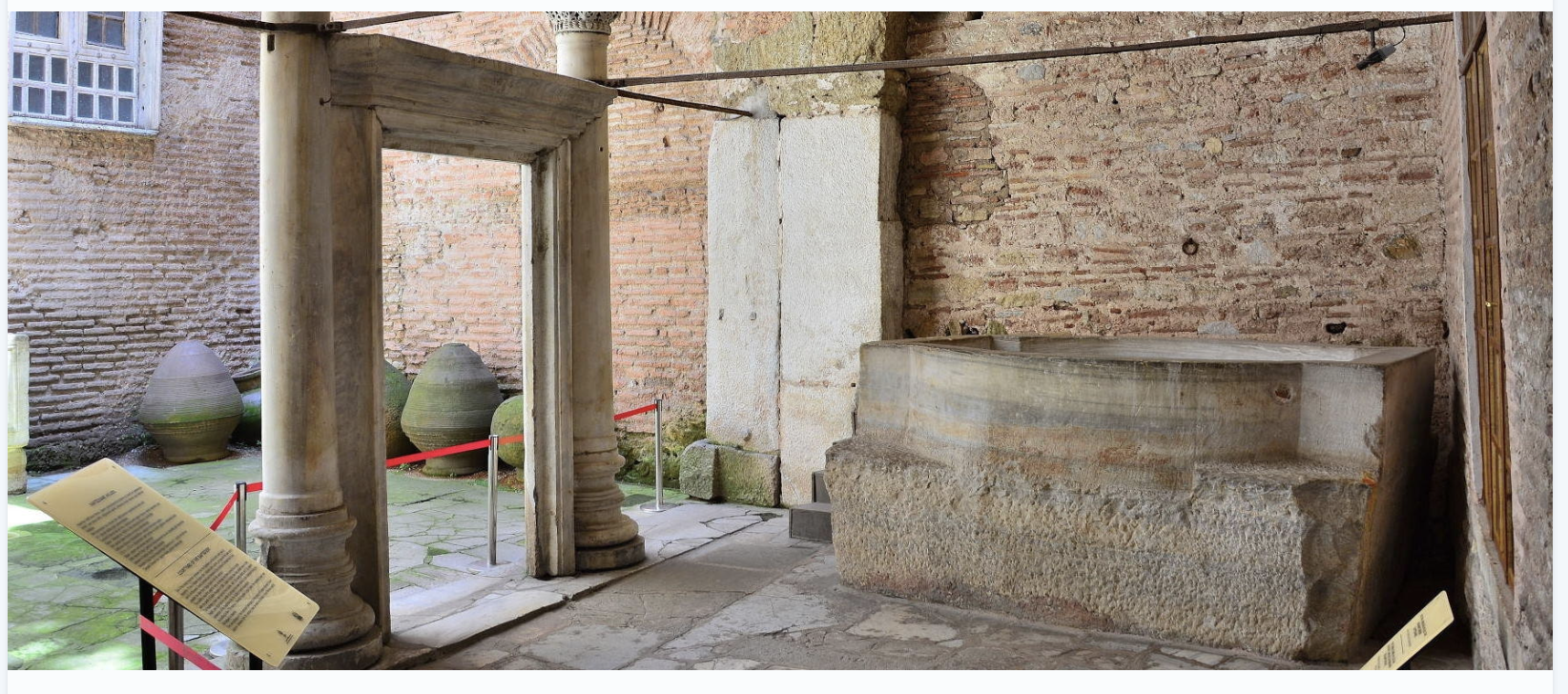
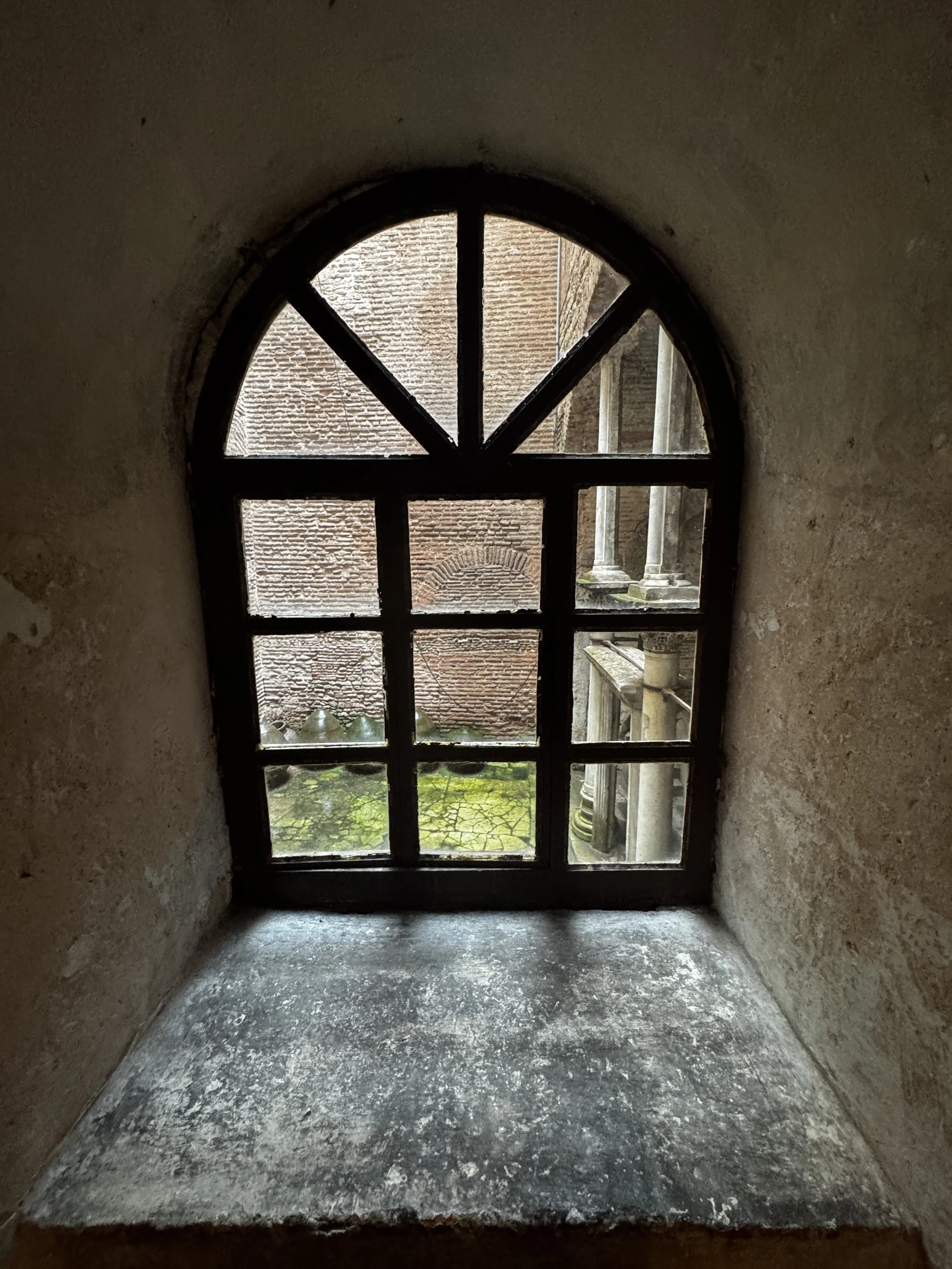
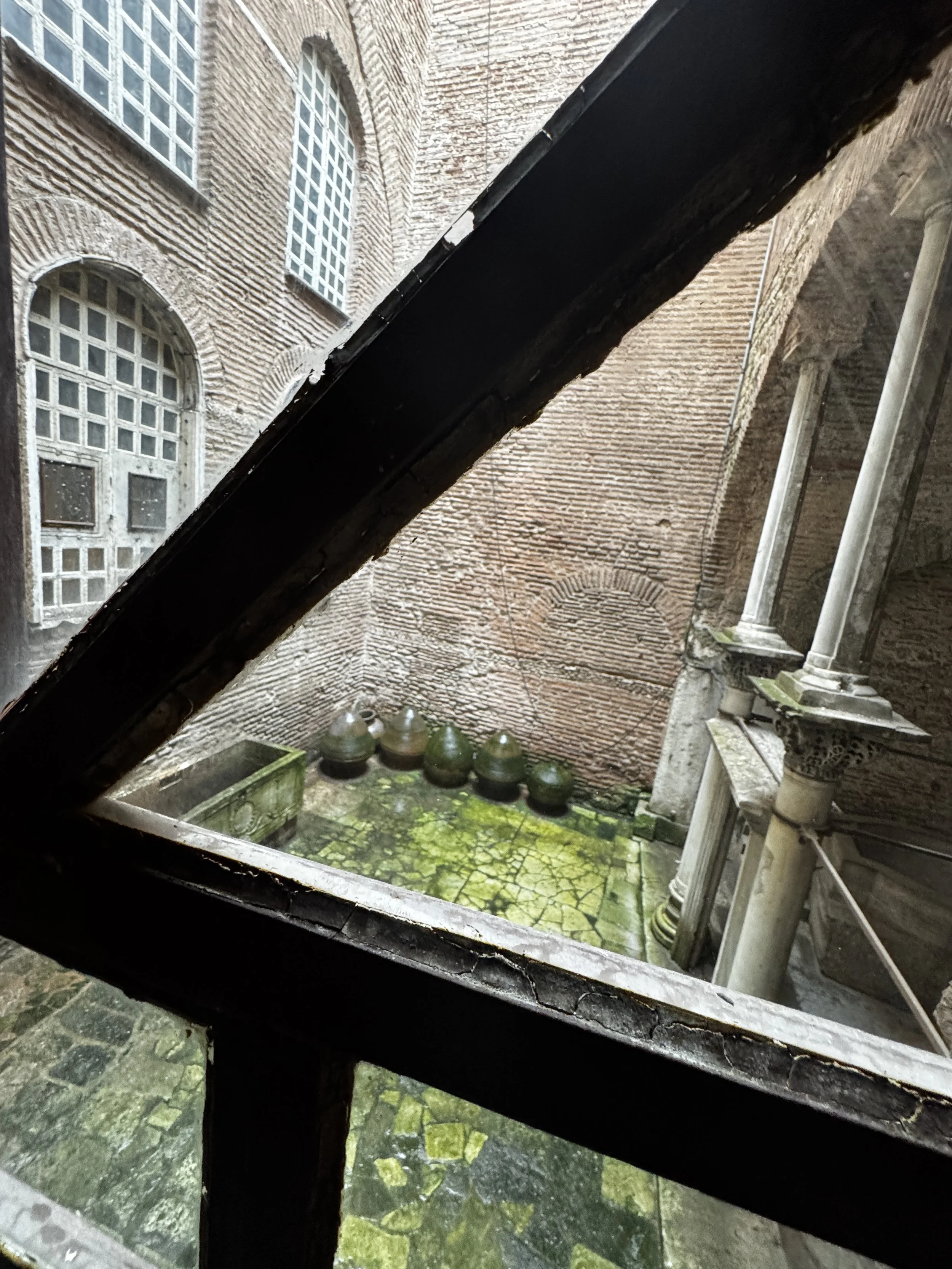
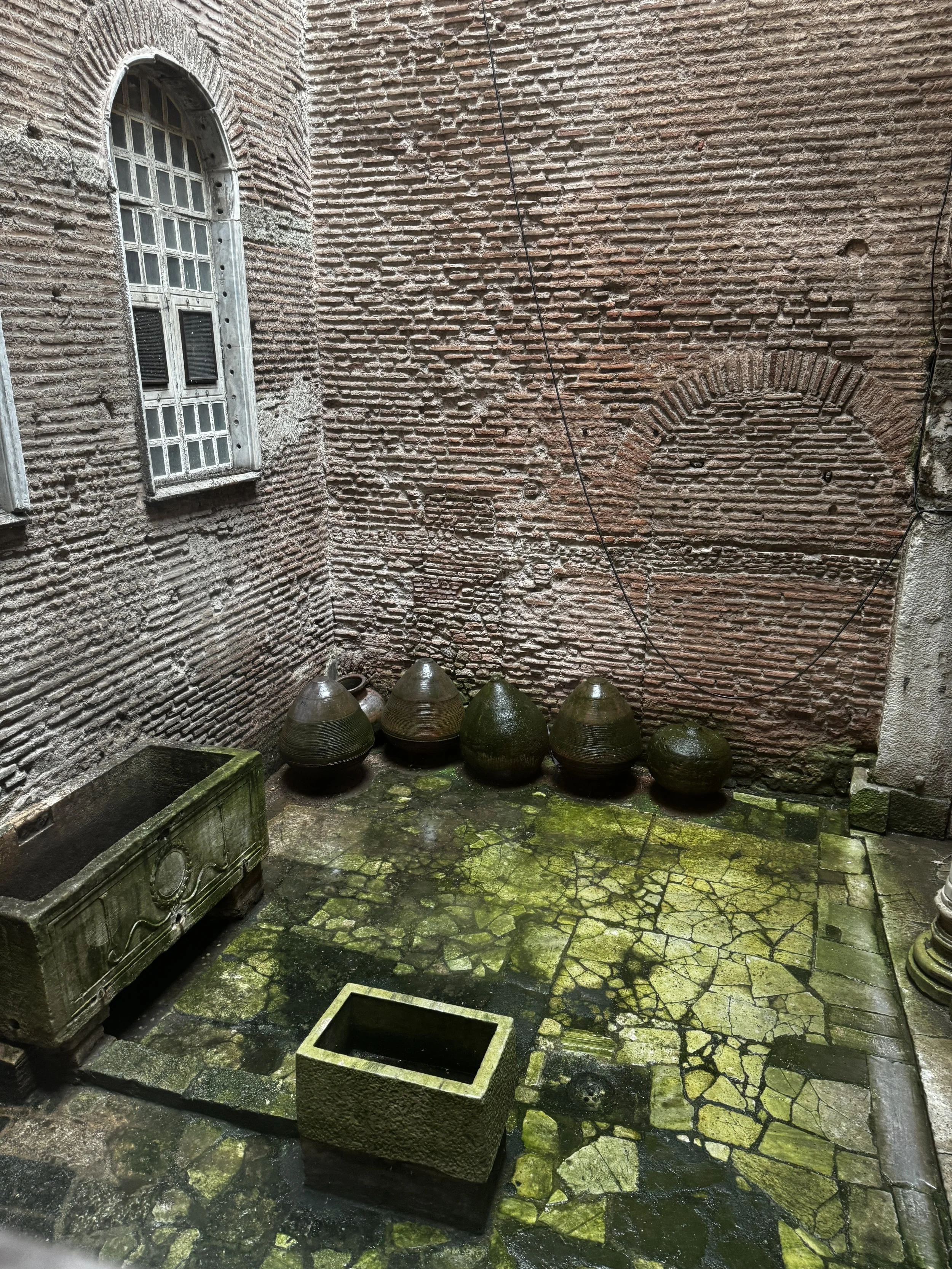
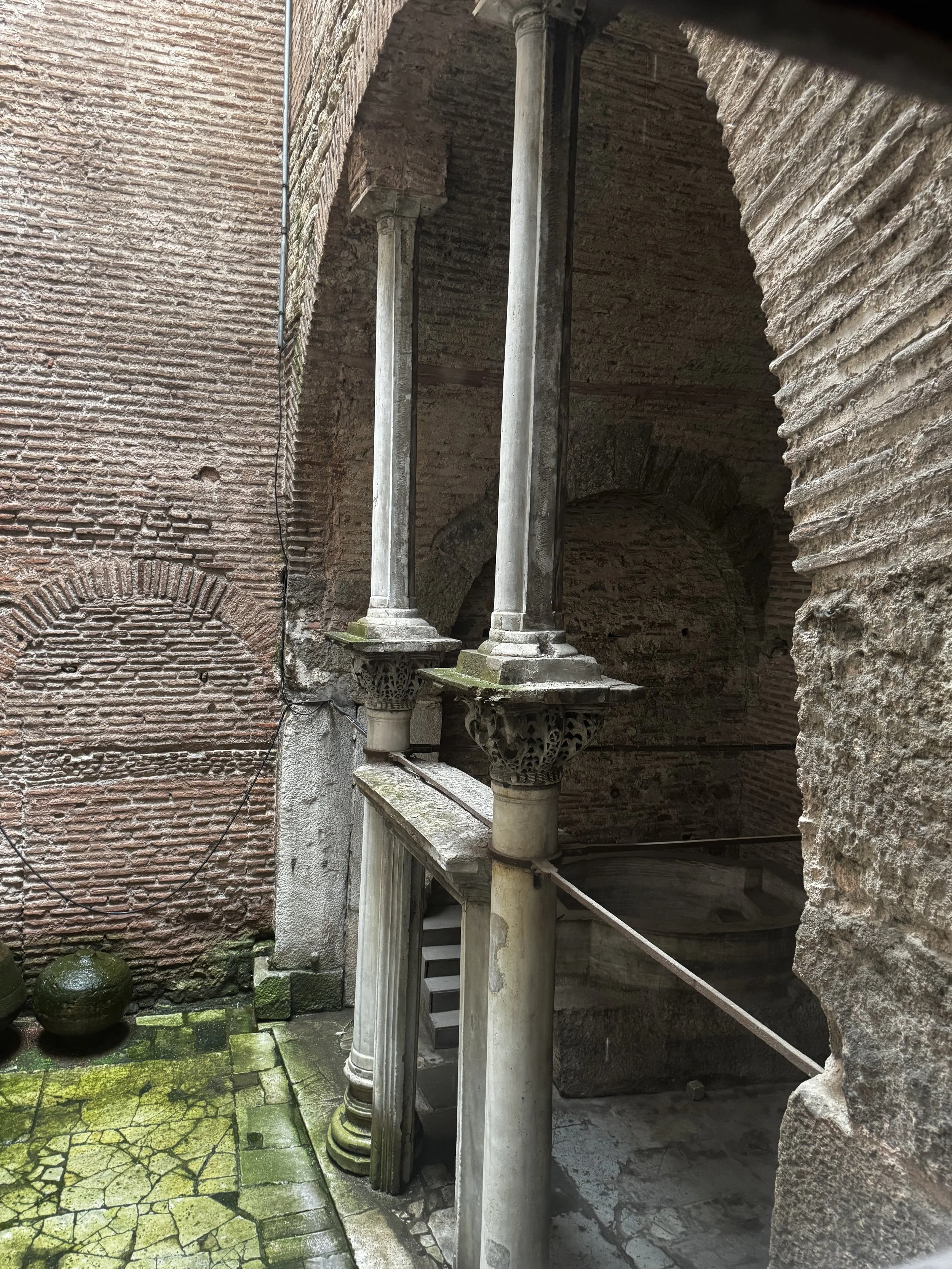
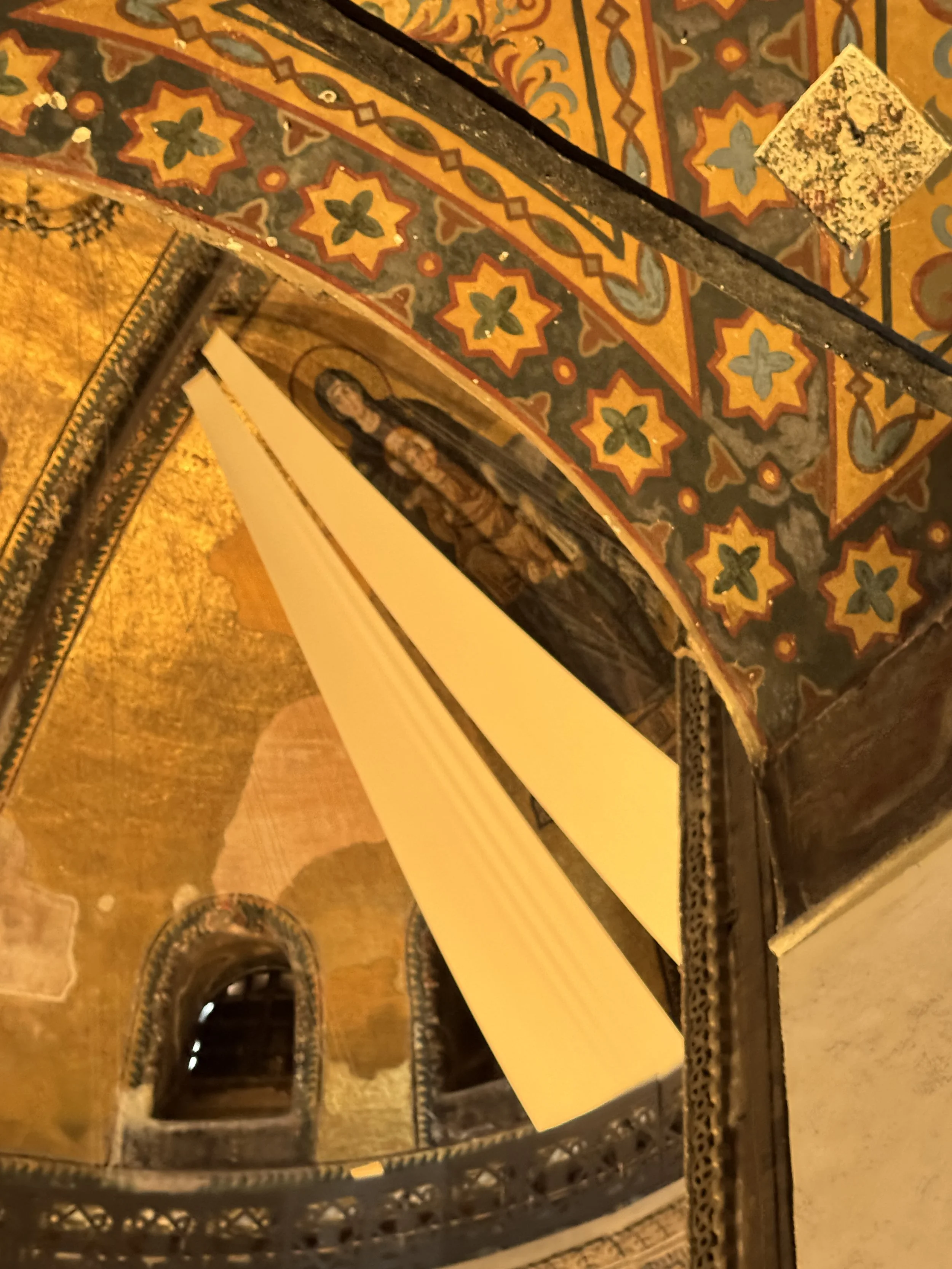
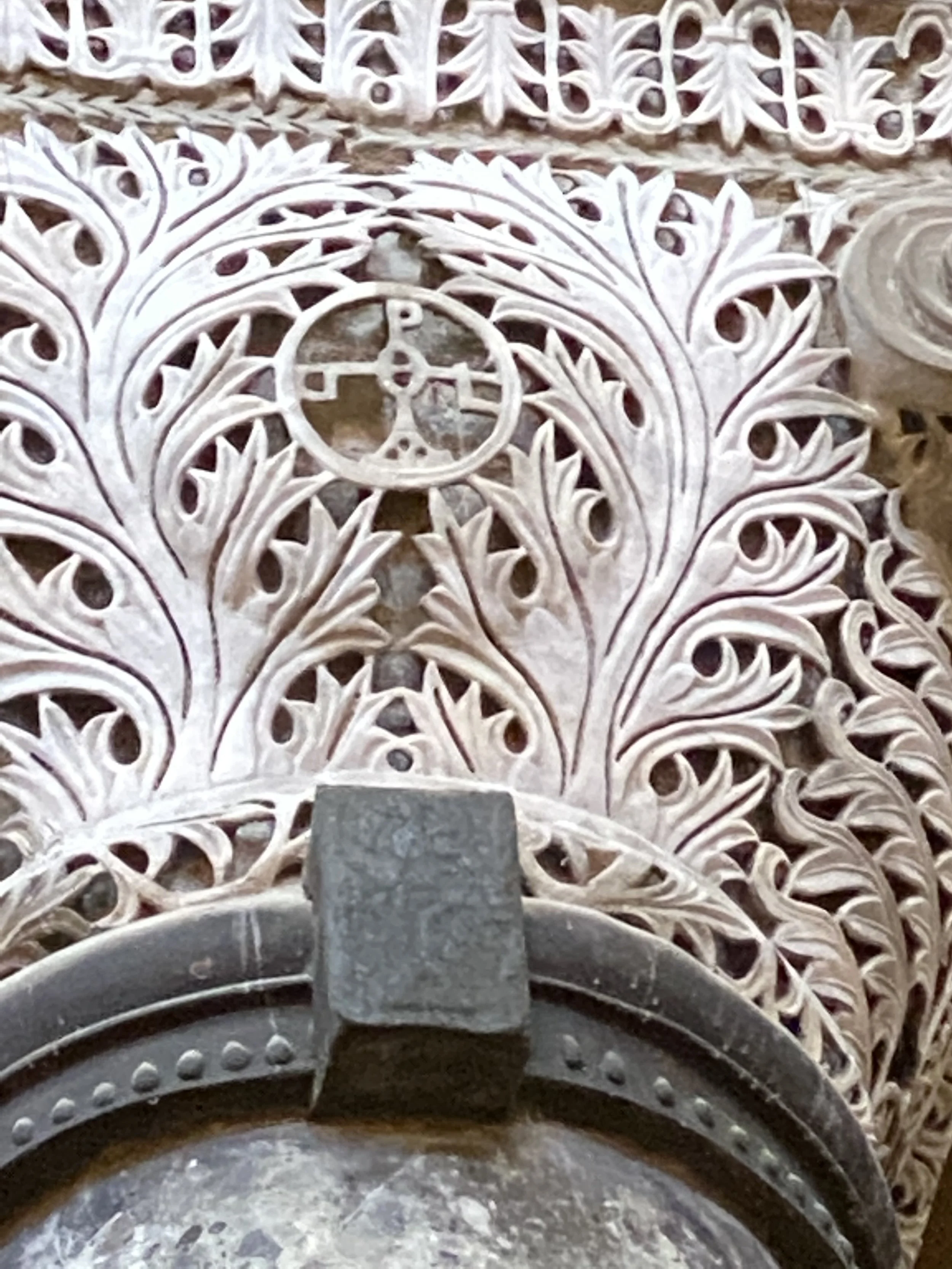
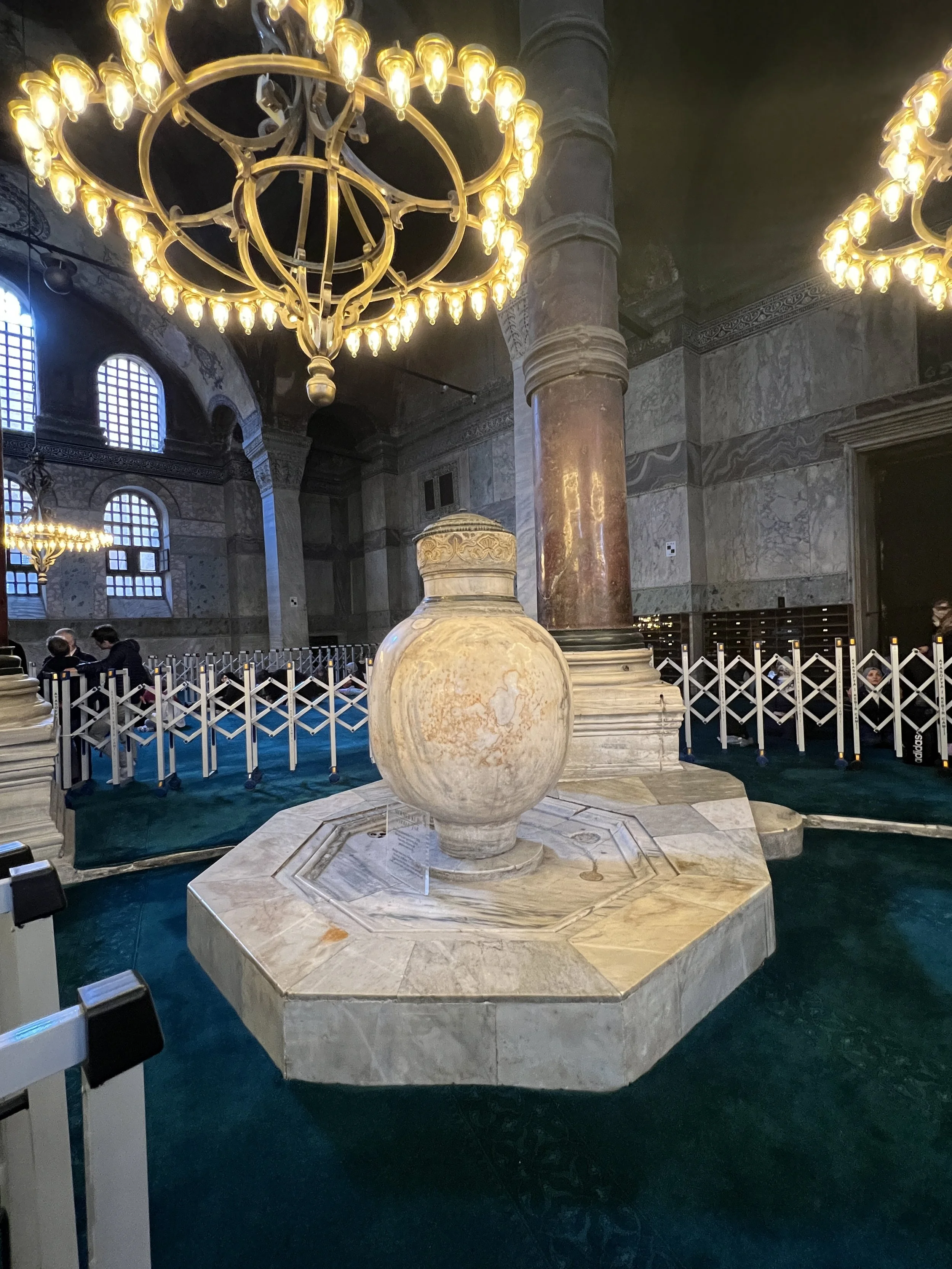
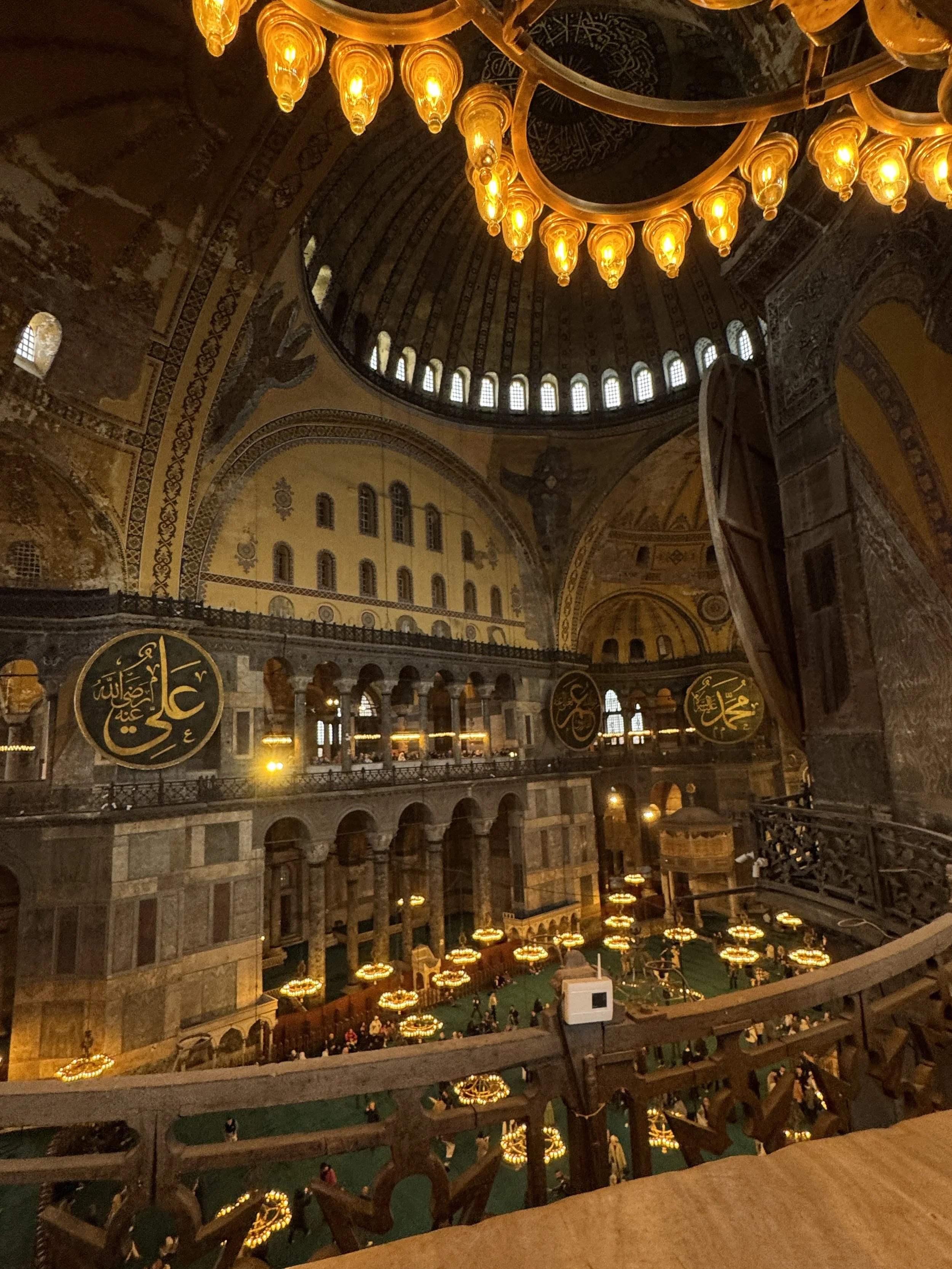
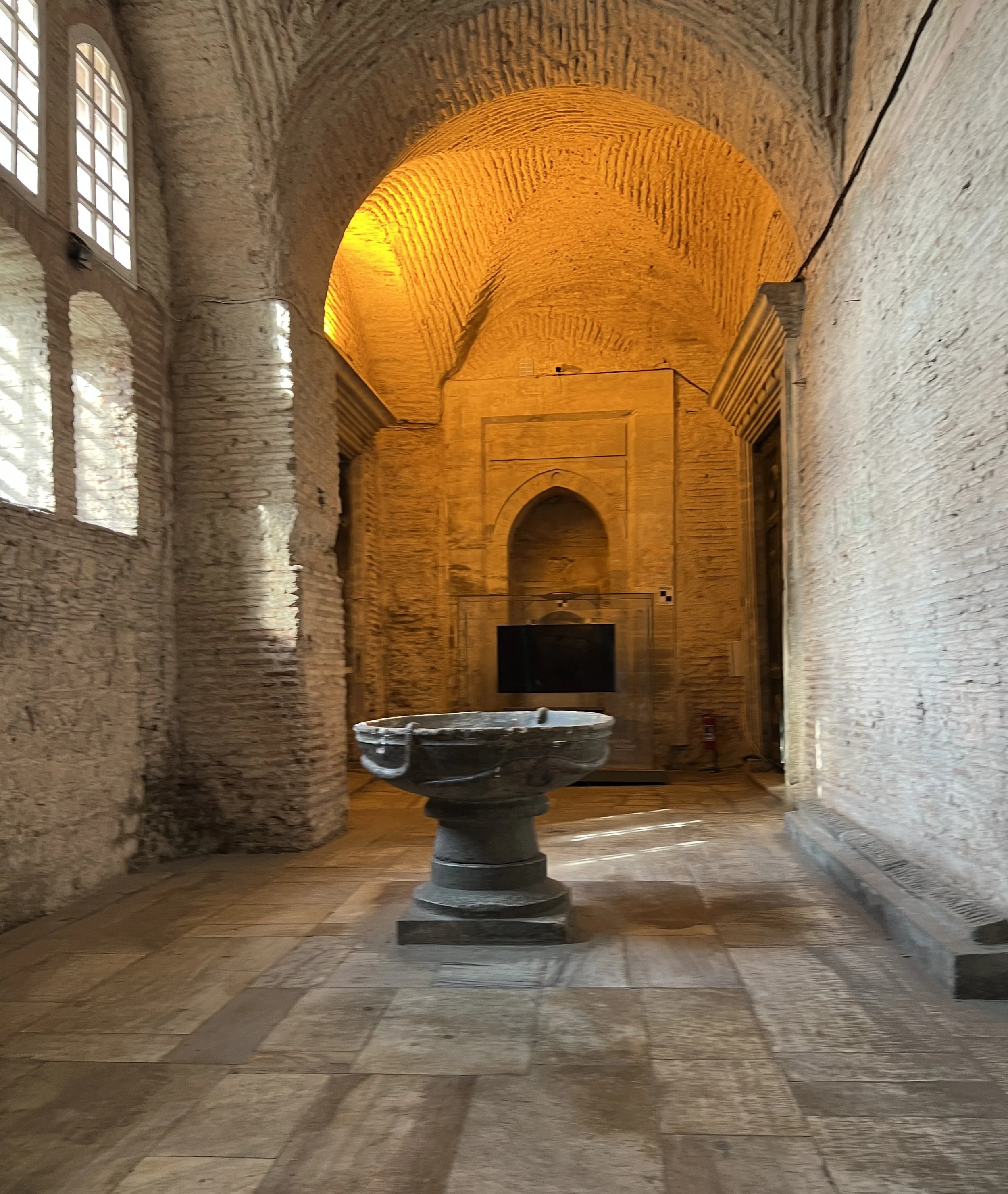
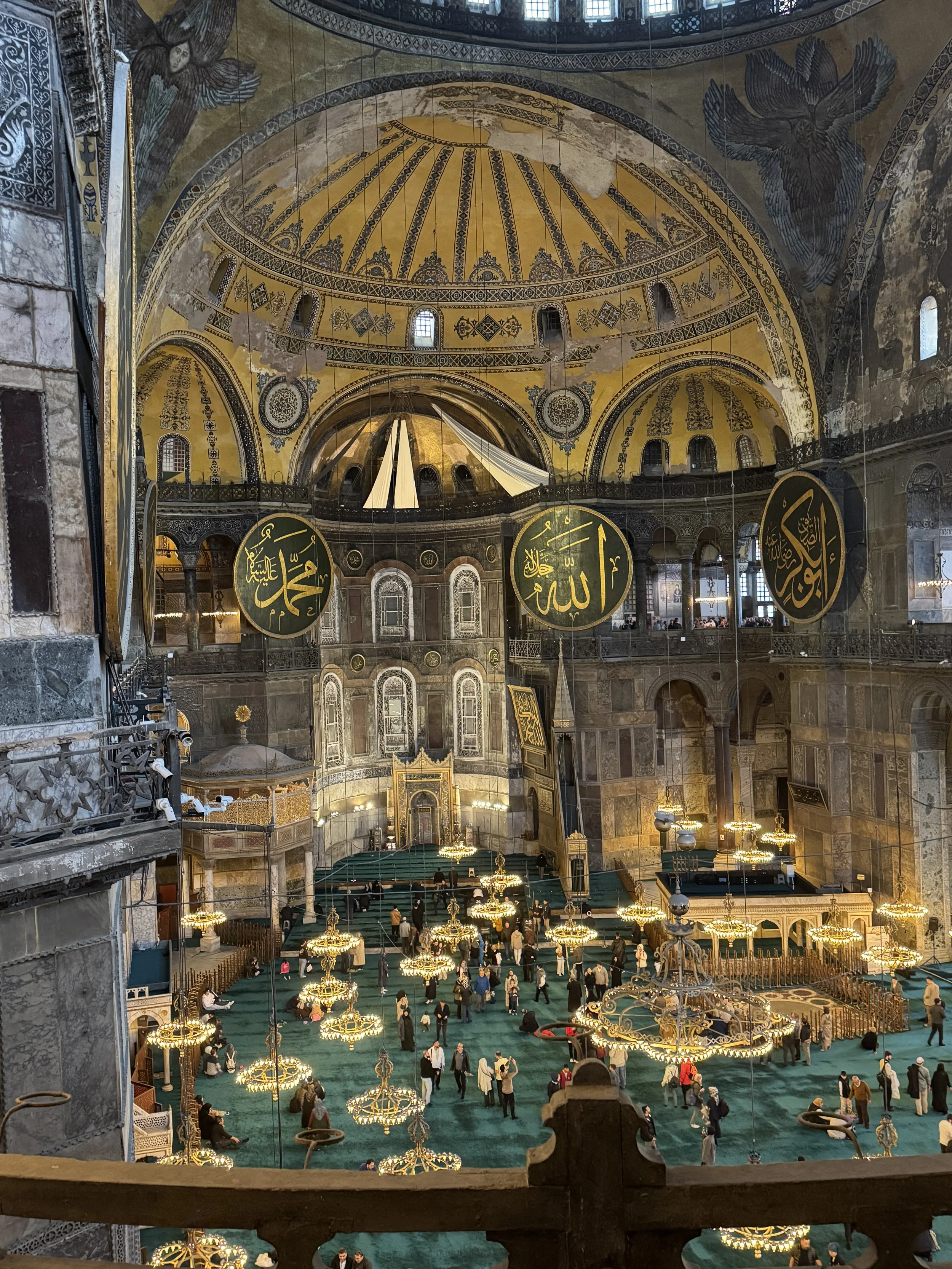
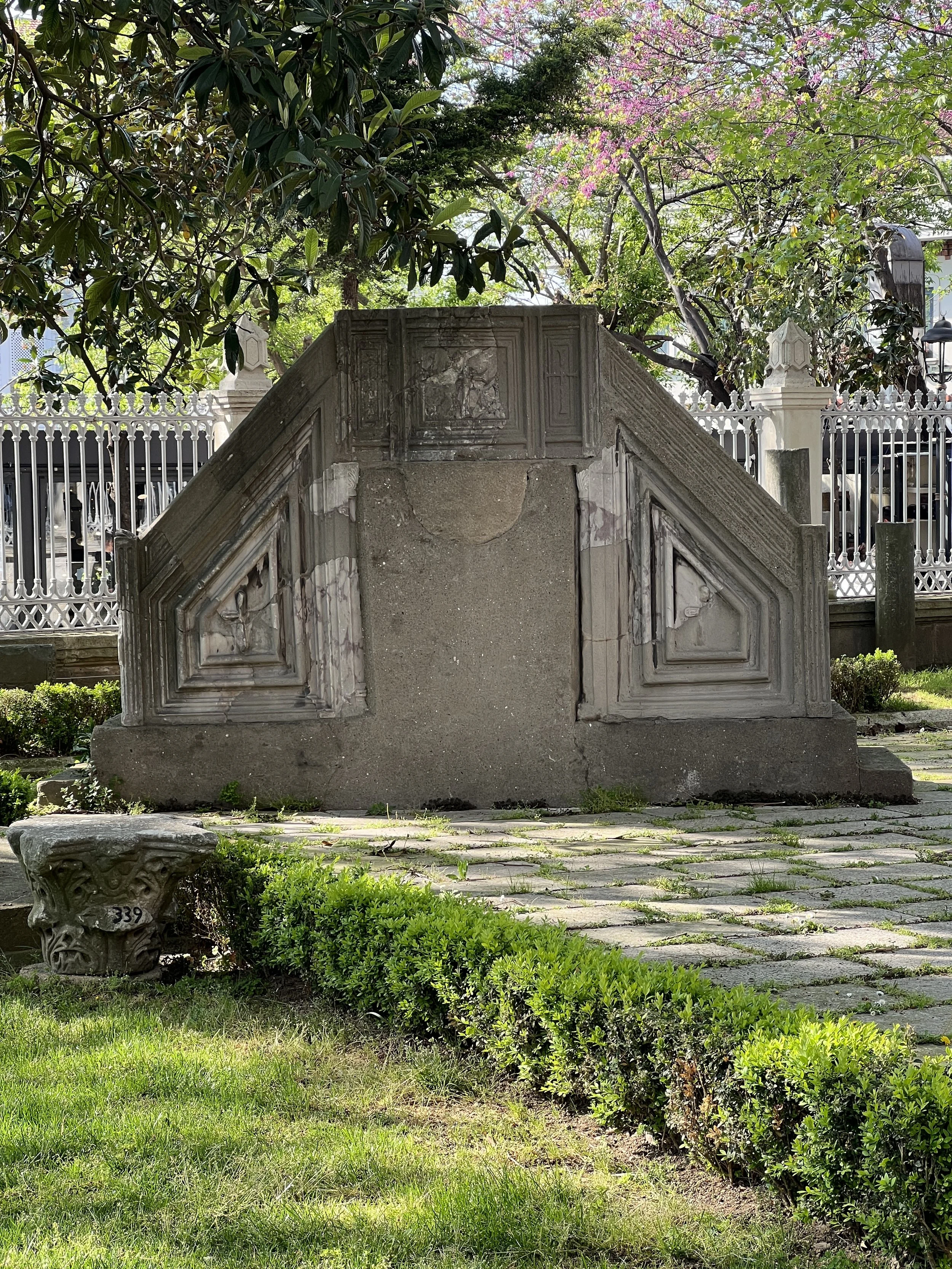
We were lamenting that after all of the times we’ve been to the Hagia Sophia in Istanbul, we still haven’t been able to find a way to see the ancient baptistery. This is one of the earlier baptisteries in existence (definitely not the earliest), some date it to the 537 reconstruction of the ancient church by Emperor Justinian. We’ve seen pictures of it online (one included in the photos posted here) but our guide has never been able to take us to it. Scrolling through photos we took from the balcony of the Hagia Sophia in May 2025 we paused at a picture of a window looking out into a small courtyard… could it be… YES!! It is the courtyard where the massive marble immersion baptismal font is now located! Zooming in we can even get a blurry glimpse of the end of the font itself. So while not entirely satisfactory, and we didn’t notice it at the time, I guess we’ve seen it!
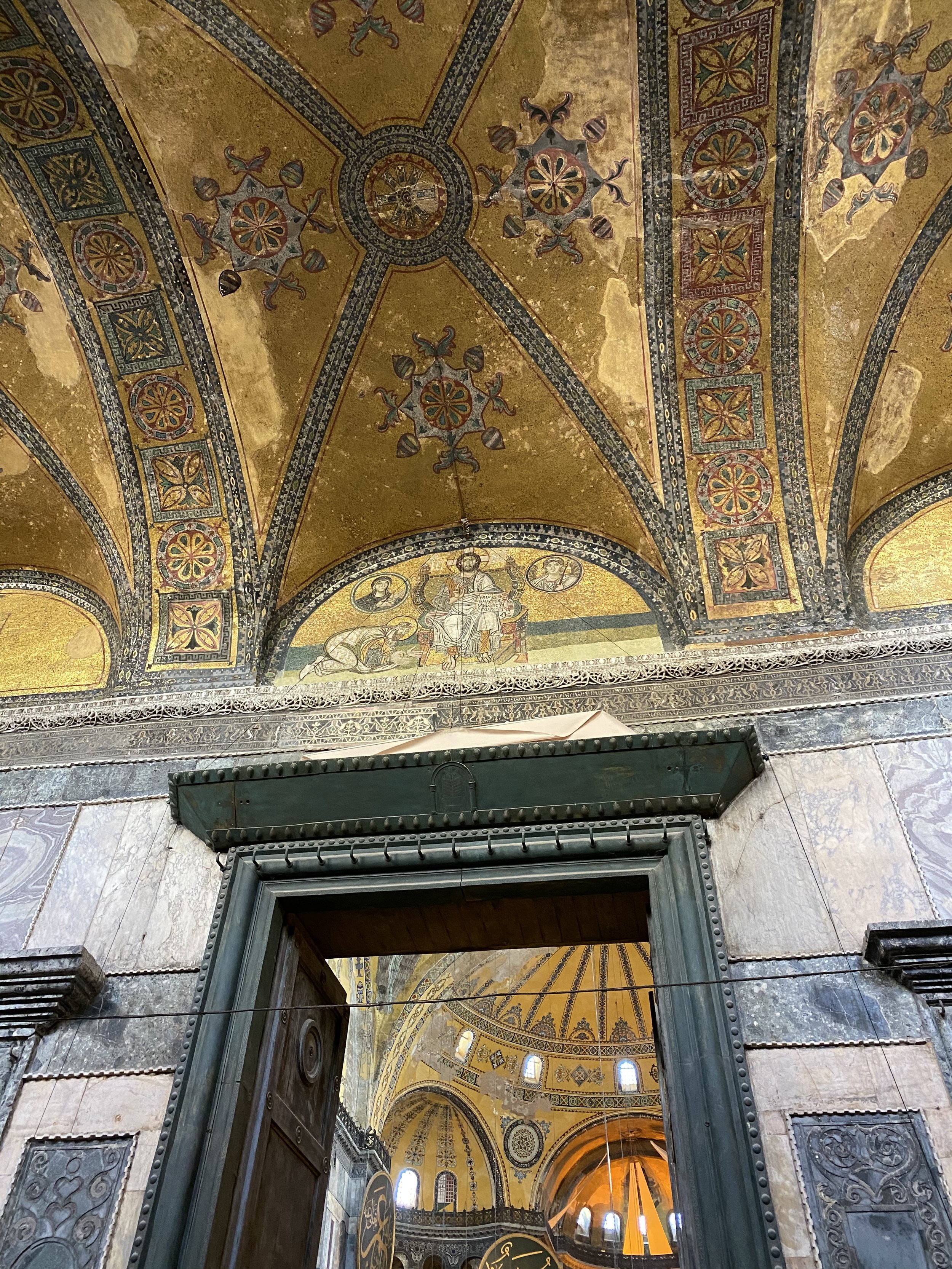
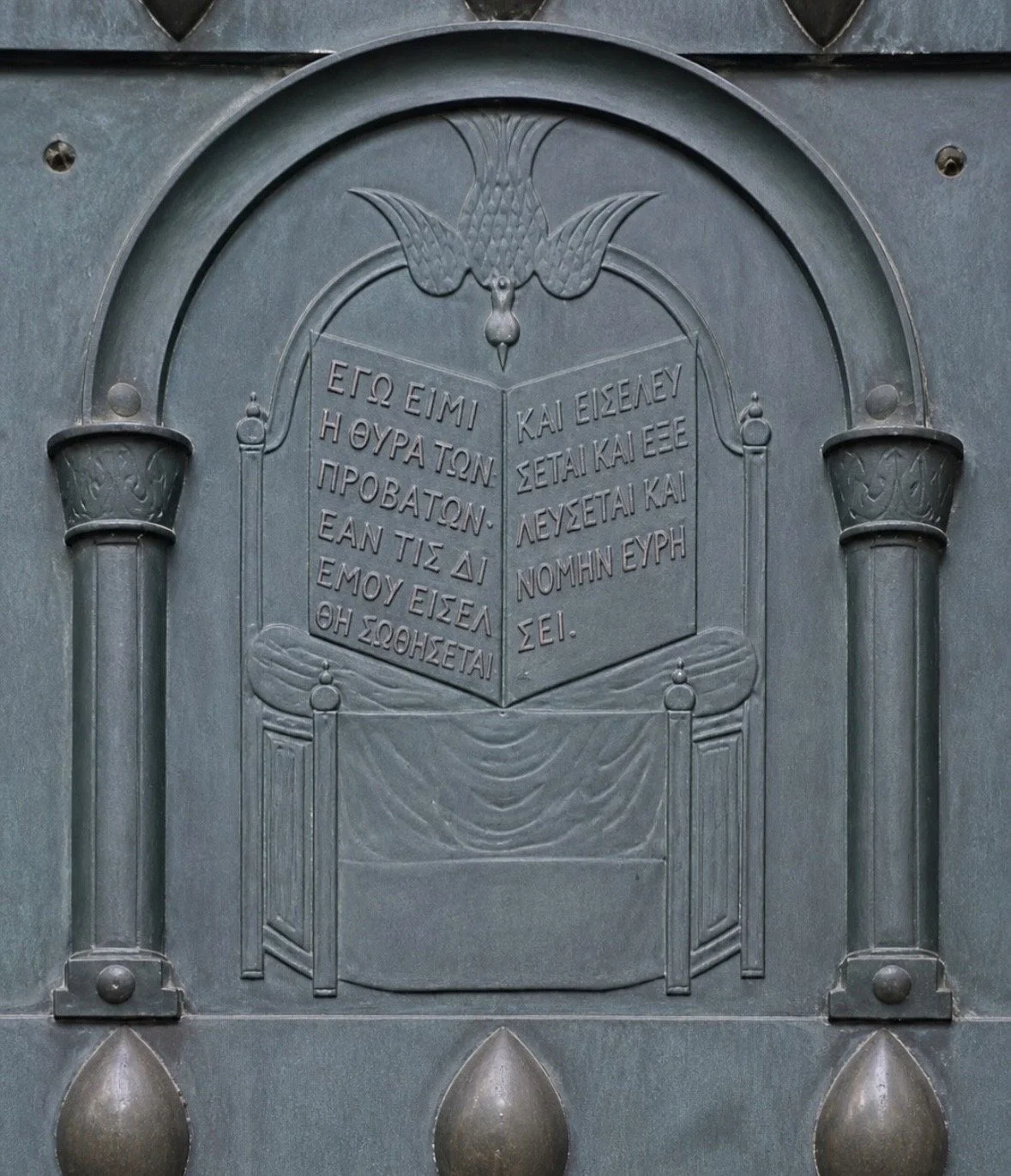
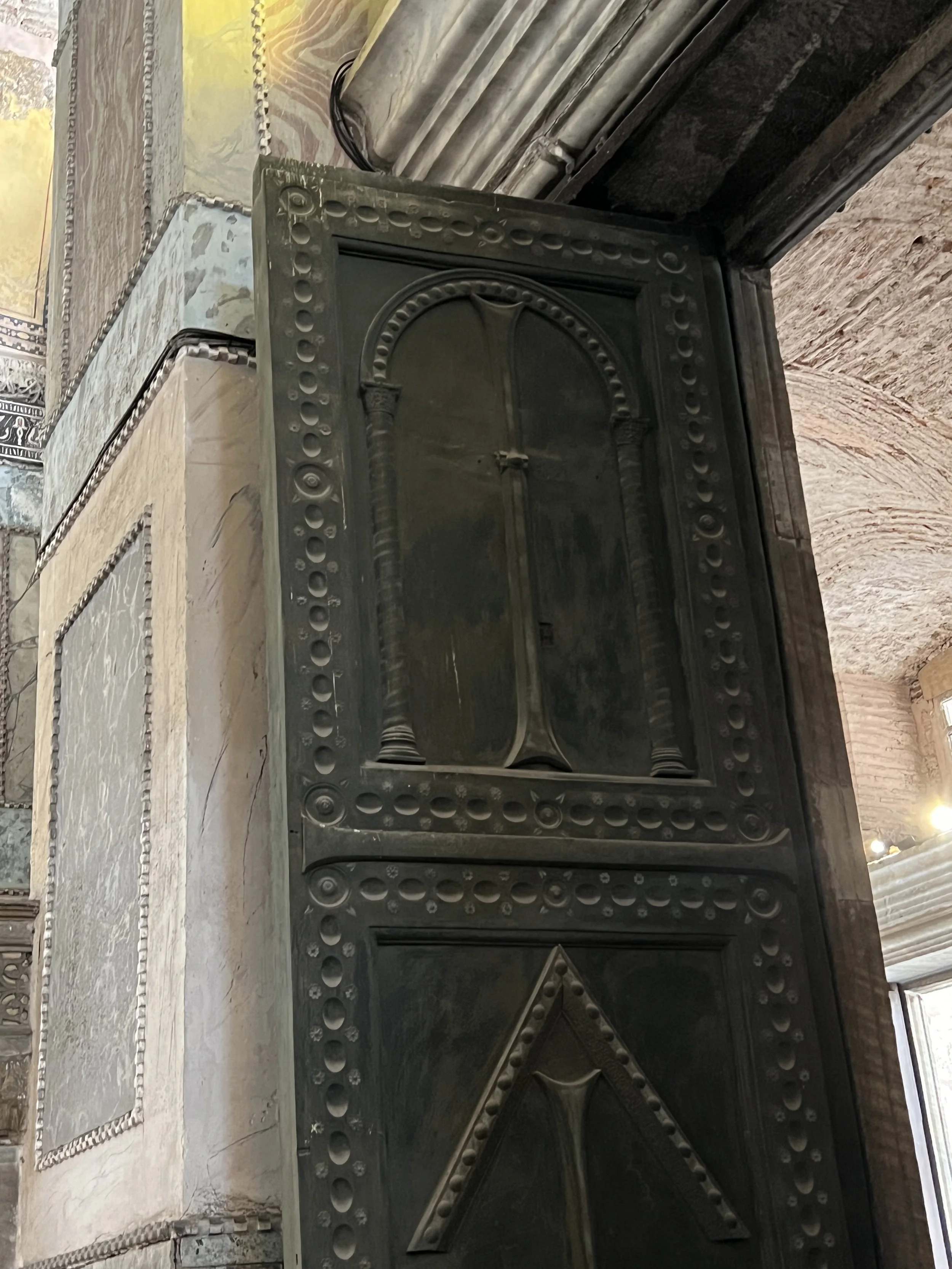
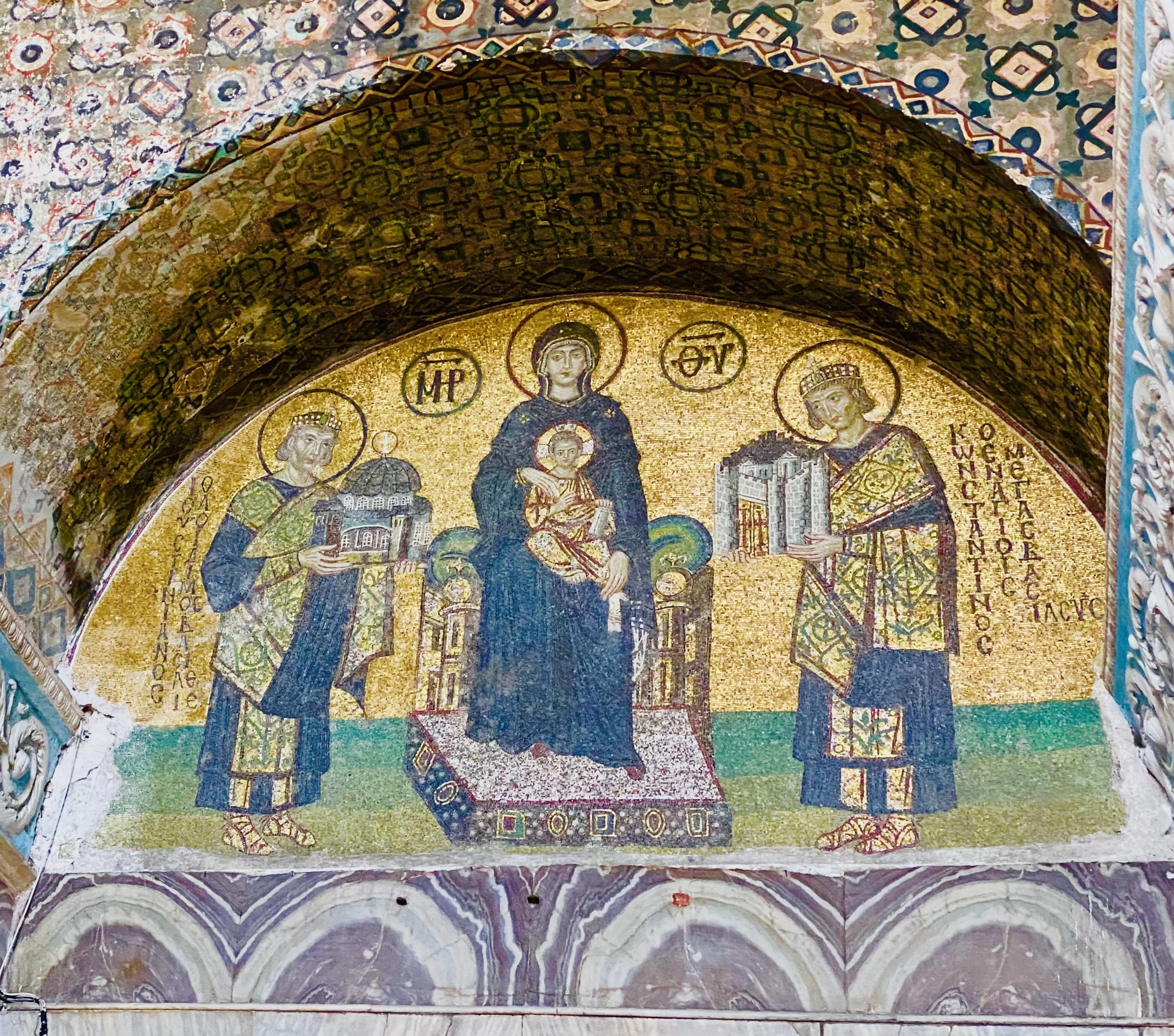
Another thing we had read about in the Hagia Sophia is a carving in the stone lintel above the Imperial Gate that reads “The Lord said: I am the door for the sheep. If anyone enters through Me, he will be saved; he will come in and go out and find pasture”. Looking at the door, one focuses on its massive size, the cross in the door that has been altered, and the golden shimmering mosaic above the door of Christ and Leo bowing to him. We found that we had captured the lintel carving too!
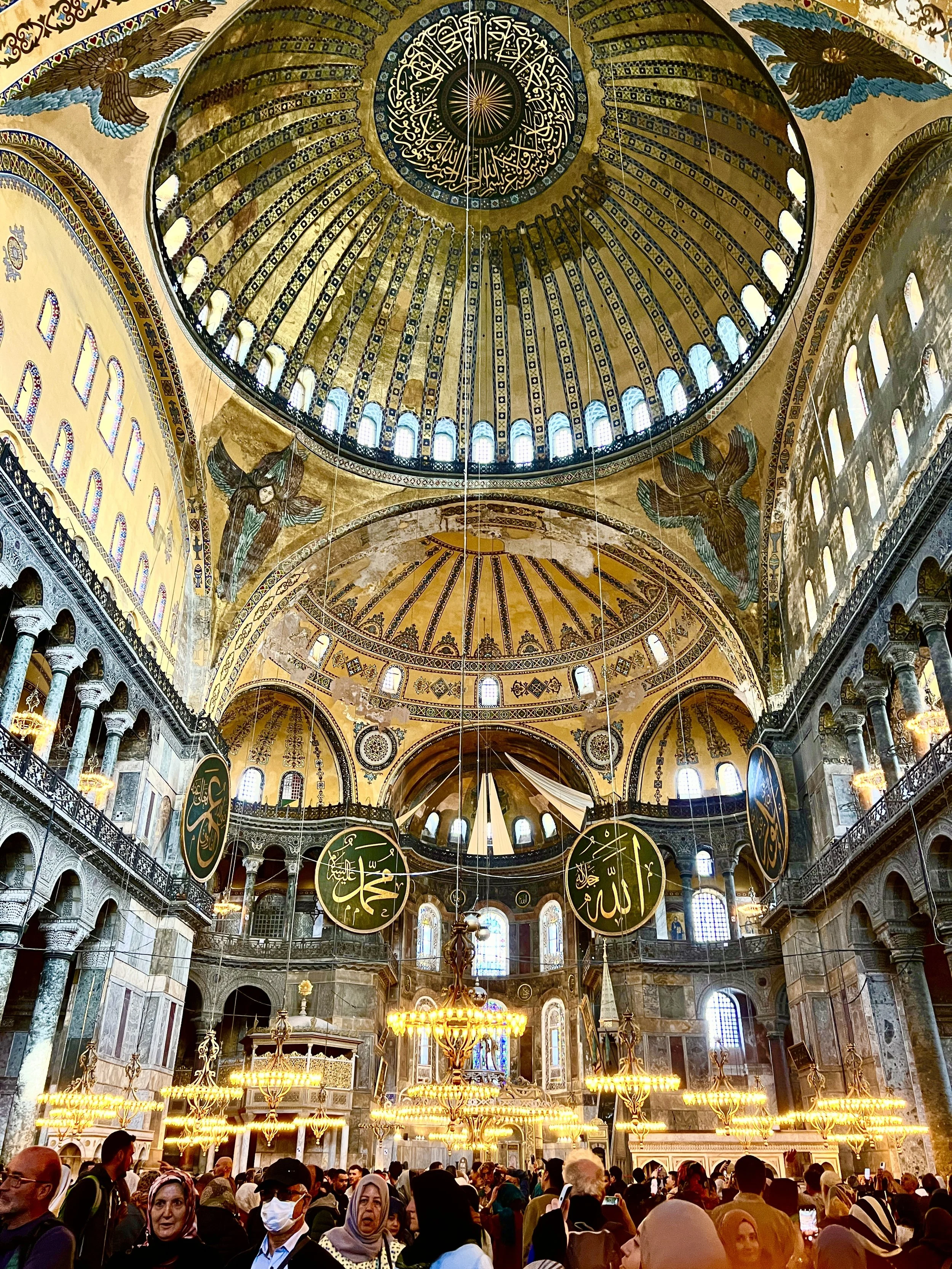
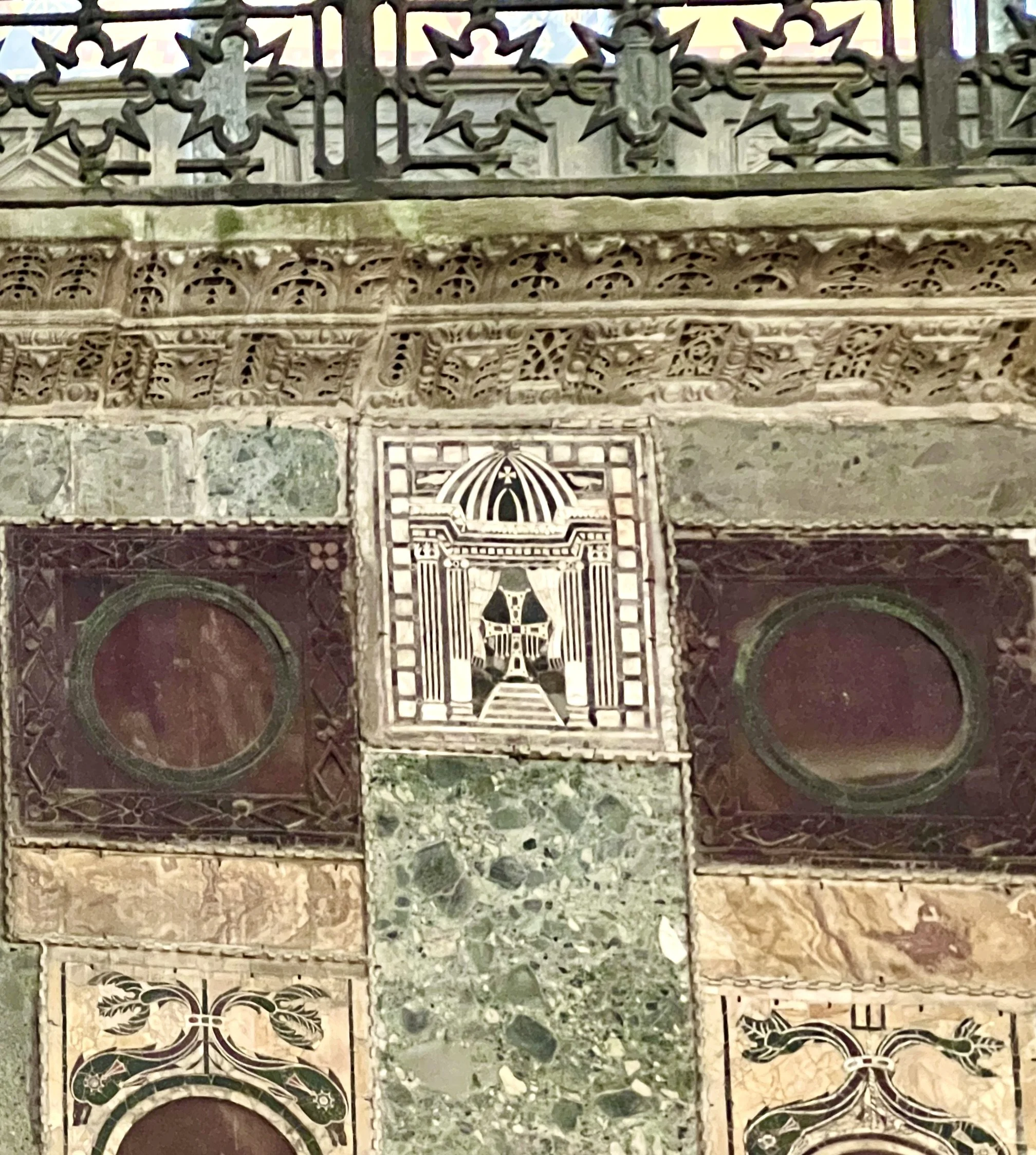
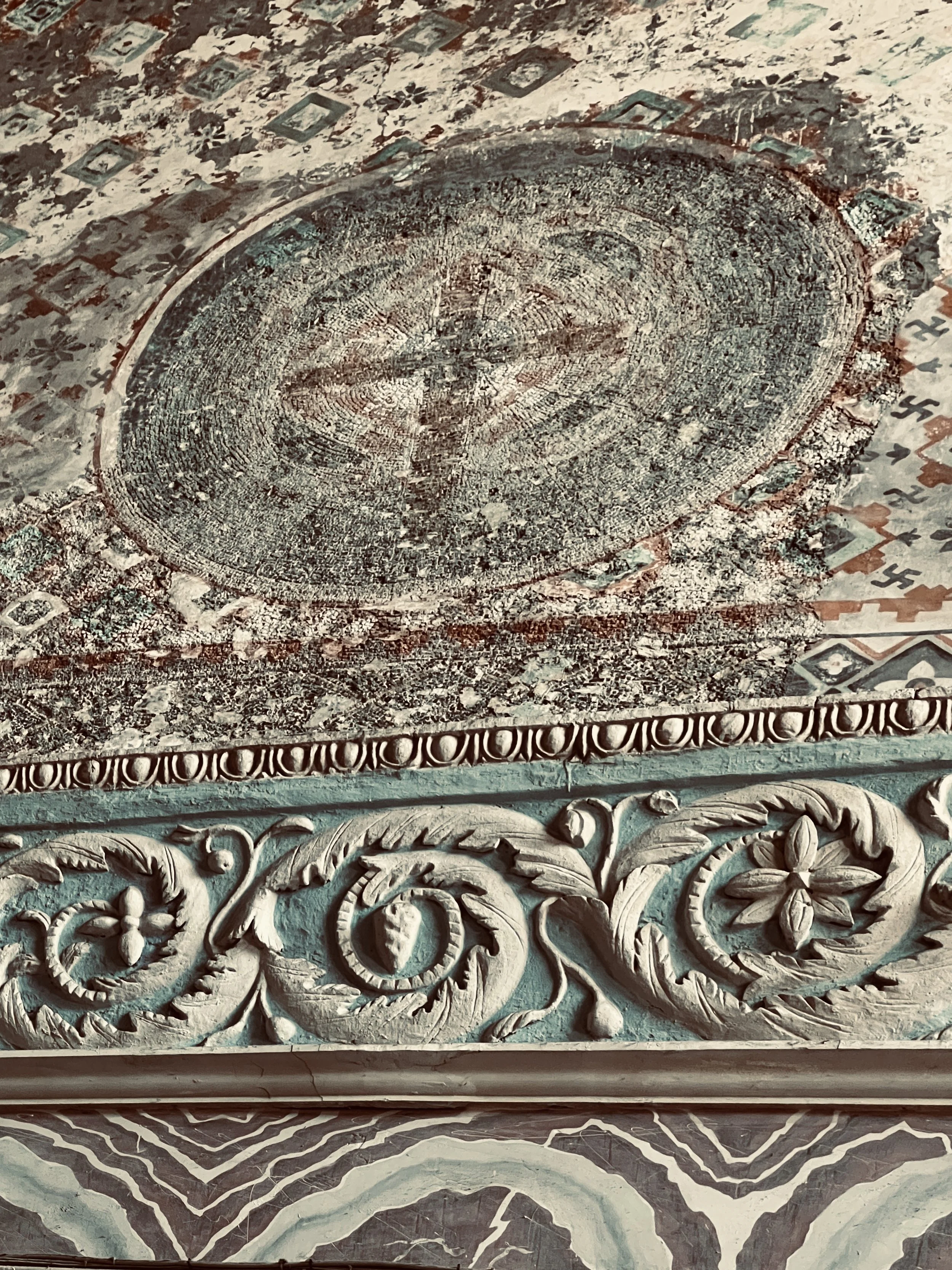
A final example: we were standing in the nave on the main floor of the Hagia Sophia (which for a few years now has been off limits to tourists) and did some video clips just panning around the vast space. It wasn’t until long after that visit that we noticed the video captured a black and white mosaic high up on a wall with a stylized church and dome and a cross at the center.
So, moral of the story - don’t be so quick to delete your “extra” photos and videos, you never know what surprises they might hold!
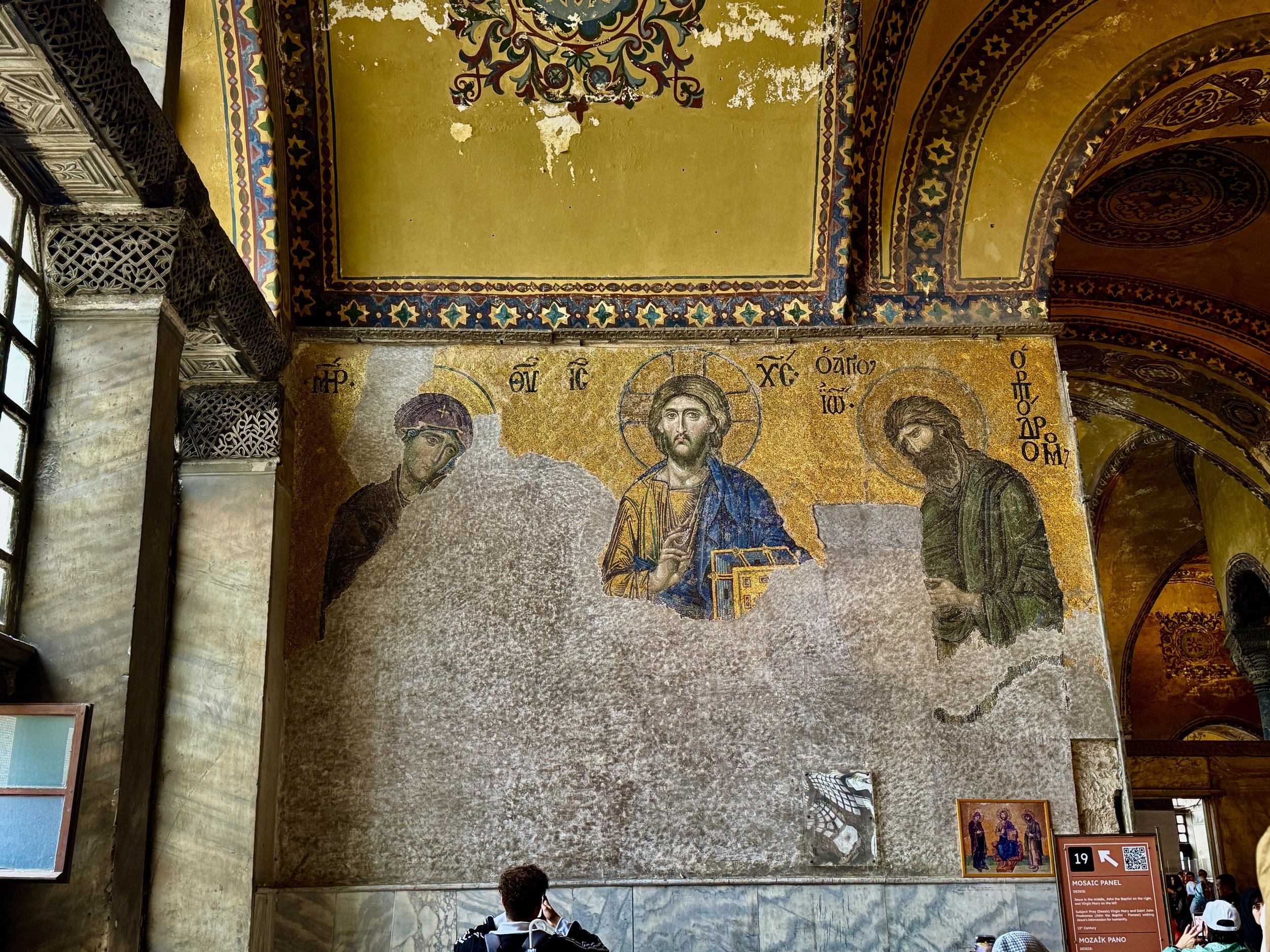
While not exactly biblical archeology, the Hagia Sophia is a fascinating place with a long and complex history that begins early in the life of the Christian church. It was built in 360 AD by Emperor Constantine, less than 50 years after the legalization of Christianity. It has gone through fire, earthquake, reconstruction, renovations, conversion to a mosque then a museum then a mosque again. In spite of this, the Christian foundations of this space in the early church are readily evident in hundreds of ways. If you are in Turkiye to follow the footsteps of Paul in Asia Minor, or to go to the archeological sites of the 7 churches of the Revelation, the Hagia Sophia truly is a must see - whatever small part of it we are allowed to see at any given time!
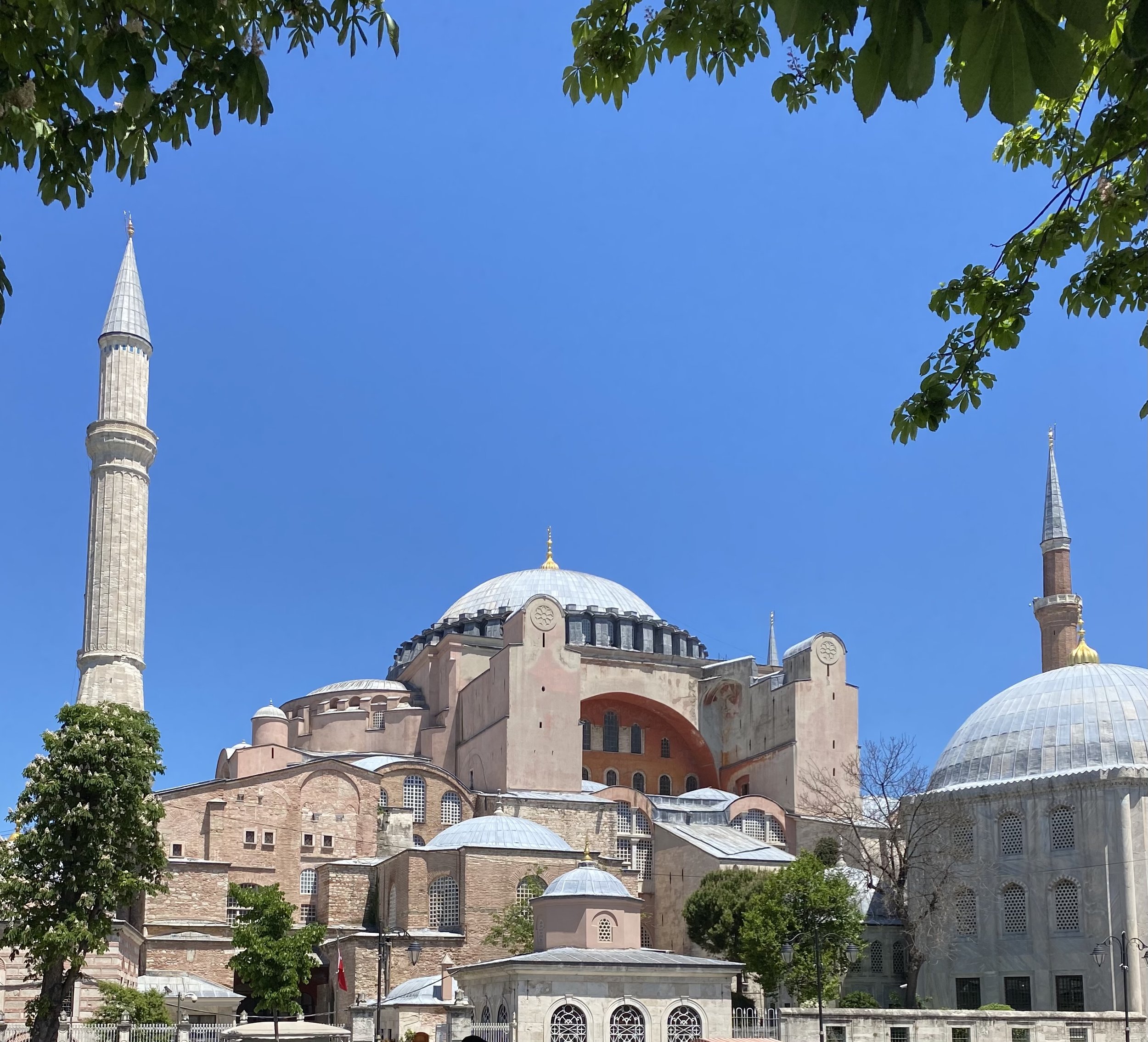
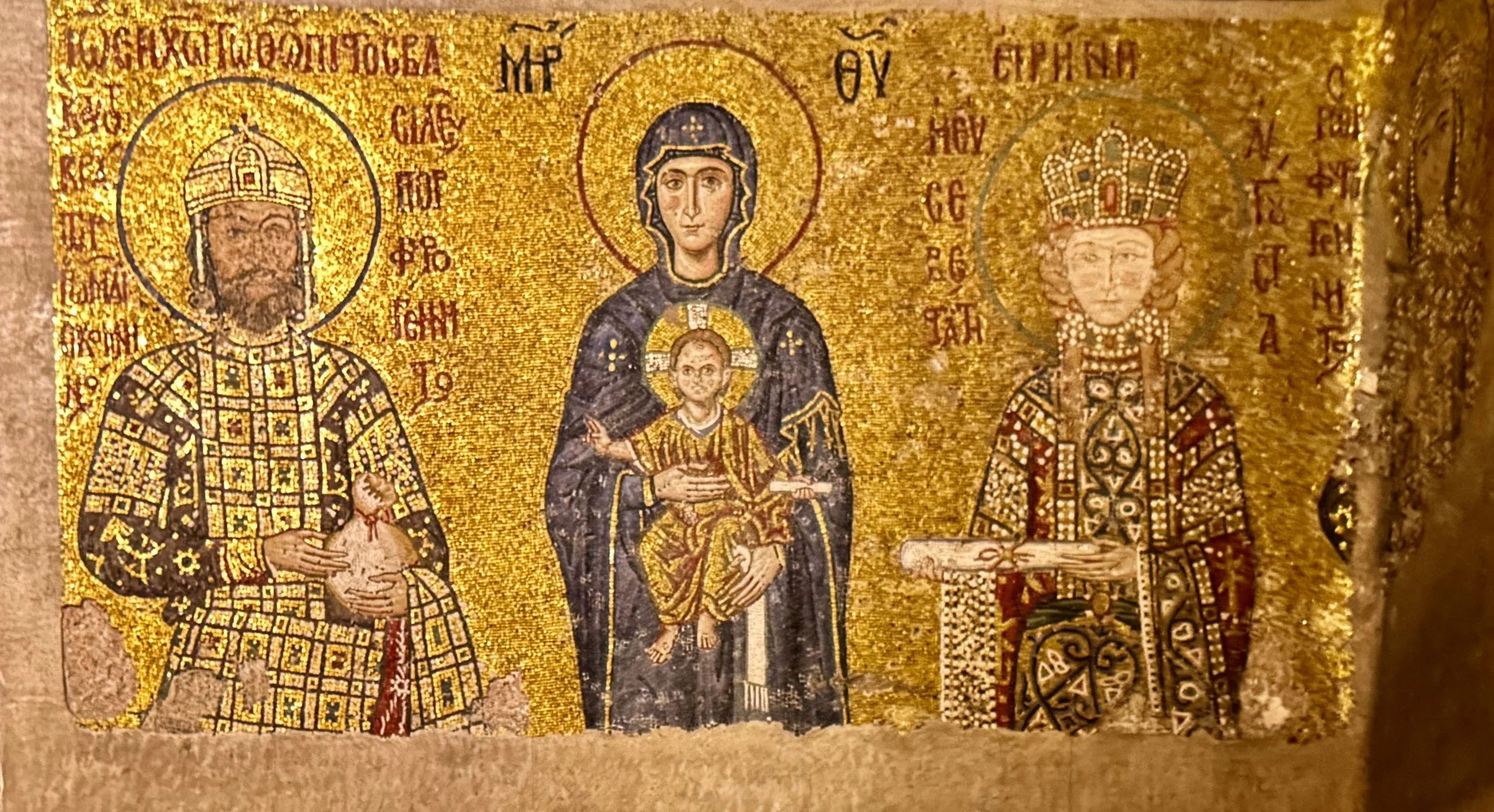
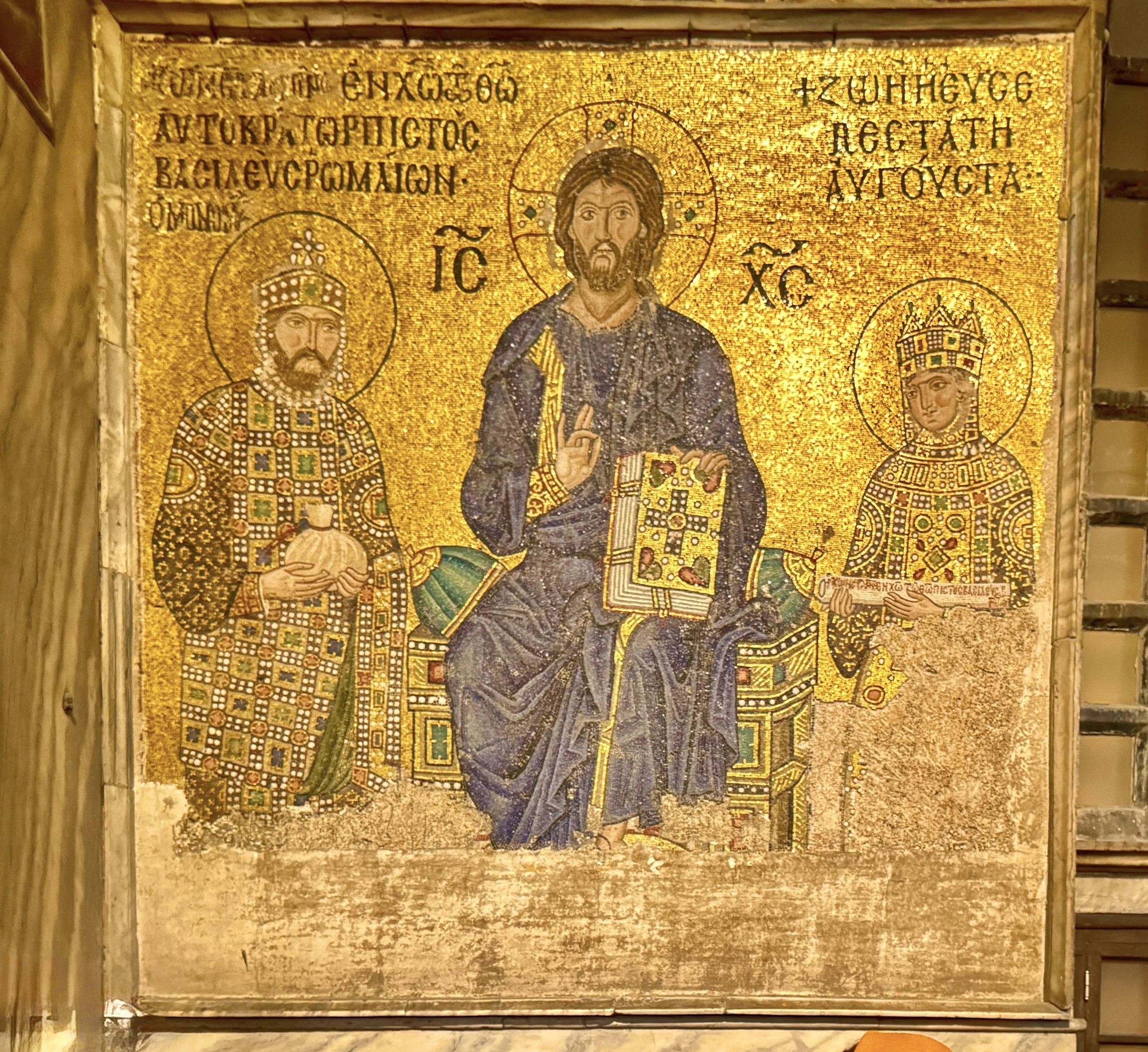
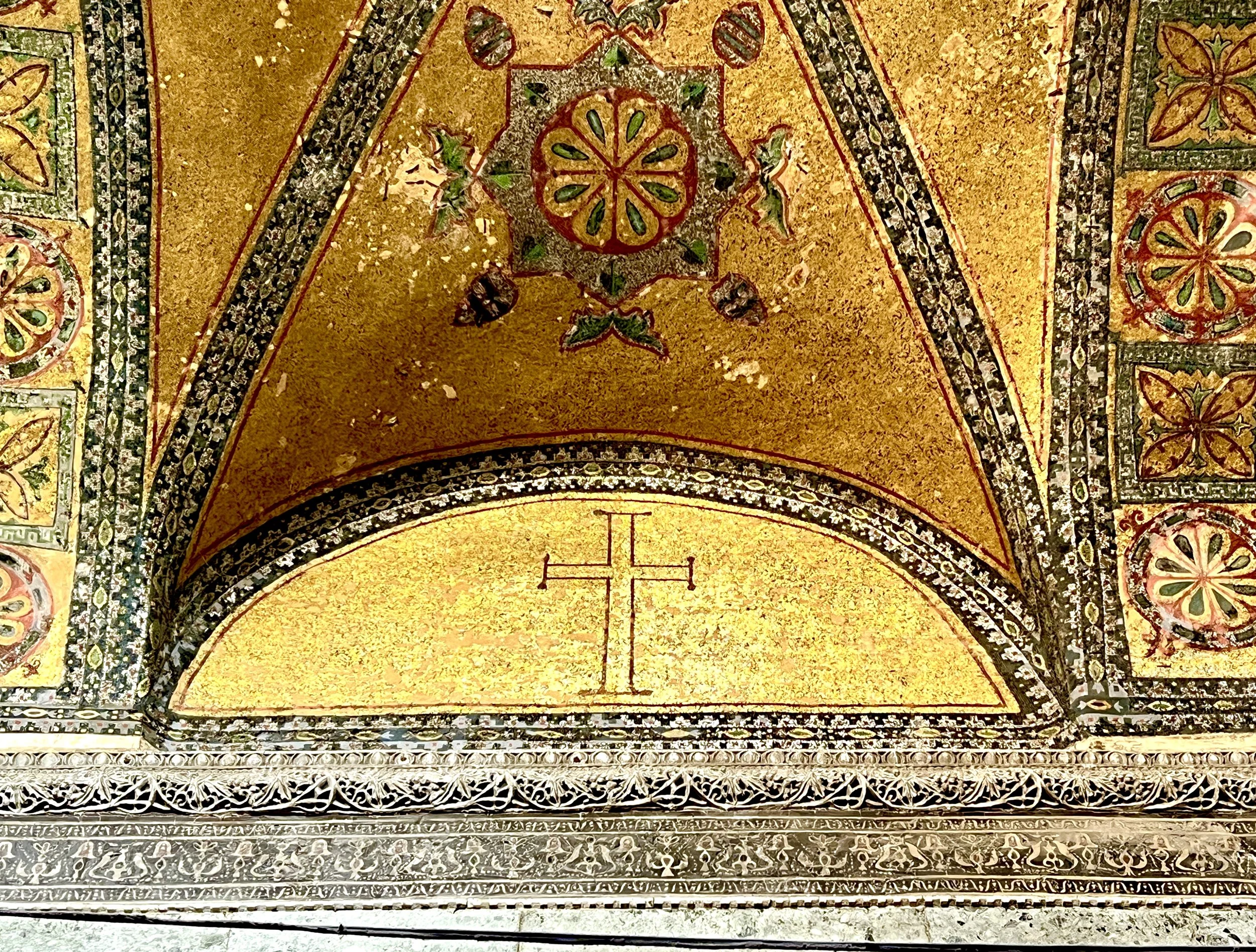
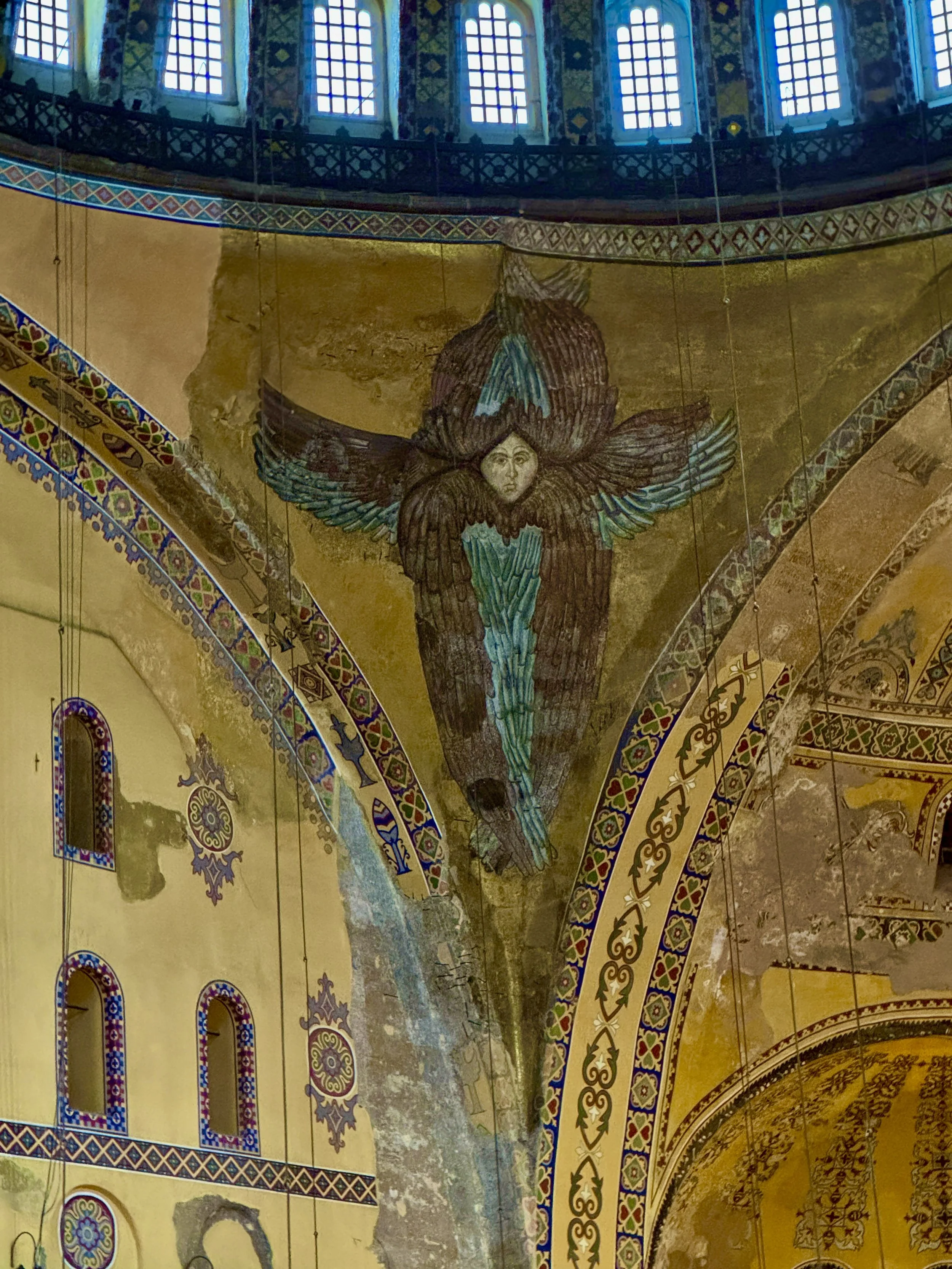
The Hagia Sophia, Holy Wisdom, Istanbul Turkiye. First bul in 360 AD but destroyed in a riot in 404 AD. The present building has its origins from 537 AD and Emperor Justinian.