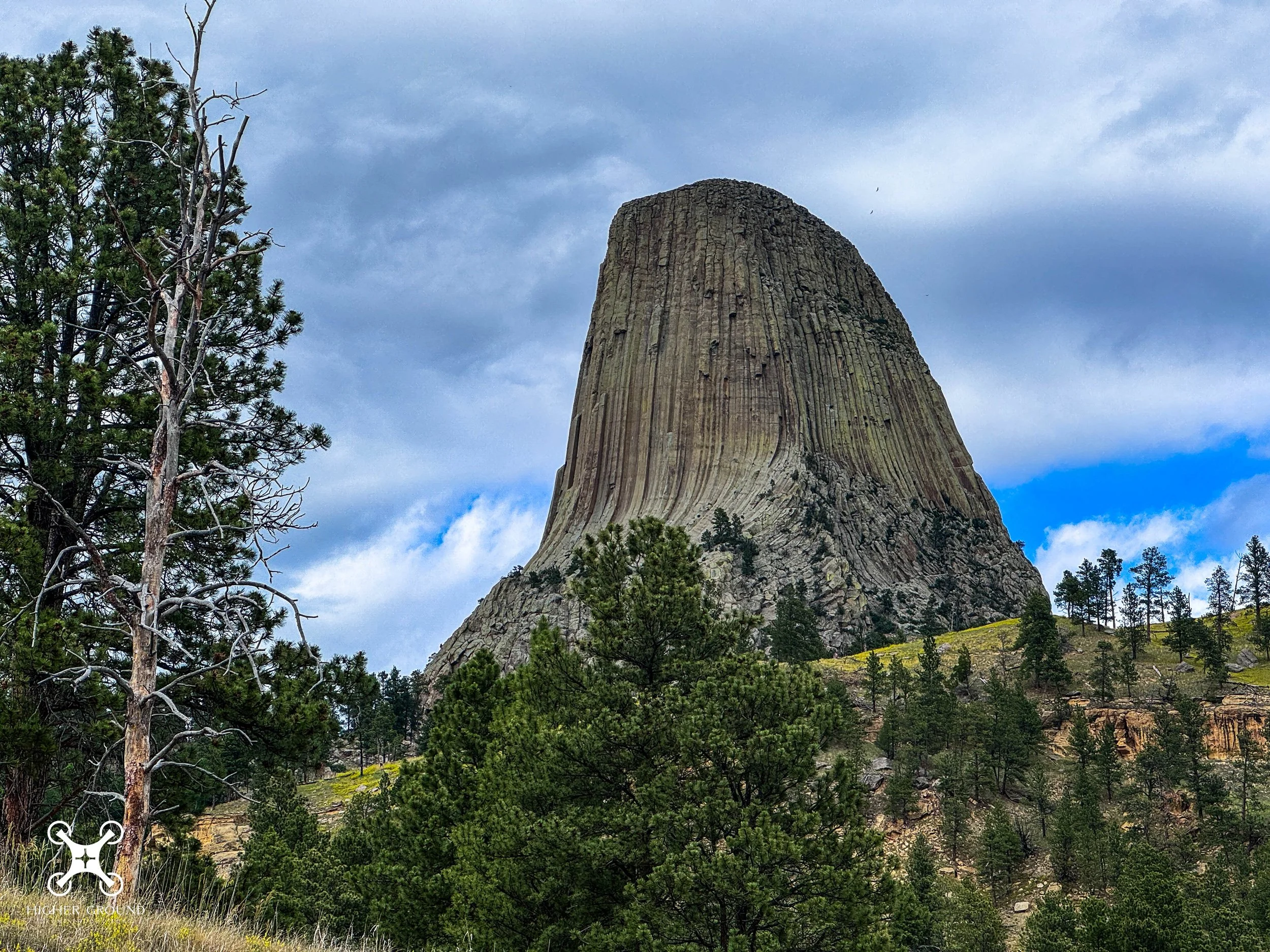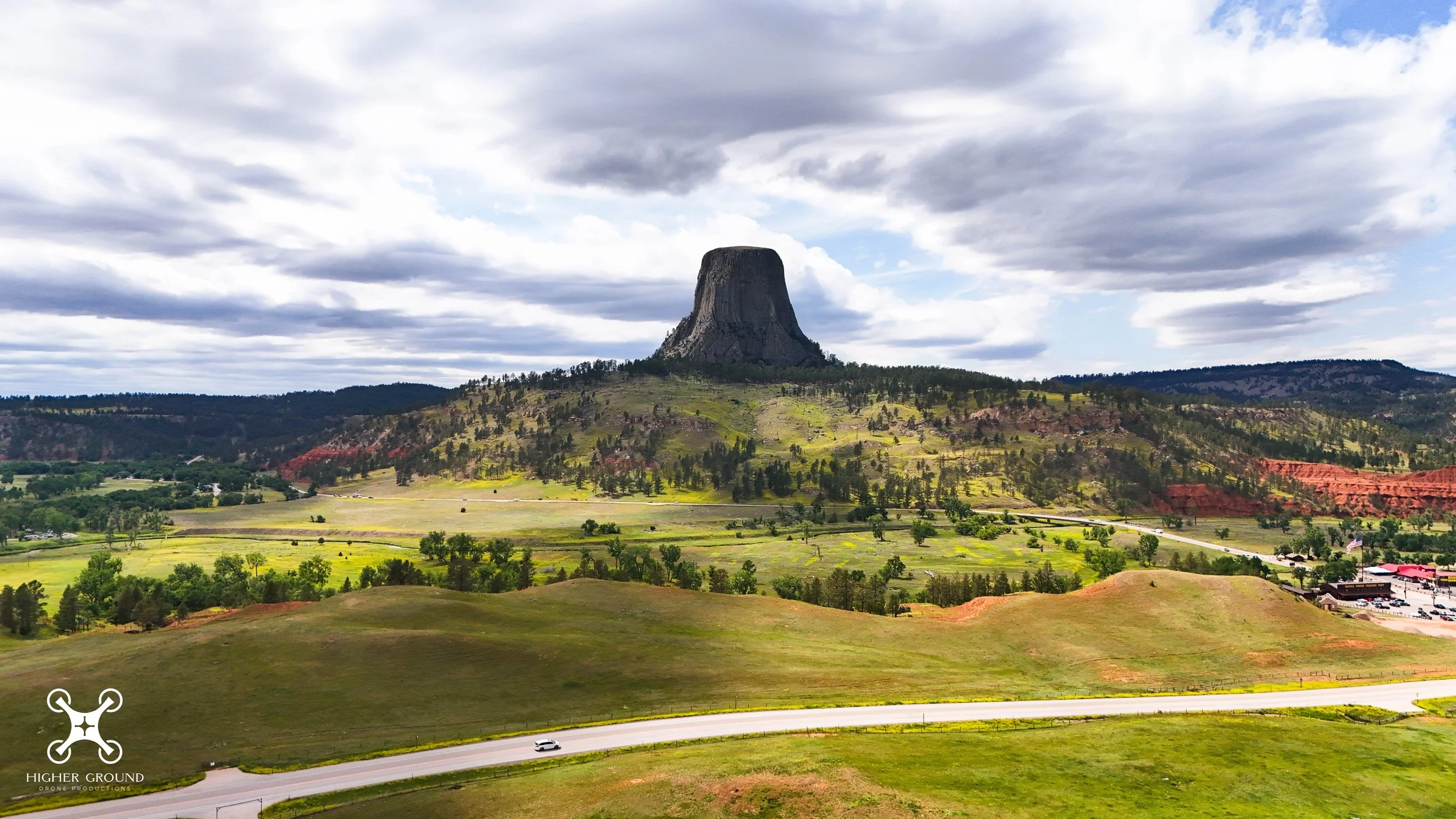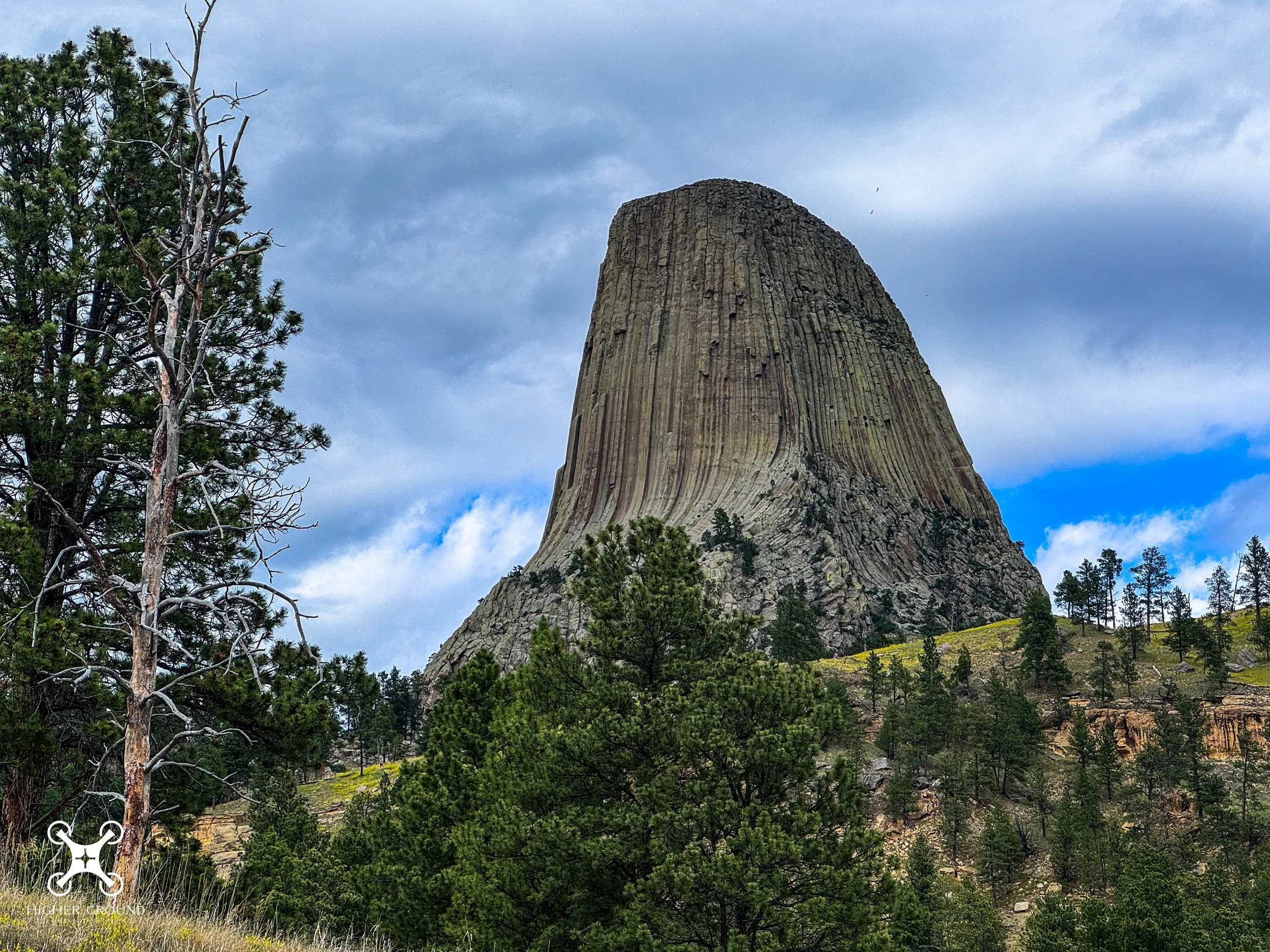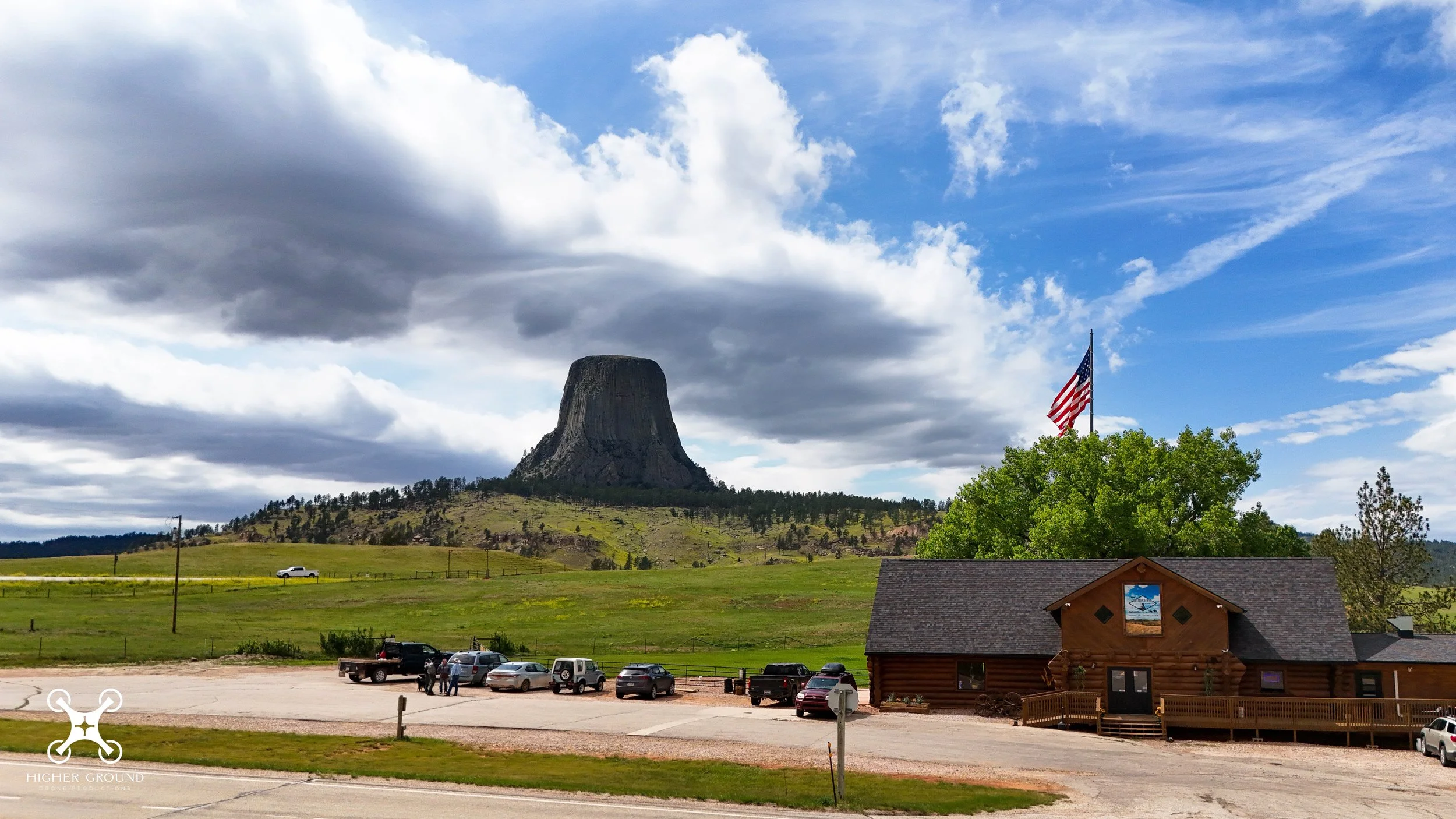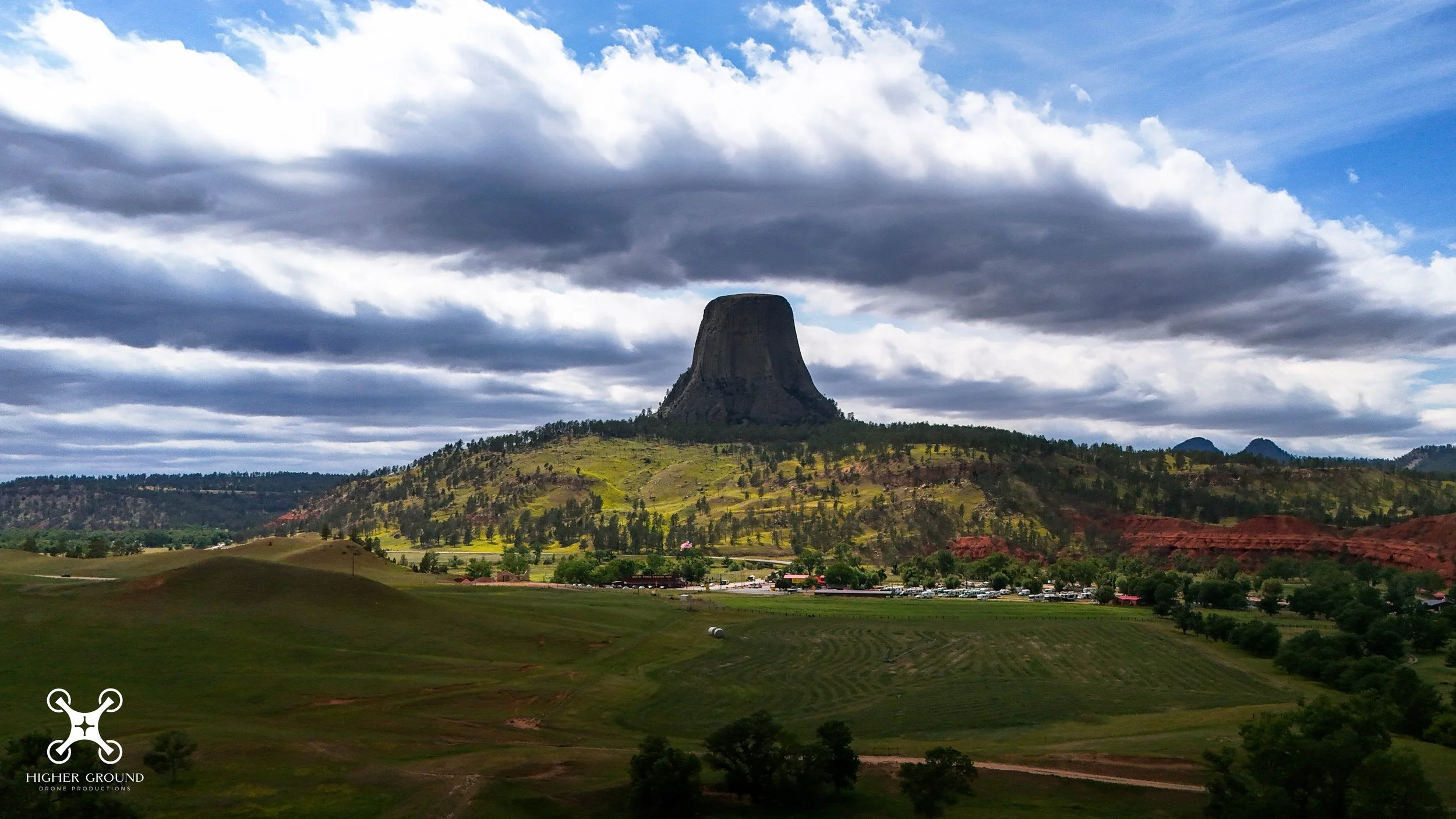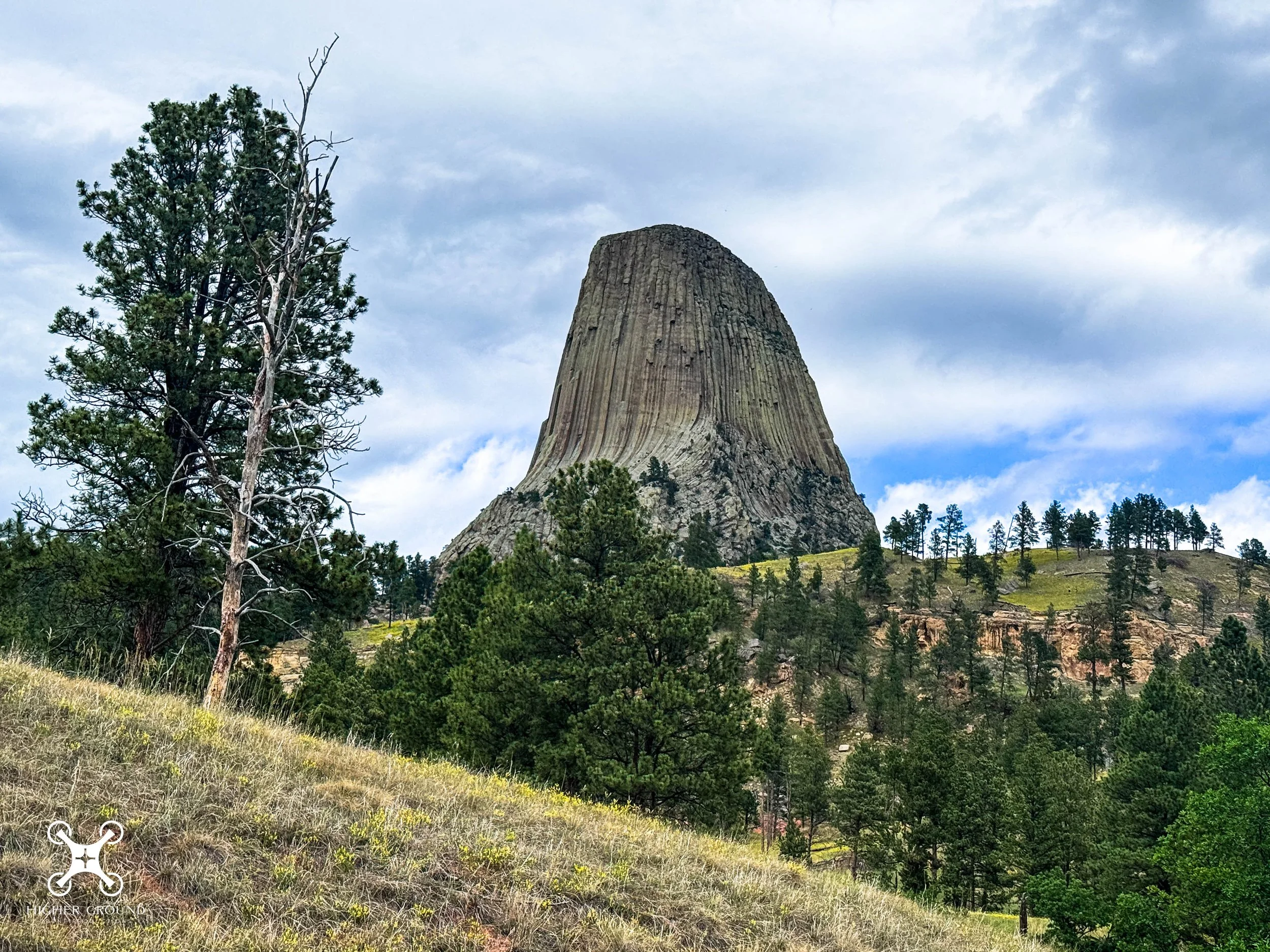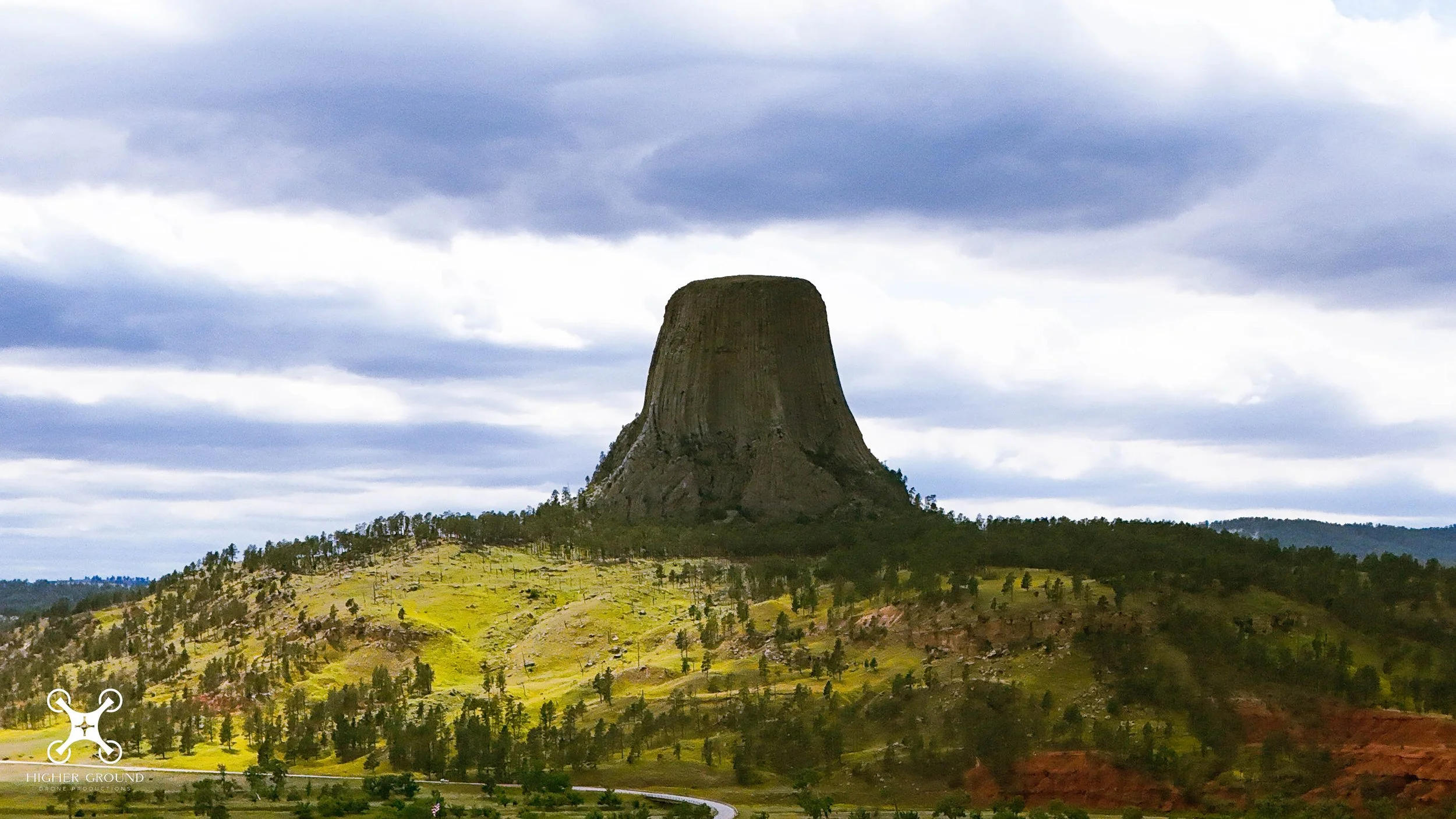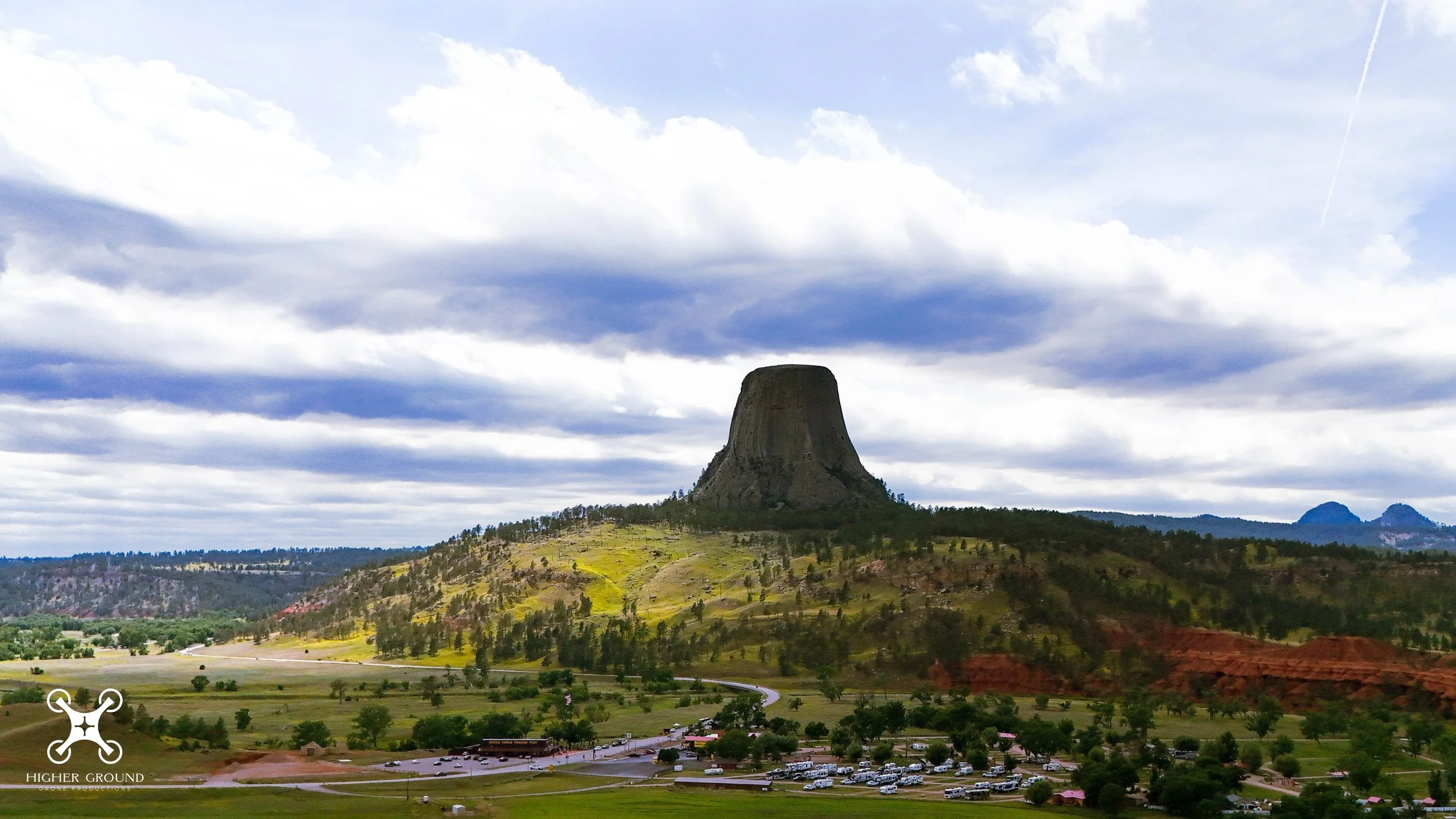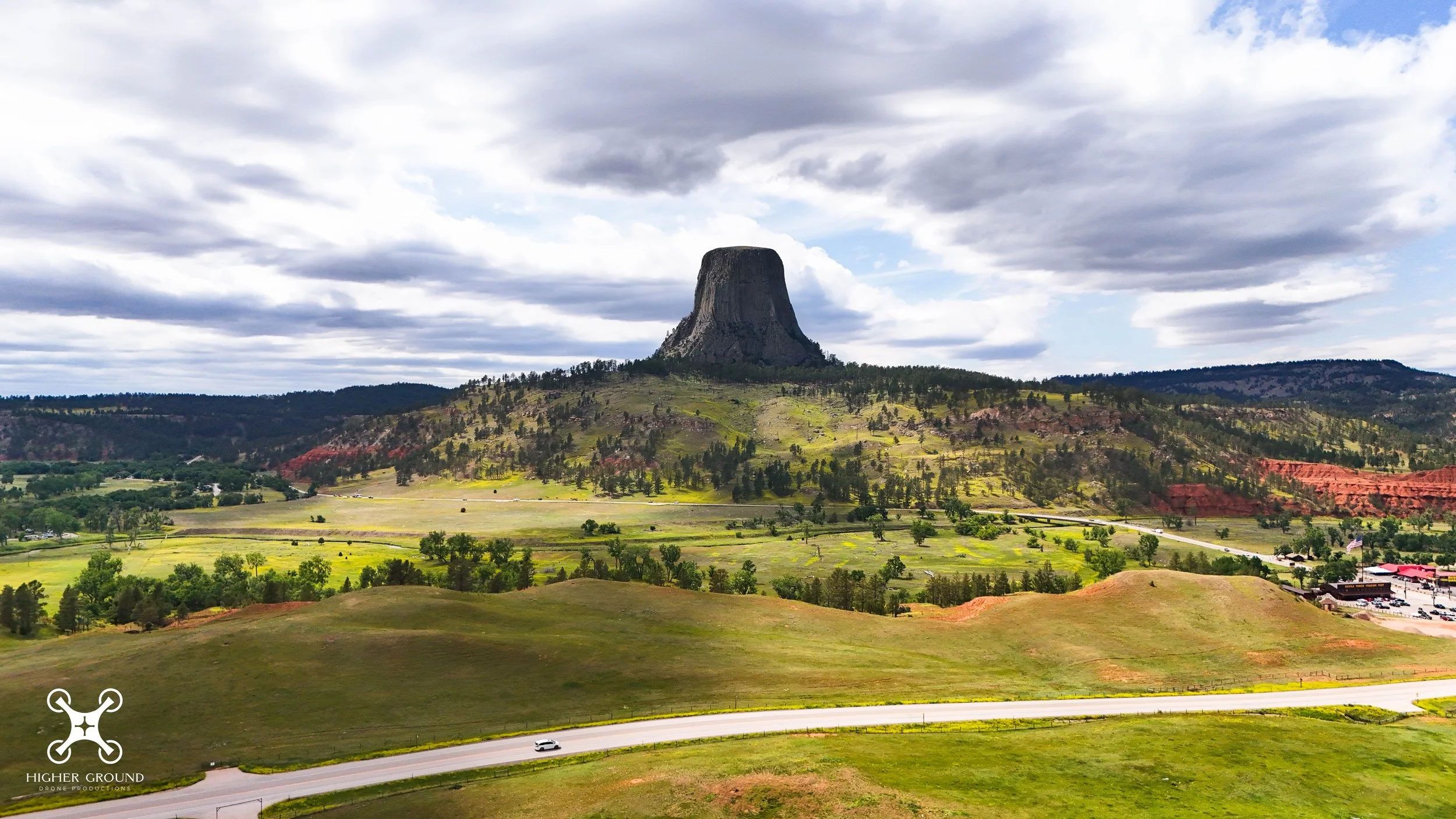
Devils Tower got its name from a mistranslation during an 1875 U.S. government expedition.
For centuries, surrounding Native American tribes (including the Lakota, Cheyenne, and Arapaho) sacredly referred to the landmark as Bear Lodge. In 1875, Colonel Richard Irving Dodge led a scientific survey party into the Black Hills. Dodge later reported that the local tribes called the place "bad god's tower," which was adapted into Devils Tower. Historians and linguists believe Dodge's interpreter mistakenly translated the Lakota word for bear into a word associated with a bad spirit or god, leading to the erroneous name.
Devils Tower is a laccolithic butte (see notes below), composed of igneous rock in the Bear Lodge Ranger District of the Black Hills, near Hulett and Sundance in Crook County, northeastern Wyoming, above the Belle Fourche River. It rises 1,267 feet above the Belle Fourche River, standing 867 ft from summit to base.
Scientists debate how Devil’s Tower was formed, but agree that about 65 million years ago, molten lava was forced into existing hard rock formations, cooling and eroding over millions of years into this striking formation that stands 1,267 feet above the landscape.
The site is sacred to the Lakota people and many other Plains Tribes, and President Theodore Roosevelt declared it the nation's first national monument in 1906.
Because I needed to look this up:
A laccolith is a dome-shaped, intrusive igneous rock body that forms when magma pushes its way between horizontal layers of sedimentary rock and forces the overlying strata upward into a bulge.
A butte is an isolated, steep-sided hill with a small, relatively flat top, formed by wind and water erosion acting on harder caprock that protects softer layers underneath.