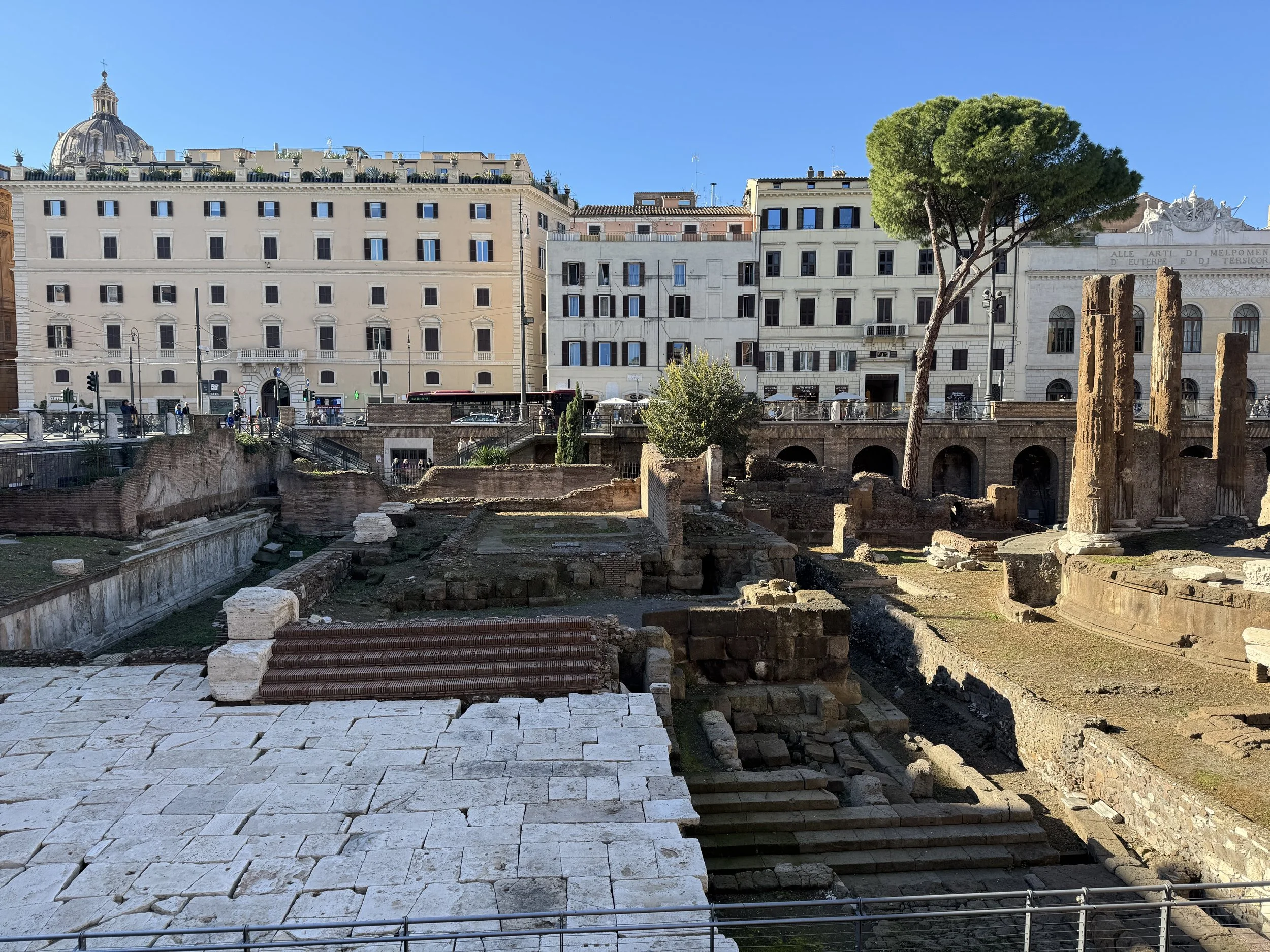
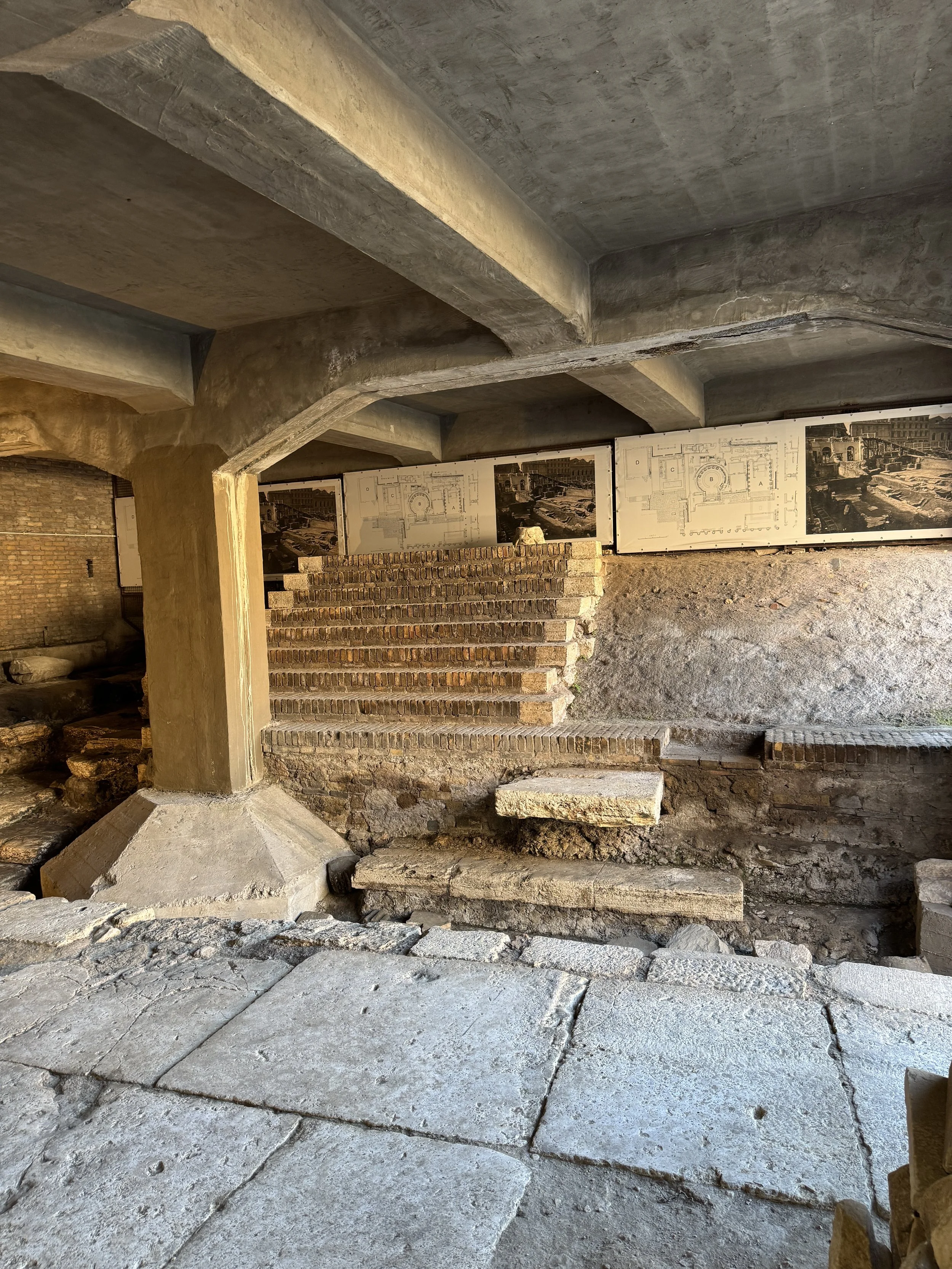
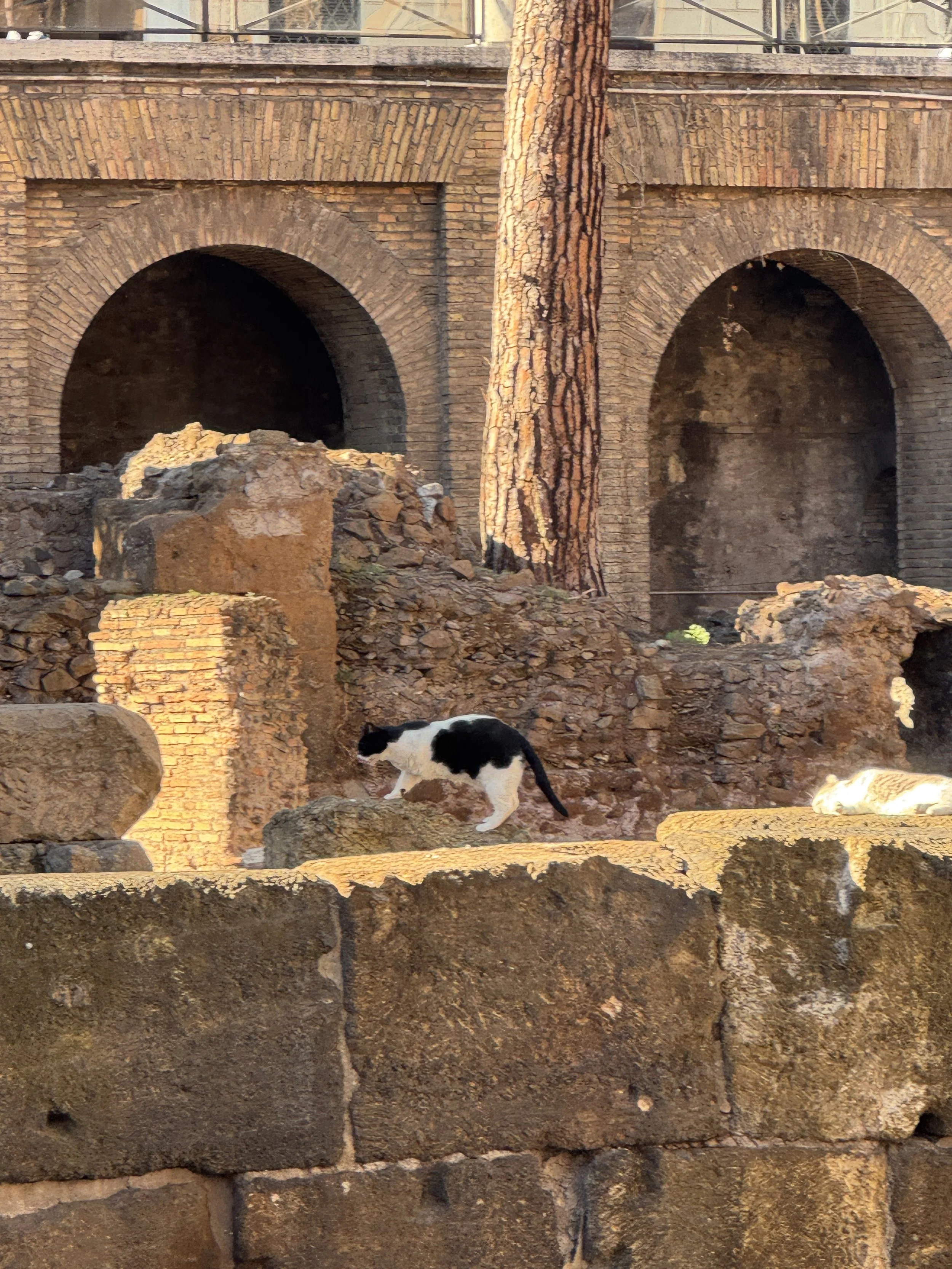
Area Largo Argentina, Rome
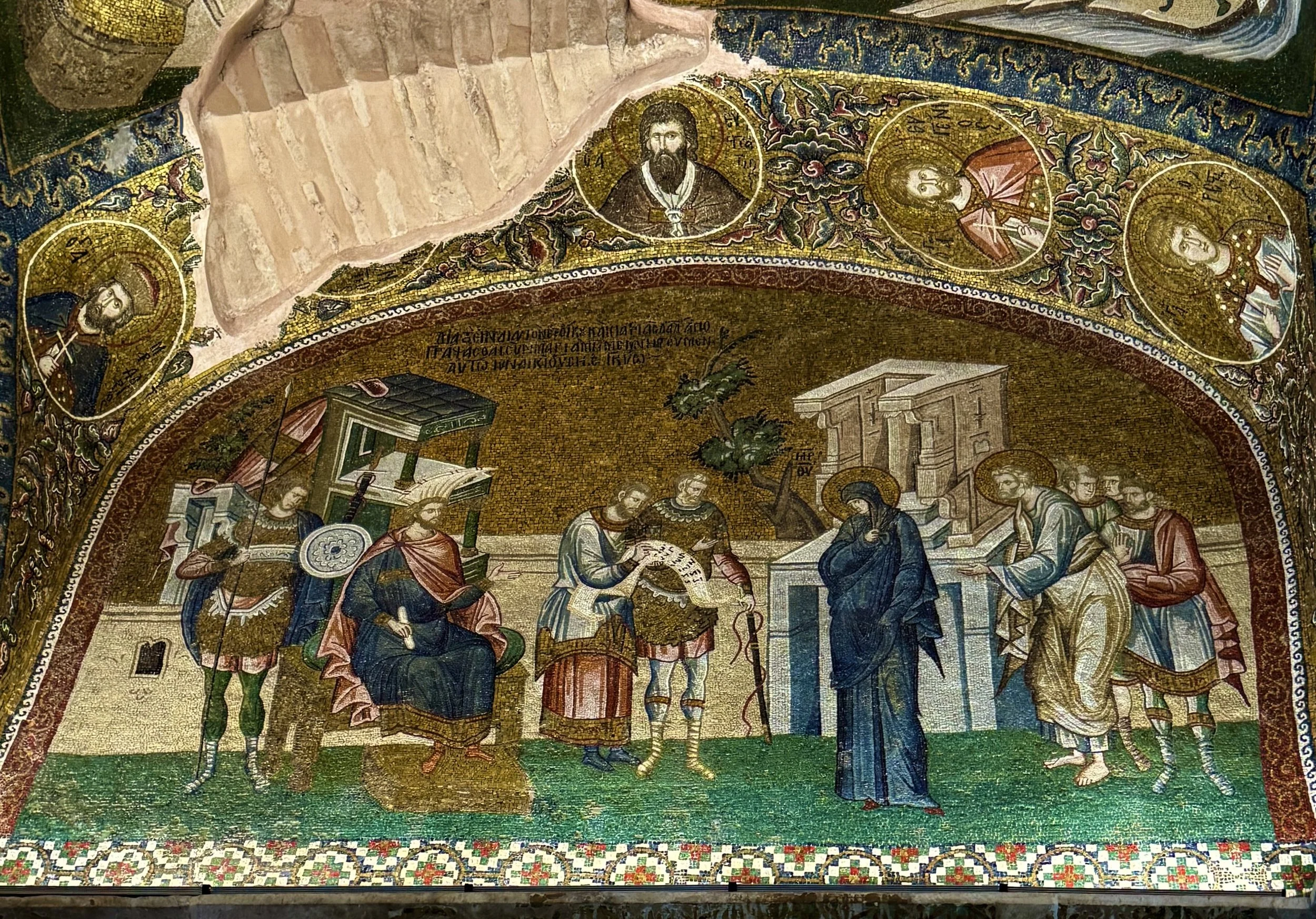
“In those days a decree went out from Caesar Augustus that all the world should he registered…and all went to be registered, each to his own town. And Joseph also went up from Galilee, from the town of Nazareth, to Judea, to the city of David, which is called Bethlehem, because he was of the house and lineage of David, to be registered with Mary, his betrothed, who was with child.” Luke 2:1-5
A pivotal moment in the rise of the Roman Empire unfolded at the Theatre of Pompey, in what is now Largo di Torre Argentina, in 44 BC. There, Julius Caesar was assassinated by a group of senators led by Marcus Junius Brutus and Gaius Cassius Longinus. Their intent was to preserve the Roman Republic, yet ironically their actions helped usher in the very outcome they hoped to prevent. In the aftermath, Caesar’s adopted heir, Augustus (Octavian), rose to power, eventually becoming Rome’s first emperor in 27 BC.
Under Augustus, the empire entered the Pax Romana—an era marked by peace, stability, and the development of infrastructure and administrative systems, including taxation and census registration. From a Biblical perspective, this stability proved significant. The Roman census brought Joseph and Mary to Bethlehem at the time of Jesus’ birth, in fulfillment of Old Testament prophecy (Micah 5:2). More broadly, the enduring peace and interconnected road systems of the Pax Romana—lasting into the late 2nd century AD—facilitated the rapid spread of Christianity, enabling the apostles to carry the gospel far beyond Israel. God’s providential hand at work!
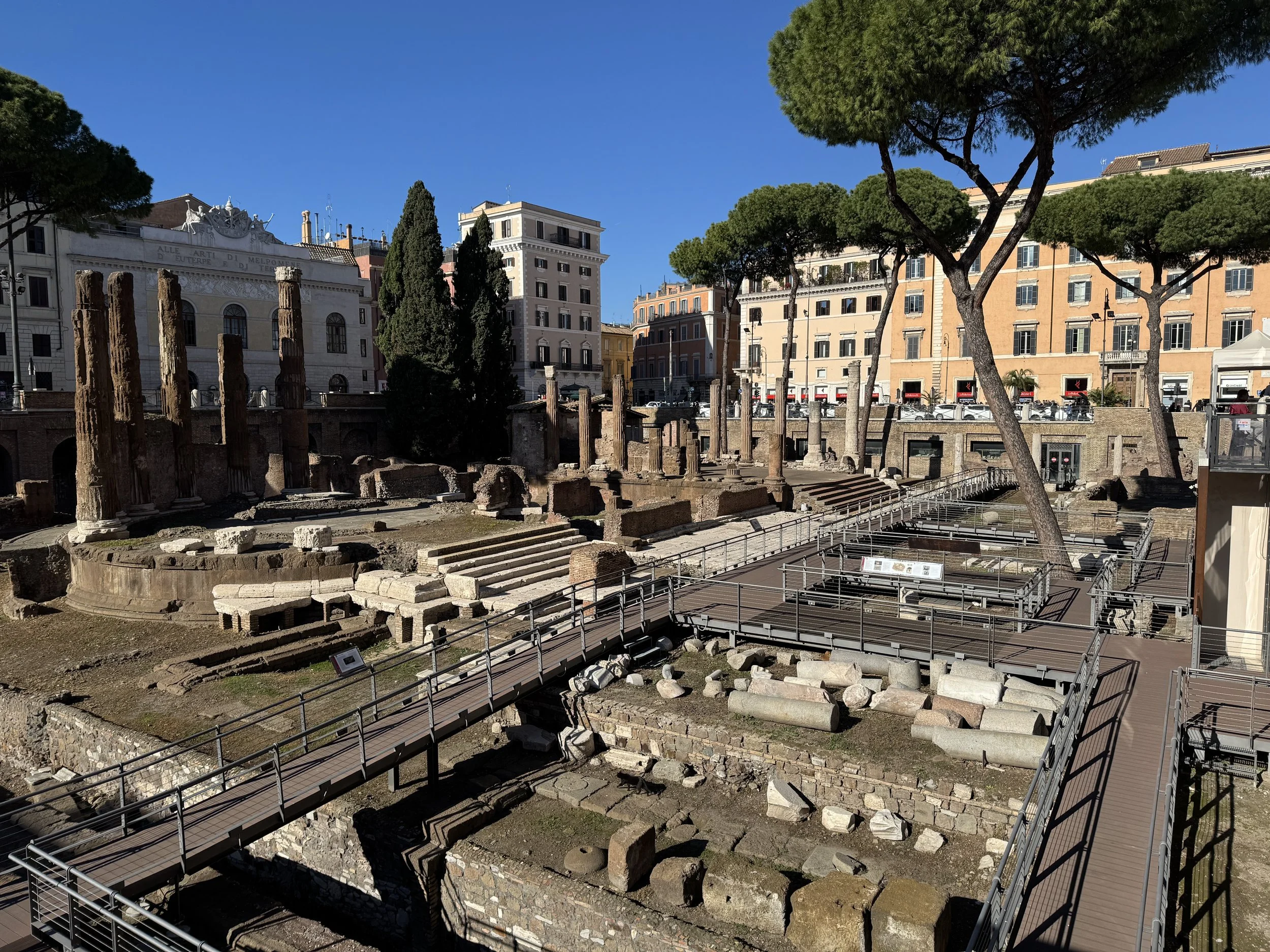
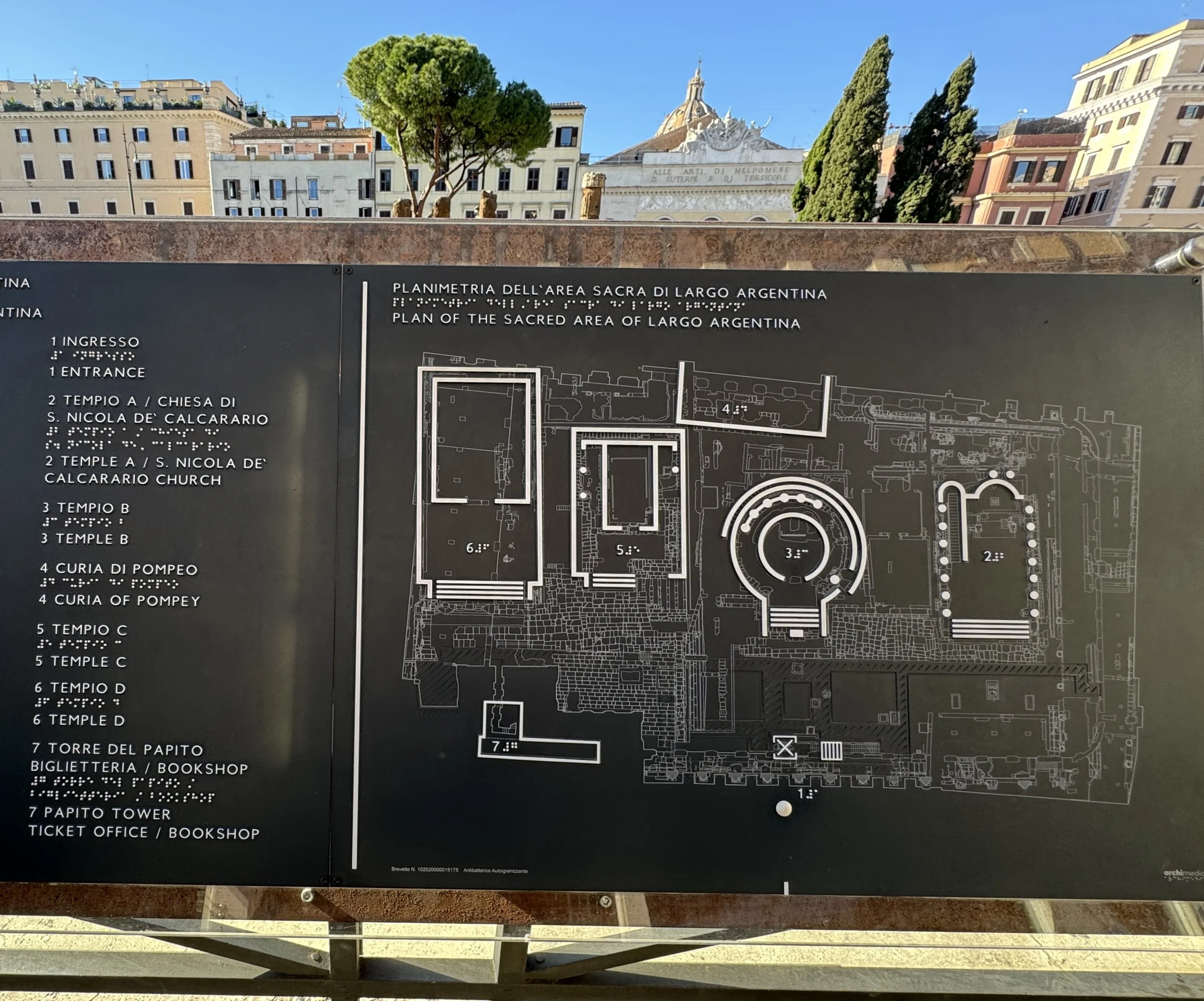
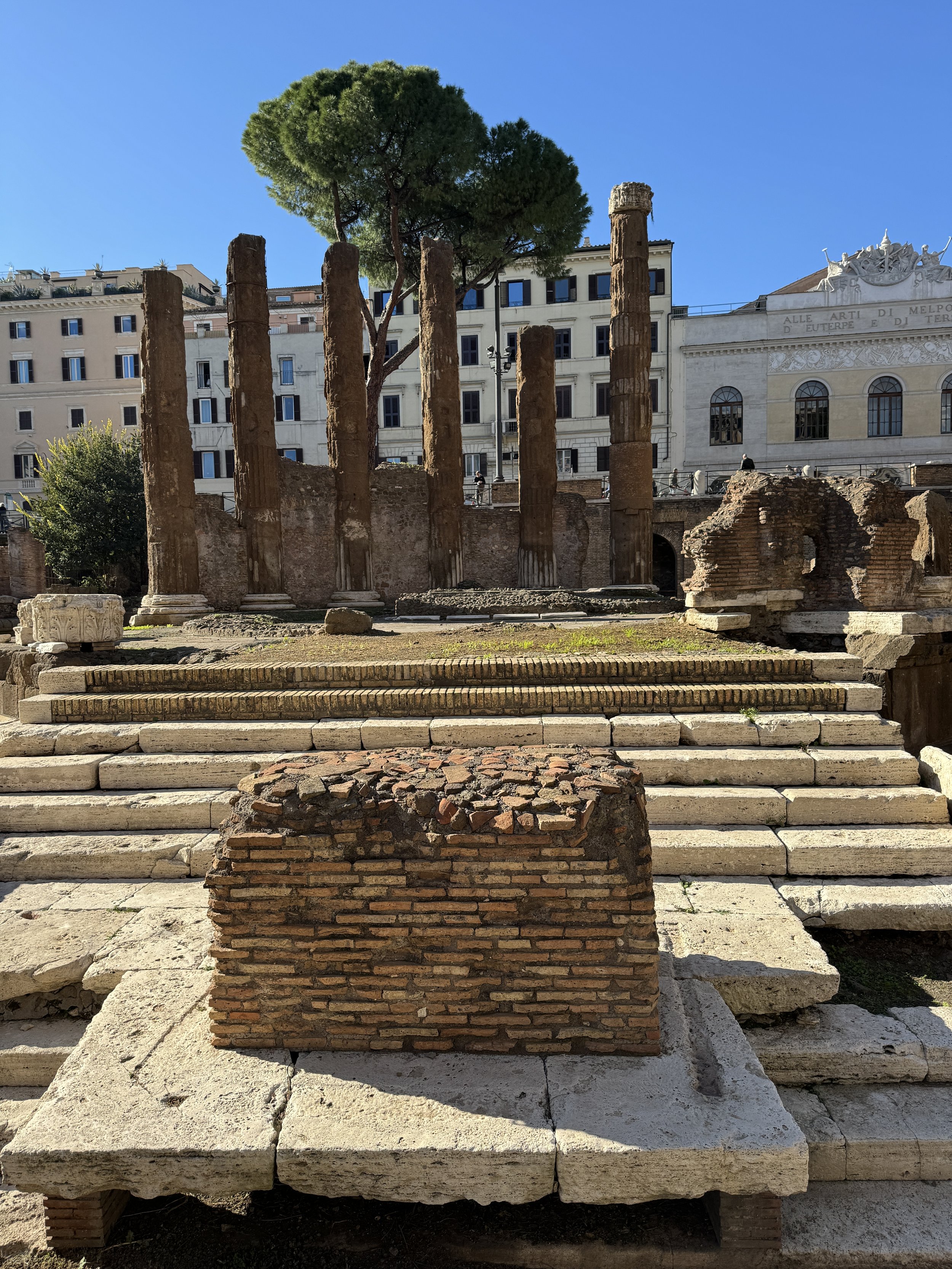
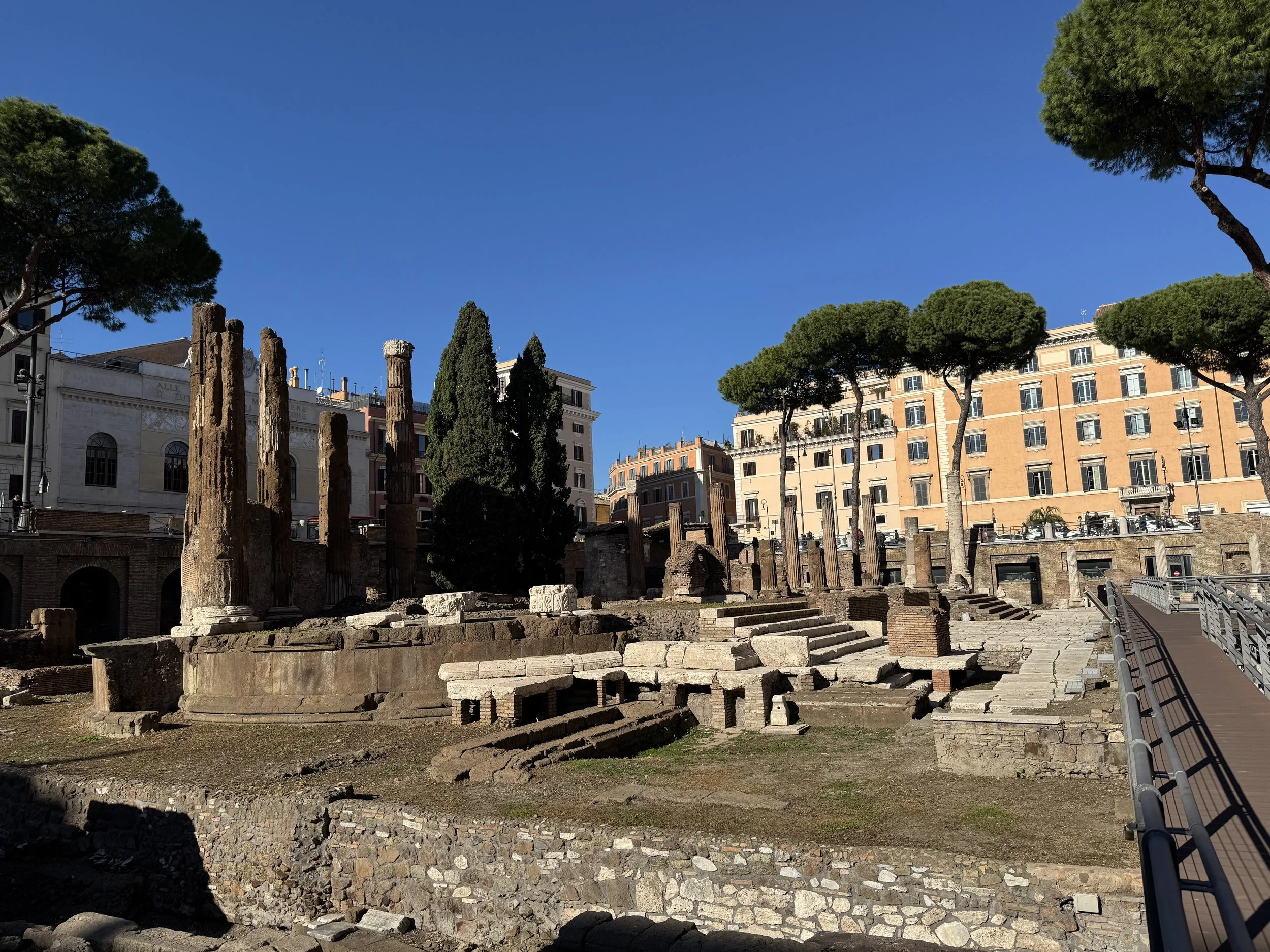
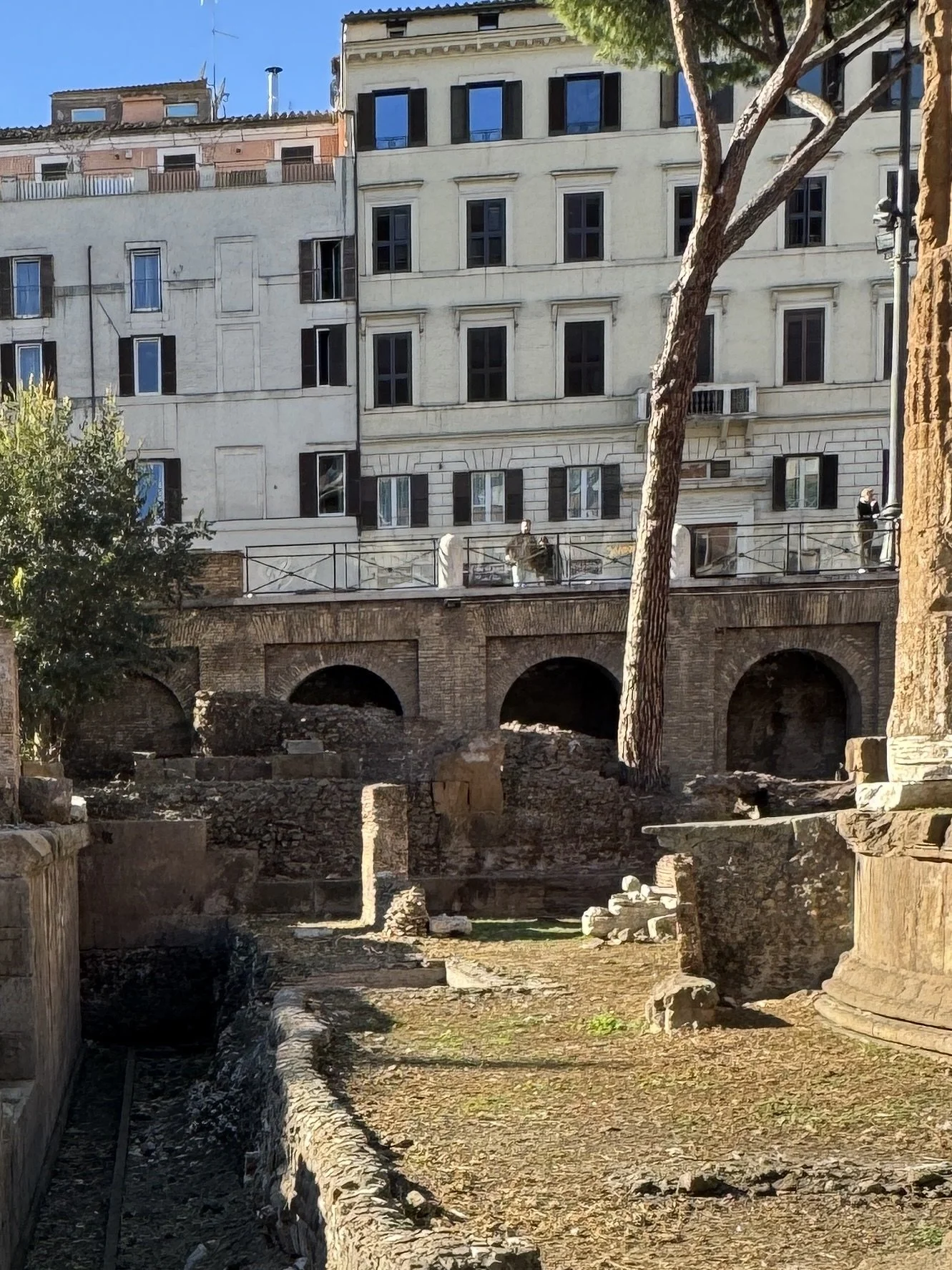
Today, portions of this historic site are visible in the sunken archaeological remains of Largo di Torre Argentina. The complex features four temples dating from the 4th to 2nd centuries BC, along with remnants of the Curia of Pompey, where Caesar was killed after being stabbed 23 times. Much of the surrounding theater complex still lies buried beneath the modern city.
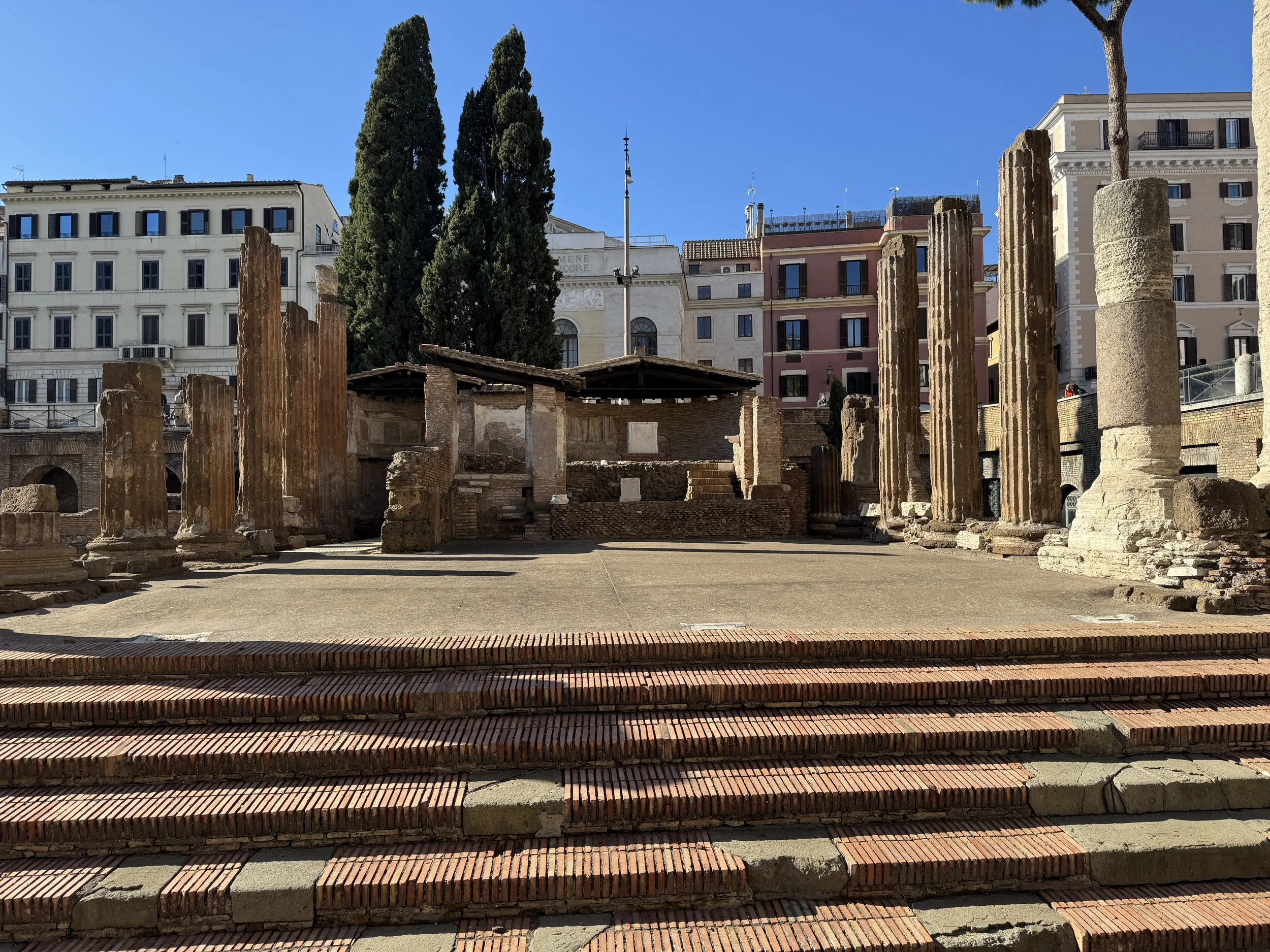
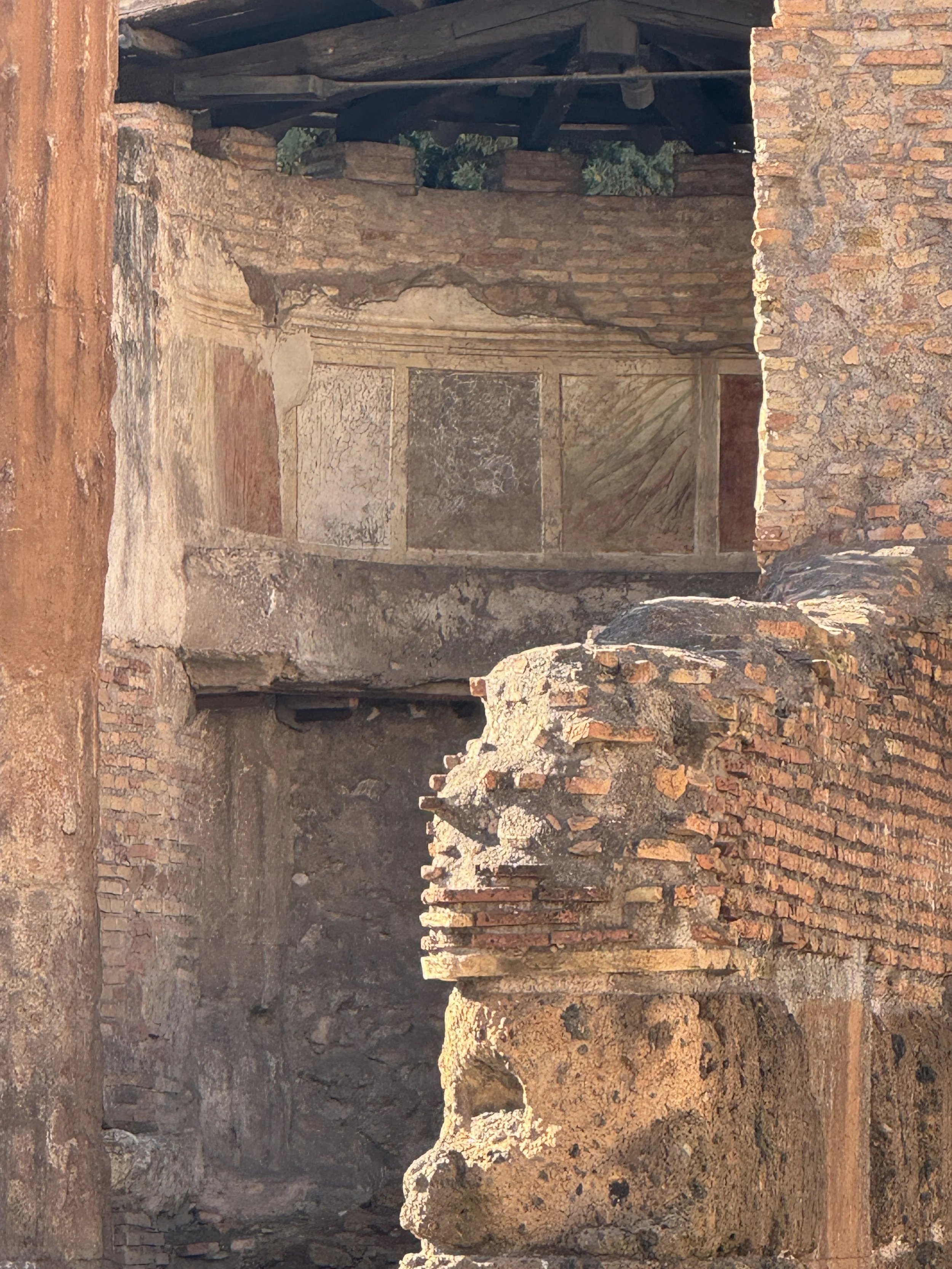
Temple A, from the 3rd century BC, later incorporated a large latrine and was eventually converted into a 10th-century church, San Nicola de' Calcarario, where parts of the apse and frescoes remain visible. Temple B, dating to 101 BC, is a circular (tholos) structure. Temple C, the oldest (c. 280 BC), was rebuilt after the great fire of Rome in AD 80. Temple D, from the 2nd century BC, is the largest of the four.
Largo di Torre Argentina is now also known as a cat sanctuary. Dozens of cats roam freely among the ruins—clearly unimpressed by the history beneath their feet!
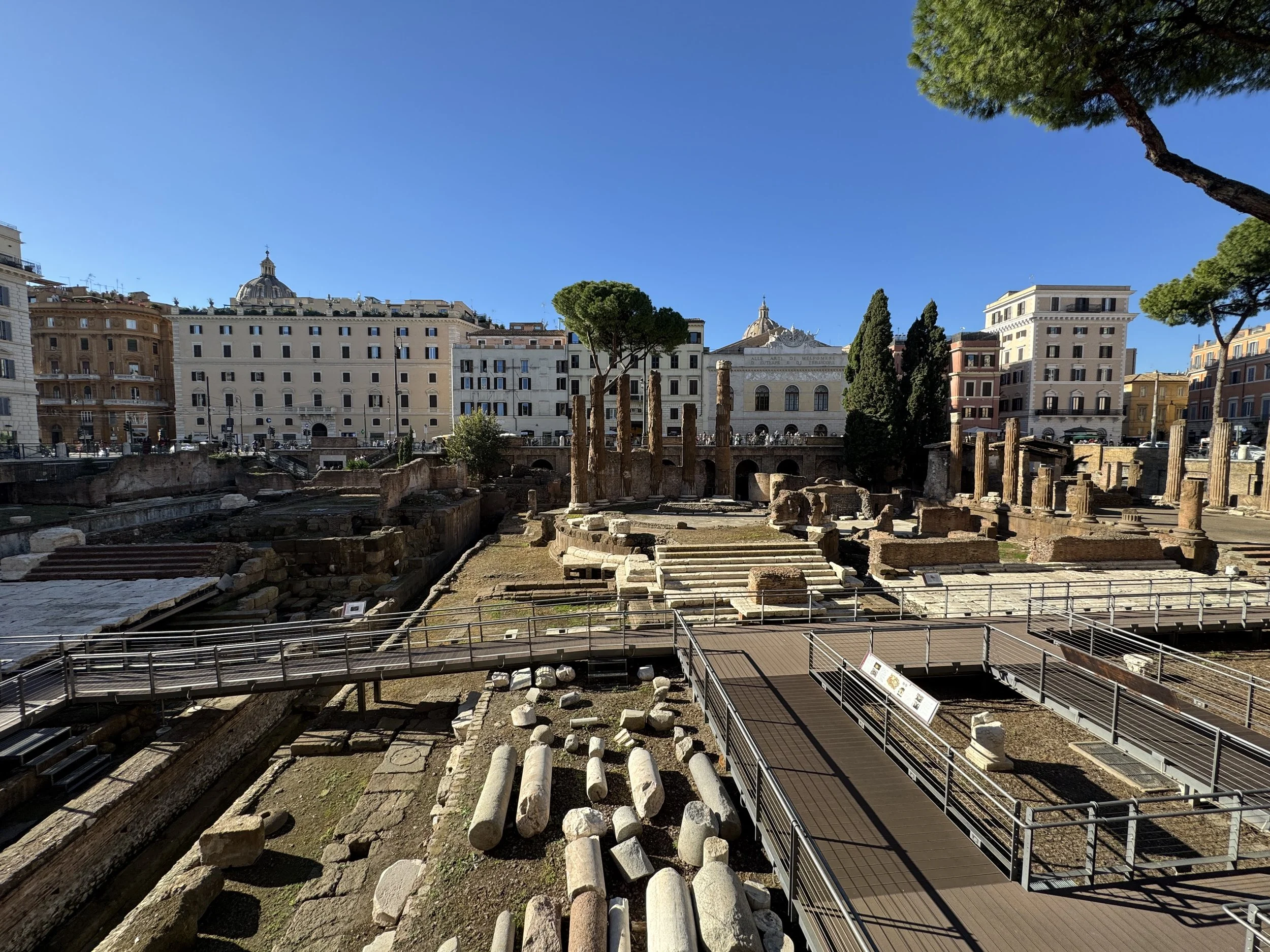
Area Largo Argentina, Rome. The remains of 4 ancient temples have been excavated below the level of the modern street. At the back is a portion of the Curia of Pompey where Julius Caesar was assassinated, paving the way for his heir Octavia Augusta to become the emperor and order the registration and taxation that brought Mary and Joseph to Bethlehem.